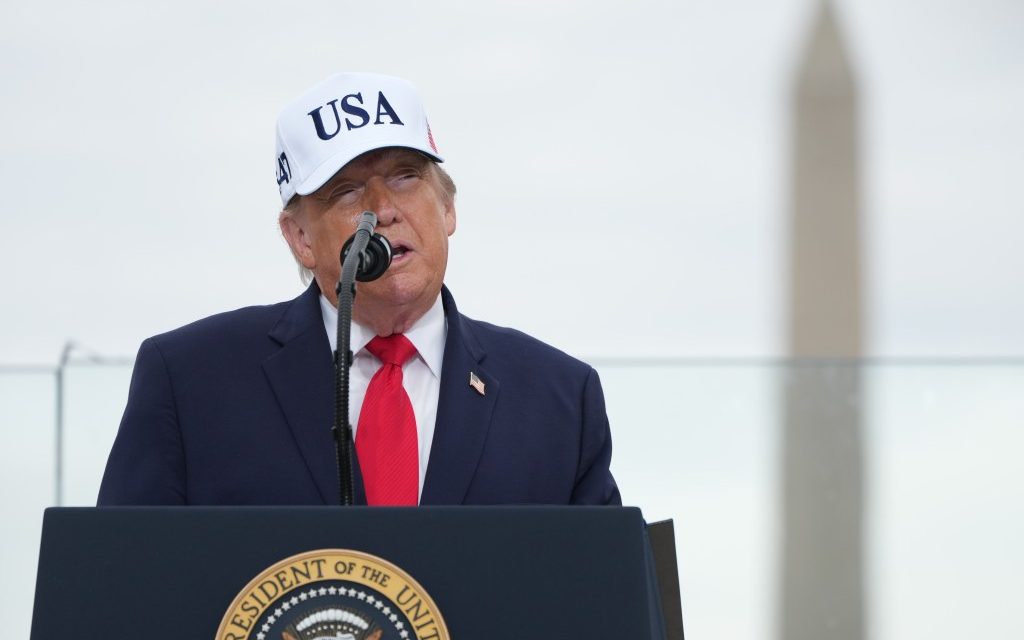
President Trump faces a limited period after the midterm elections to act on Iran before Congress potentially limits his war powers. While he pushes for negotiations, Trump has indicated a willingness to “finish the job” if Iran resists his terms. If Democrats take control of the House, Trump’s window to act could close by January, when congressional resistance intensifies.
Jonathan Schanzer, executive director at the Foundation for Defense of Democracies, notes there is a 6-8 week period for potential military action. Iran is aware of this timeframe, pursuing diplomacy while escalating regional threats to gain more time.
Possible US Military Actions
If diplomacy fails, Trump’s likely approach would be a brief but impactful bombing campaign designed to pressure Iran into negotiations, as explained by Mark Cancian, a senior adviser at the Center for Strategic and International Studies. A potential strategy may involve two weeks of intense bombardment, though its effectiveness remains uncertain. Iran previously endured five weeks of bombings, suggesting a shorter campaign may have limited impact.
The US might target military sites similar to those hit in earlier conflicts and coastal bases near the Strait of Hormuz. If escalation occurs, attacks could extend to Iran’s oil infrastructure and the electrical grid. Such actions would send a message that US would not tolerate intact Iranian nuclear facilities.
US Military Capabilities
Currently, the US has two aircraft carriers in the Middle East—the USS George HW Bush and USS George Washington. The USS Theodore Roosevelt Strike Group is en route to provide additional strength. Each carrier can launch about 44 aircraft, including F/A-18 Super Hornets and F-35C Lightning IIs. Over 20 destroyers and warships surround the Arabian Gulf, maintaining a blockade outside the Strait of Hormuz.
Approximately 50,000 US soldiers are positioned in the region, along with advanced ballistic missile defense systems like the Patriot and THAAD. Reinforcements include more aircraft and missile systems recently deployed in the area.
Iran’s Potential Response
Ria Reddy of the Institute for the Study of War warns that striking Iran’s energy infrastructure would lead to strong retaliation. Iran could launch a widespread retaliation campaign, targeting US bases and increasing war costs. Iran’s attacks may include refined missile and drone strikes and assaults on commercial ships in the Strait of Hormuz. Tehran may also mobilize terror groups in Gaza, Lebanon, and Yemen, alongside potential cyber and terror attacks.
Israel’s Role
Israel was involved in initial strikes and might participate if the conflict restarts. Israel’s political situation remains unstable following inconclusive election results, leaving Prime Minister Benjamin Netanyahu advocating for renewed strikes. However, Trump’s preference for diplomacy may limit Israeli influence. A diplomatic deal could affect Netanyahu’s political future, while opposition may struggle to sway the US administration without Netanyahu’s support.
 Election Night Developments and Concerns
 King Charles III Acknowledges Slavery’s Past While Praising Royal Navy’s Role
 Election Monitoring, U.S.-Israel Aid, Data Center Ballot, Fox News Ratings, UK Adventurer, Harvard Lawsuit, Florida Polling Places
 Midterm Elections: Russia, Ukraine, and American Interests
 Poland Enhances Border Security Near Kaliningrad to Counter Threats
 Prince Harry and Meghan Markle’s Living Situation and Future Plans in Britain