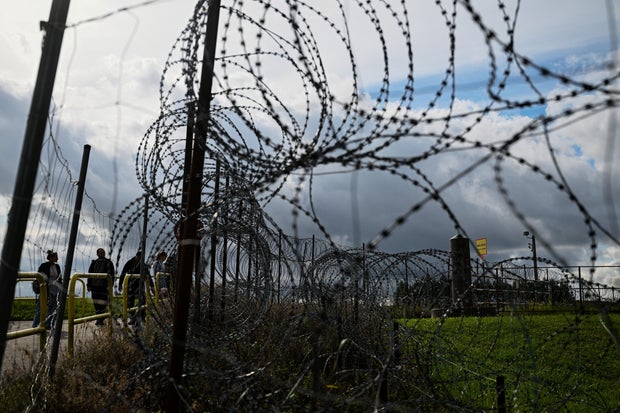
Poland initiated an extensive security operation along its border with the Russian exclave of Kaliningrad this week. The aim is to counter potential threats of sabotage and provocation. Prime Minister Donald Tusk highlighted the operation’s significance for national security.
The deployment includes additional police, counterterrorism units, and GROM, an elite military special forces unit. This initiative, running from November 2 to at least November 8, was confirmed by national police chief Marek Boroń. Warnings of possible sabotage and incursions had previously elevated alert levels.
Concerns about such activities were particularly acute in Warmia-Masuria and Podlaskie, two northeastern regions. Recent movement observed near Kaliningrad supported these concerns. Tusk revealed that suspicious activities, such as individuals using flashlights close to the border, necessitated a swift response from Polish security forces.
“Our rapid deployment of security measures likely prevented any planned provocations,” Tusk stated. Intelligence reports had suggested the possibility of “diversionary acts” or serious provocations against the European Union.
A special command center at the Polish national police headquarters coordinates the security efforts. The primary goals are public protection, early detection of suspicious activities, and safeguarding critical infrastructure.
Kaliningrad, bordered by NATO members Poland and Lithuania, holds strategic military importance. Russian agencies like the FSB and GRU maintain a presence there.
The Suwałki Corridor, east of Kaliningrad, is crucial. It links the Baltic NATO states with the rest of the alliance. Despite heightened security, no direct evidence of acts originating from Kaliningrad has been published. Poland remains vigilant after months of incidents across Europe attributed to Russia.
These incidents include sabotage and airspace incursions. On October 13, during a joint conference with Lithuania’s prime minister, Tusk shared concerns echoed in recent discussions with NATO Supreme Allied Commander Alexus Grynkewich.
Britain’s MI5 chief, Sir Ken McCallum, also expressed concerns. He labeled Russia “aggressor number one” in Europe. McCallum noted Moscow’s hybrid warfare tactics as careful to avoid triggering NATO’s collective defense principle under Article 5.
This year saw various incidents like a fire at a Polish drone factory in August and a September arson attack on a Starlink station. Both were blamed on Russia. Russian drones frequently breach NATO airspace amid ongoing conflict in Ukraine.
Recently, the UK Royal Navy intercepted a Russian spy ship near Scotland, monitoring a NATO exercise. Helicopters tracked the ship off Scotland’s northern coast during this maneuver.
 Election Monitoring, U.S.-Israel Aid, Data Center Ballot, Fox News Ratings, UK Adventurer, Harvard Lawsuit, Florida Polling Places
 Midterm Elections: Russia, Ukraine, and American Interests
 Prince Harry and Meghan Markle’s Living Situation and Future Plans in Britain
 Midterm Election Predictions and Expected Policy Shifts
 Global Electoral Disputes Echo Trump’s Claims
 Palestinians Return to Damaged Homes in Hebron After Israeli Military Operation