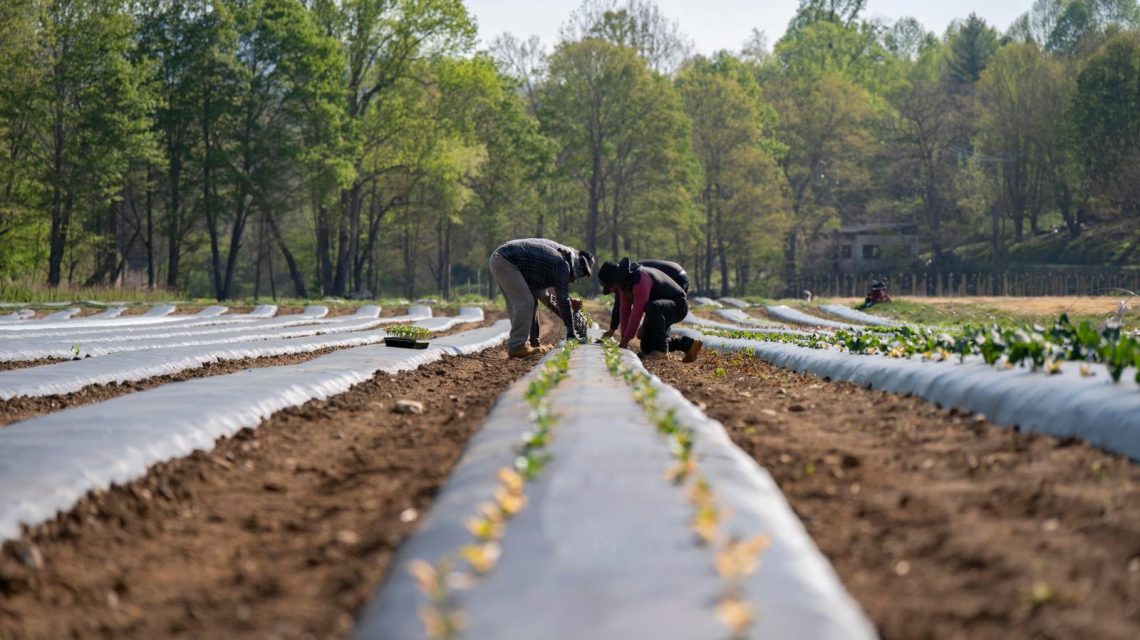
A federal judge has invalidated a Trump administration rule that reduced wage requirements for many foreign farmworkers. The judge ruled that the Labor Department failed to demonstrate how these changes would protect U.S. farmworkers from wage depression and improperly bypassed standard federal rulemaking procedures.
Ruling Details
U.S. District Judge Kirk Sherriff, appointed by President Biden, declared the 2025 overhaul of the H-2A wage system unlawful. The administration argued the changes were necessary to combat labor shortages and reduce costs for growers amid stricter immigration enforcement.
While the judge did not immediately vacate the rule to avoid disrupting the labor market, he ordered the Labor Department to quickly devise a new wage-setting system. Employers might face backpay if the new wages exceed current rates.
This decision recognizes the important work of the men and women who put food on our tables, and that farmworkers should get paid fairly,said Teresa Romero, president of the United Farm Workers.
The H-2A Wage Rule Explained
The focus of the case was the Adverse Effect Wage Rate (AEWR), the minimum wage that employers must pay foreign workers using the H-2A visa program. Federal law mandates the Labor Department to ensure this does not “adversely affect” the wages of U.S. workers.
Traditionally, the government used USDA farm labor data to set these rates. When USDA ended its Farm Labor Survey in 2025, the Labor Department changed its wage calculation method with an interim rule. United Farm Workers claims this rule cut wages by up to $7 per hour.
The rule also introduced a two-tier wage structure, used a different government wage survey, and created a “housing adjustment,” lowering required wages for providing housing. Critics argued this could reduce pay for higher-skilled roles.
Judicial Rejection
The judge questioned if lower H-2A wages would undermine U.S. farmworker wages. He noted that 92% of H-2A positions fell into the lowest skill tier, with wages based on the 17th percentile of workers rather than averages.
The court criticized the housing adjustment, suggesting it made foreign workers cheaper to hire, possibly disadvantaging American workers. The critique extended to the new wage survey and job-classification system.
Farmworkers’ jobs are very difficult,said Crisanto Serrano, a farmworker and plaintiff.More and more, growers want to hire H2-A workers over local workers.
Context with Trump’s Immigration Policy
The wage rule emerged amidst the Trump administration’s efforts to pair strict immigration enforcement with expanded labor pathways for industries dependent on immigrant workers.
The administration claimed reduced H-2A wage requirements would aid growers in transitioning to legal labor due to potential labor shortages as unauthorized workers left.
The judge questioned whether lower wages were essential for this transition, noting the H-2A program’s growth and strong farm-sector income undermined claims of hiring difficulties at existing wages.
Immediate Consequences and Next Steps
The court ordered the Labor Department to swiftly develop a new wage-setting system and publish replacement rates. The judge retained authority over the case, requiring government updates within two weeks on progress.
The current rule stays temporarily, but employers face potential wage-adjustment payments if new rates exceed those paid now. The outcome on back pay will finalize post the Labor Department’s new wage release.
 San Francisco 49ers Owner Jed York Arrested and Donates to Democrats
  States Challenge Trump Administration’s Postal Service Voter Rules
  Louisiana Governor Jeff Landry Discusses SpaceX Launch Facility
  Democratic Divide Over Hasan Piker’s Comments on U.S. Jews and Israel
  Texas and Minnesota Clash Over Extradition of ICE Agent Christian Castro
  DOJ to Defend Trump-Backed Mail-In Voting Restrictions