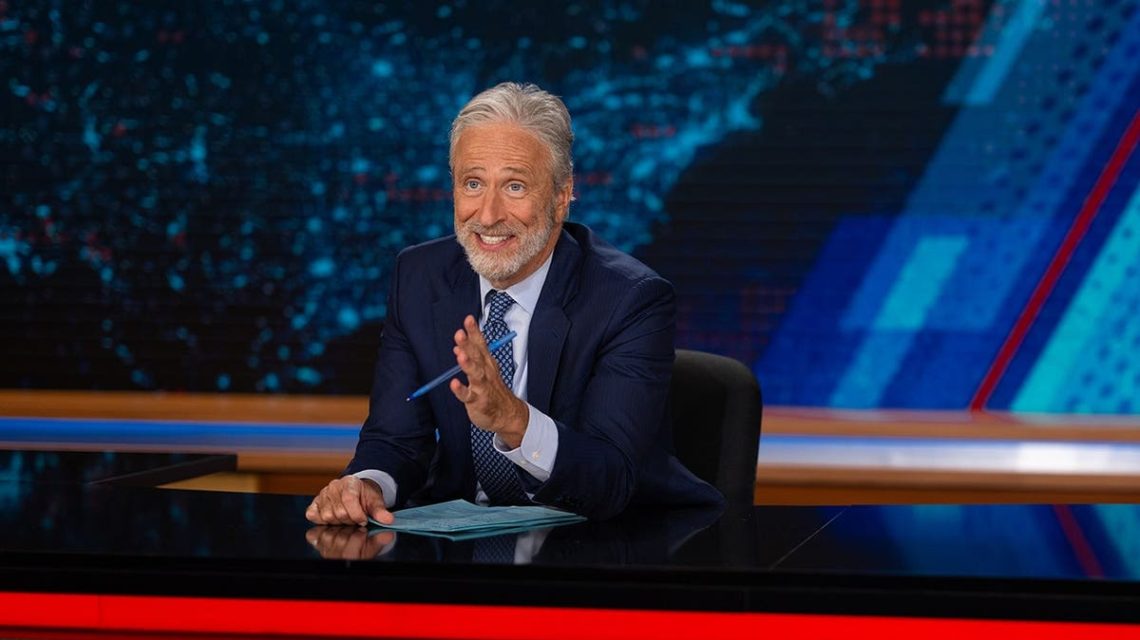
Talk show host Jon Stewart recently expressed his concerns about whether shows like his have been beneficial or detrimental to the country. During an appearance on Michelle Obama’s podcast, “IMO,” Stewart was asked about the influence of “The Daily Show” on young people’s news consumption.
Impact of Comedy on Political Awareness
Michelle Obama questioned Stewart on the role of comedy in the political climate. She asked if it was healthy for young people to get their news from sources like “The Daily Show” or to wish for Stewart to run for president. Stewart acknowledged that late-night shows are becoming outdated, comparing them to a “video store inside of a Tower Records.” He noted the influence of social media and the changing landscape of news access.
Despite describing his show as potentially “impotent,” Stewart appreciated how it can offer catharsis. He recognized the difference between cultural power and actual power, reflecting on his experiences on Capitol Hill. Stewart pondered whether his show serves as a kind of “opiate” for audiences, providing temporary relief without addressing deeper issues.
Reflecting on the Role of Political Comedy
Stewart further questioned the societal impact of his work. He wondered if his show helps, harms, or distorts public perception. Though he described his efforts as possibly not honorable by design, he aimed to act in good faith. Stewart noted the abundance of bad faith in media and expressed uncertainty about the overall positive impact of his career.
Tim Graham, executive editor of the Media Research Center’s NewsBusters division, shared similar concerns. He described the concept of Americans getting news from comedy shows as alarming. Comparing political comedy to “ultra-processed food,” Graham argued it offers a skewed view of reality. He mentioned the distortion caused by relying solely on comedic sources for news, using the example of misconceptions about Sarah Palin.
The Role of Late-Night Shows
Graham added that late-night comedy can be likened to an opiate because audiences use it to cope with political frustrations. He highlighted the overwhelming focus on Donald Trump in political jokes, with late-night shows devoting 82% of their political humor to Trump and the Republicans in 2024.
The discussion on Michelle Obama’s podcast illustrated the challenges of navigating comedy’s influence on political discourse. Graham pointed out the irony of discussing partisan bias given the media’s favorable coverage of the Obamas. He referenced the advice attributed to Michelle Obama, “When they go low, we go high,” noting its absence in late-night comedy.
 ABC News Faces Scrutiny Over Report on Trump Family Investments
  Amanda Seyfried’s Decision Against Intimate Scenes Reflects Changing Boundaries in Hollywood
  Kacey Musgraves Criticizes Christopher Columbus During Concert
  Dan Levy Criticizes Shane Gillis Over SNL Monologue
  Divided Observance: Columbus Day vs. Indigenous Peoples’ Day
  Recovery of Stolen Renoirs and Investigation of Art Heist