Jeffries Faces Backlash Over Pro-Israel Appointment
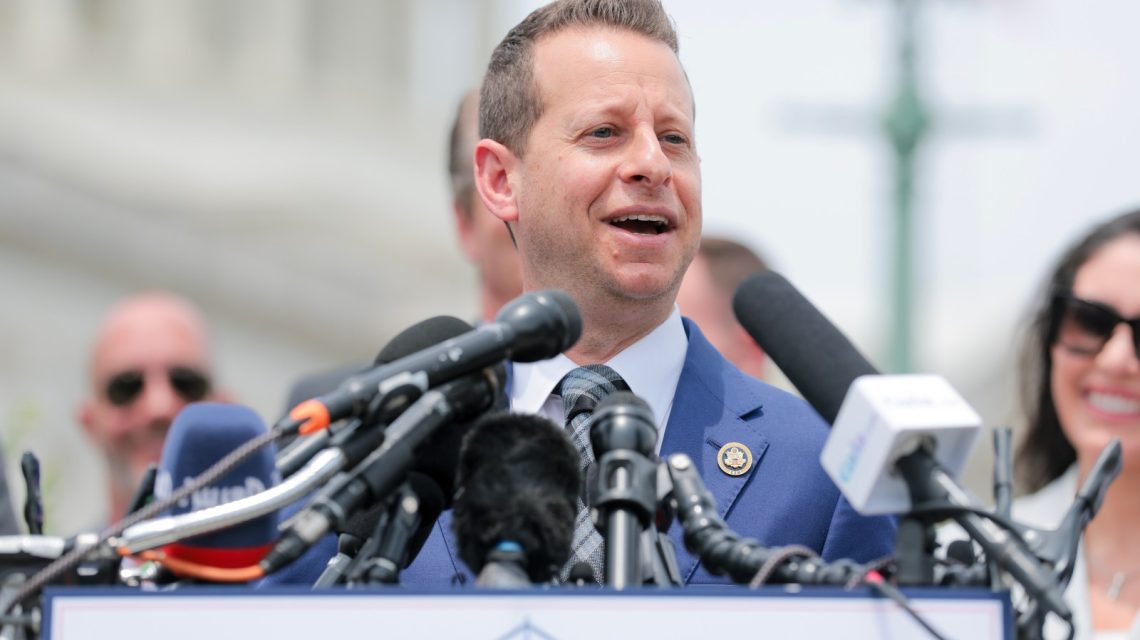
House Minority Leader Hakeem Jeffries has come under fire from progressives following the appointment of pro-Israel Democrat Representative Jared Moskowitz to a key foreign policy role. Progressive Democrats express increasing dissatisfaction with Israel’s actions in Gaza, highlighting a split between voter sentiment and party leadership.
Florida Representative Jared Moskowitz was appointed as the ranking member of the House Foreign Affairs Committee’s Subcommittee on the Middle East and North Africa. The decision was announced by New York Representative Gregory Meeks, the panel’s top Democrat. Despite Meeks being the committee’s ranking member, Jeffries received the majority of criticism for the appointment. This move is seen as a signal of reluctance within Democratic leadership to change stance on Israel, even as voter opinion shifts.
Moskowitz expressed gratitude to Jeffries and Meeks for the appointment, calling it an honor. He committed to strengthening ties between the United States, Israel, and Gulf allies during a period of substantial regional change.
Progressive Reactions to Appointment
Moskowitz’s appointment sparked immediate criticism from progressive media figures and former Obama administration official Ben Rhodes. Rhodes viewed the decision as a harsh statement from Democratic leadership toward its voters. Additional criticism focused on the influence of political donors affecting bipartisan lawmaker attitudes toward Israel, the pharmaceutical sector, and defense contractors.
Journalist Prem Thakker pointed out that new polling suggests Democratic voters support imposing sanctions against Israel and ceasing weapon transfers. Kyle Kulinski, host of Secular Talk, critiqued Jeffries’ choice of Moskowitz, suggesting it embodies pro-war and pro-Israel sentiments. Kulinski even called for Jeffries’ resignation. Hasan Piker, a left-wing streamer, argued that Democratic leaders are neglecting voter concerns on this issue.
Wally Rashid, a Palestinian-American journalist, noted previous reports of Jeffries’ meeting with Jared Kushner, casting speculation on potential links to Moskowitz’s promotion. However, no evidence substantiates this connection.
Jeffries’ Approval Ratings
Polls show mixed reactions to Jeffries among voters. A Civiqs national tracking poll revealed only 26 percent of respondents view Jeffries favorably, while 54 percent hold an unfavorable opinion. Another 20 percent remain uncertain. Similar unfavorable ratings were found in CNN polling.
CNN’s July poll showed only 16 percent of respondents favorably view Jeffries, compared to 32 percent unfavorable. This marks the largest unfavorable gap since December 2022. Meanwhile, YouGov tracker data places Jeffries as the 22nd most popular national Democrat, indicating his popularity lags behind more recognized party figures.
The Democratic Party’s overall favorability has declined, as evidenced by a recent Fox News poll. The survey showed 41 percent of respondents view the party favorably, against 56 percent unfavorably, marking a notable reputation shift compared to Republicans. Furthermore, Fox News reported a decline to 77 percent in favorable views among self-identified Democrats, down from 87 percent the previous year.
Despite unfavorable polling, Jeffries remains confident that Democrats can regain the House majority in the upcoming elections. In a past NBC News interview, he expressed conviction in the party’s prospects.
Growing Democratic Opposition to Israel
Polling indicates a growing divide between Democratic voters and Israel. The IMEU Policy Project commissioned a YouGov survey, highlighting Democratic voter shifts in key nominating states.
The survey found substantial opposition to Israel among respondents. In Michigan, 80 percent perceive Israel as committing genocide against Palestinians. Similarly, in South Carolina, 52 percent oppose arms sales to Israel. These results reflect increasing support for sanctions and changes in policy toward Israel.
A February Gallup poll reveals 65 percent of Democrats now side with Palestinians, while 17 percent support Israel. This contrasts sharply with past survey results. Independents also moved toward Palestinians this year, while Republican support for Israel reached its lowest since 2004.
Jeffries and Senate Minority Leader Chuck Schumer have maintained a supportive U.S.-Israel stance, though increasingly at odds with Democratic party sentiment. Recently, a sizeable portion of House Democrats voted against an Israel weapons transfer, opposing Jeffries’ and Schumer’s position.
This divergence in opinion is reflected in Democratic primaries. Abdul El-Sayed’s recent Senate nomination win over a pro-Israel candidate underscores shifting grassroots energy. Closing the gap between official party positions and voter sentiment may demand fresh leadership willing to reconsider established perspectives.
 Gov. JB Pritzker Launches Reelection Campaign Highlighting Opposition to Trump
  Controversy Over Pause on Tariffs for Imported Ground Beef
  Trump Shares Concerns Over Midterm Challenges for Republicans
  Democratic Candidates Gain Ground in Key Texas Districts
  State Governments Urged to Promote Clean Energy
  Removing Barriers for Aspiring Parents