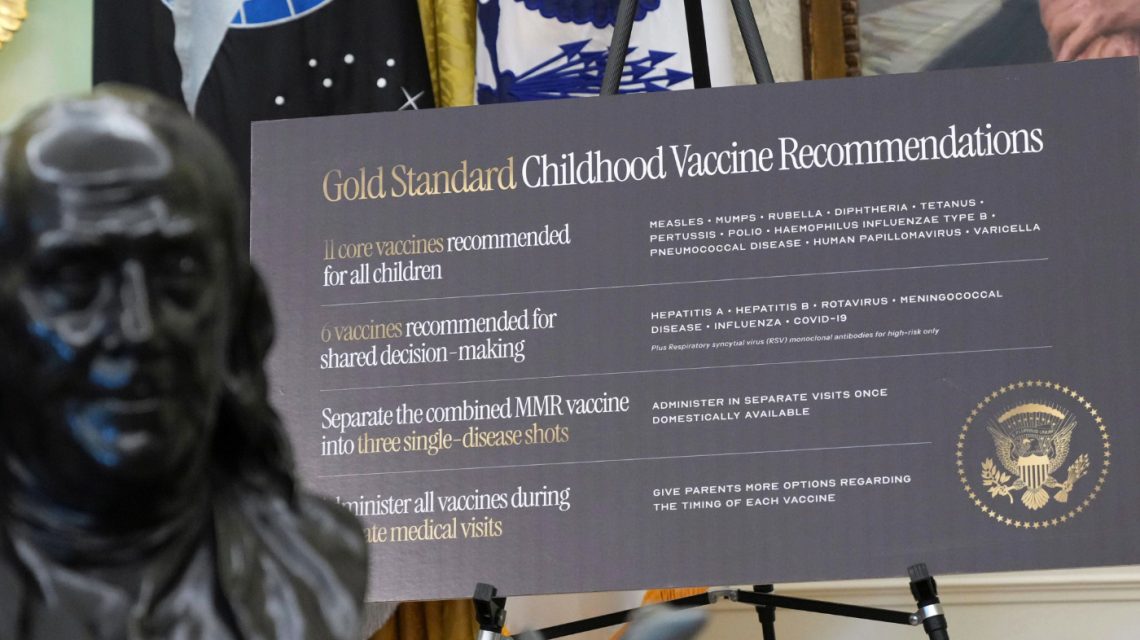
A new executive order signed by President Trump on August 10, 2026, aims to alter the U.S. childhood vaccine schedule. Trump emphasizes aligning the U.S. with other developed nations. Critics argue this initiative risks the health of American families and could worsen the country’s health outcomes.
Healthcare systems worldwide offer valuable lessons for the U.S. Countries like Denmark, Germany, and Japan have systems that often outperform the U.S. on health metrics. They provide universal coverage, are cost-effective, and promote longer, healthier lives. However, the vaccine schedules between these nations and the U.S. are largely comparable.
Denmark’s system, though unusual, serves a relatively small and homogeneous population with baseline conditions different from the U.S. It emphasizes fewer doses, thanks to stronger primary care systems. The U.S. accommodates a more fragmented structure by including more doses.
Instead of merely focusing on vaccine schedules, critical questions pertain to how countries like Denmark manage to provide better care access and outcomes. The key lies in strong investments in universal healthcare and affordability, supported by accessible primary care, cheaper prescriptions, and public health policies. These investments ensure timely diagnoses, effective management of chronic illnesses, and a healthier population overall.
The healthcare success in Denmark stems from long-term strategic policies. Unlike the focused attention on a singular vaccine approach, this success is due to a system delivering consistent, quality care to its citizens.
Many Americans face insurance challenges, high medical costs, and drug prices leading to deferred care. Despite higher spending, health outcomes remain subpar, perpetuating medical debt burdens. Comprehensive learning from foreign systems should involve understanding how they achieve widespread health security and affordable healthcare.
Reginald D. Williams II, senior vice president at the Commonwealth Fund, highlights that genuine health improvements in the U.S. must come from adopting policies that broaden care access and affordability, particularly in primary care, maternal and child health, and preventive care. The lesson lies not only in the vaccine policies but in ensuring health as a universal right rather than a privilege.
 Addressing School Shooting Anxiety: Guidance for Parents
  Adapting School Designs for Enhanced Safety
  Nigeria Confirms Ebola Case Amid Wider African Outbreak
  Dr. Vanessa Kerry Appointed WHO’s Special Envoy for Health Resilience
  Christina Applegate Addresses Misdiagnosis of Multiple Sclerosis on Podcast
  How to Approach End-of-Life Planning with Aging Parents