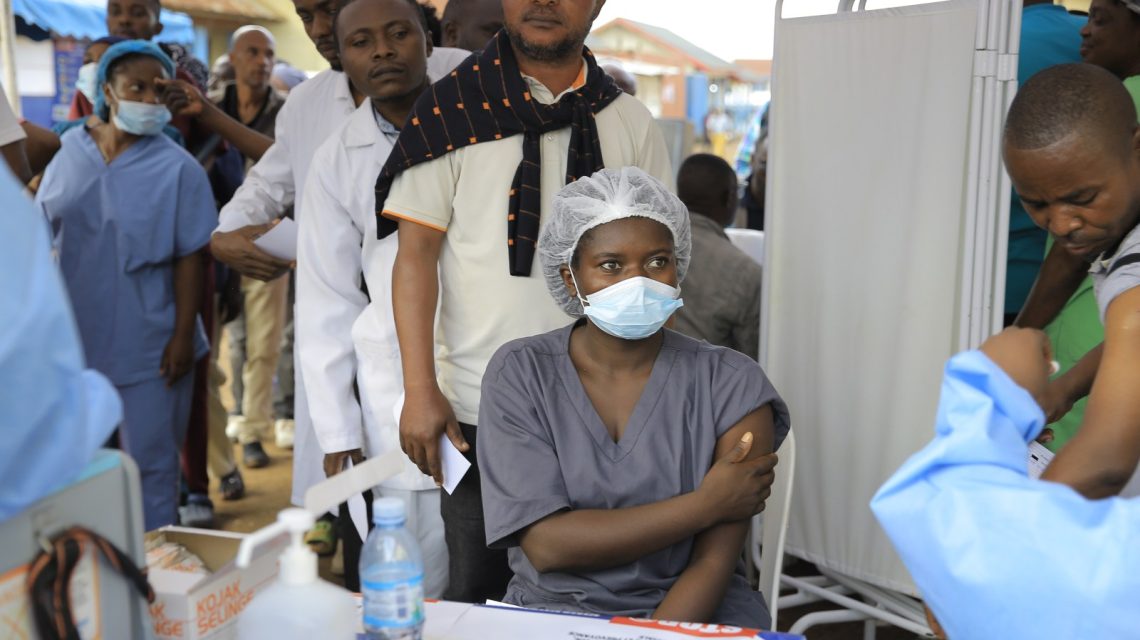
Nigeria has reported an Ebola case in its capital, Abuja. Health officials across Africa are responding to this ongoing outbreak. Nigeria’s patient came from Uganda and tested positive after being admitted to a private hospital in Abuja. The Health Ministry is tracing 44 contacts linked to this patient.
In Kenya, authorities have identified nine Ebola cases. Health officials confirm that all cases trace back to a known cluster with no evidence of further spread. This situation highlights the risk of the virus crossing borders during Africa’s larger ongoing outbreak.
The Democratic Republic of the Congo (DRC) remains the center of this outbreak. The World Health Organization (WHO) has reported 9,066 confirmed cases and 4,381 deaths with a case-fatality rate of 48.3%. This outbreak ranks as the second-largest on record.
Ebola stems from the Bundibugyo virus, confirmed in DRC and Uganda in May. The WHO states no vaccine or specific treatment for Bundibugyo virus exists, although early supportive care can enhance survival chances.
The Centers for Disease Control and Prevention (CDC) has not reported any US cases linked to this outbreak. The CDC considers the possibility of the virus spreading to the United States as low and the risk to the public as minimal.
A WHO spokesperson emphasized the need for continued vigilance, citing Kenya’s imported case as evidence of potential international spread.
WHO has provided Kenya’s Health Ministry with supplies worth around $70,000. This donation includes protective gear, testing kits, and infrared thermometers.
According to Nigeria’s Health Ministry, tracing efforts are underway for the 44 contacts associated with the patient tested positive after arriving from Uganda.
Ebola has a high mortality rate. The WHO suggests an average case-fatality rate of 50%, with rates ranging from 25% to 90% in previous outbreaks. The figures for the DRC outbreak align with a crude fatality rate of 48.3%.
The incubation period for Bundibugyo virus ranges from two to 21 days. Symptoms typically start 8-10 days after exposure. Initial signs include fever, fatigue, and muscle pain, progressing to gastrointestinal issues and organ dysfunction. Direct contact with bodily fluids of the infected or contaminated surfaces spreads the virus.
The DRC outbreak expanded significantly, marking the second-largest recorded outbreak. WHO’s latest report cites 9,066 cases and 4,381 deaths across seven provinces.
The WHO points to persistent transmission risks and underscores the potential for the virus to affect neighboring nations due to international travel.
The current outbreak has crossed borders, notably with cases in Kenya traced to a traveler from the DRC through Uganda. The October 8 WHO assessment rates DRC’s internal risk as very high, with a high risk for neighboring countries and a low global risk.
For the United States, the CDC maintains a low risk estimate. As of the report, the agency noted no cases linked to this outbreak had been reported within the country.
WHO advises against travel and trade restrictions with the affected countries, emphasizing coordinated response efforts and surveillance to manage the outbreak effectively.
 Dr. Vanessa Kerry Appointed WHO’s Special Envoy for Health Resilience
 Christina Applegate Addresses Misdiagnosis of Multiple Sclerosis on Podcast
 How to Approach End-of-Life Planning with Aging Parents
 Nationwide Recall of Compounded GLP-1 Injections
 Trump Launches Initiatives for Women’s Health Research
 Meta’s Settlement and AI’s Impact on Youth