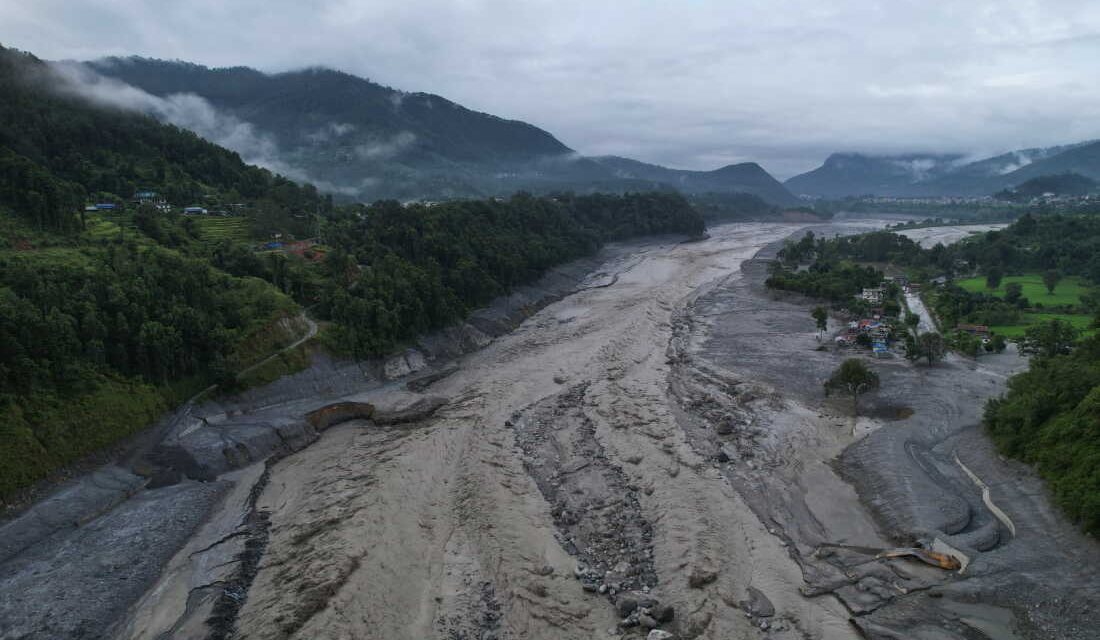
Recent flash floods have washed away a significant part of the Pasang Lhamu highway, severing Rasuwa district from the Nuwakot area in Nepal. This natural disaster has not only displaced locals but also left many pilgrims stranded. The turmoil came as a surprise to many who gathered on a sacred journey to Mount Kailash, a revered site located in Chinese-held Tibet.
Social media platforms have become a hub of frantic appeals from people seeking information about missing loved ones following the floods last Wednesday. Many of those missing were pilgrims on their way to the Himalayan peak, now a hazardous location due to the disaster.
Devastating Impact on Pilgrims
Tragedies during pilgrimages are not unusual. Comparable events have occurred in the past, such as the deadly stampede at the Kumbh Mela in 2025 and the panicked crush during Hajj in 2015. However, a flood with such deadly consequences in the Himalayan region is rare, amplified by climate change concerns that could threaten future pilgrimages in the area.
The number of pilgrims unaccounted for remains uncertain but seems considerable among the 853 foreigners Nepal and China have reported missing. Indian nationals form a large portion of the missing, as confirmed by the Indian government. Vivek Srivastav, an American citizen originally from India, is among them.
Vivek Srivastav, a biotech scientist, was on a pilgrimage to Mt. Kailash, said his brother-in-law Guarav Khare.
Significance of Mt. Kailash
Mt. Kailash holds sacred significance for Hindus, Buddhists, Jains, and Tibetan indigenous religions. Devotees believe it is the abode of Lord Shiva, a key deity in Hinduism. The 33-mile walk around its base is a spiritual journey, deeply embedded in the Hindu imagination, according to historian Hindol Sengupta.
The pilgrimage is notoriously challenging due to the altitude and harsh terrain. Many, including Shubham Kumar, cautioned their family members against undertaking such a difficult trek. Unfortunately, Shubham’s parents-in-law are now among the missing.
Adding to the tragedy, a glacier collapse affected a border crossing into Tibet, leading to harmful flooding and substantial damage, including engulfing the Gyirong Port Immigration Office.
Consequences for Local Tourism and Environmental Concerns
Jagadish Vasudev, leader of the Isha Foundation, which also lost contact with many pilgrims, lamented the loss. Though his organization is known for its disciplined pilgrimages, the catastrophe prompted reflections on the effects of climate change.
According to the International Centre for Integrated Mountain Development (ICIMOD), glaciers in the Himalayas have been losing ice at an accelerated rate, largely due to global warming. Vasudev warned this could jeopardize not only the mountain range but also the essence of Hindu culture and Nepal’s economy.
The Future of Pilgrimages in the Himalayas
Hindol Sengupta noted that increased affluence in India has allowed more people to visit sacred sites, leading to necessary infrastructure developments in the region. While such changes can support local economies, they also pose risks to the delicate mountain ecosystem.
The crisis raised questions about sustainable tourism efforts, which could help manage the pressures while respecting the sacred nature of these sites. Ensuring that paths to these revered locations remain safely accessible for pilgrims, without detrimental impacts, is crucial.
Efforts to preserve the natural and cultural integrity of pilgrimage sites are essential, along with mitigating climate change effects to prevent such tragedies in the future.
 U.S.-Venezuela Oil Deal Details Announced Amid Criticism
  Shanghai Cooperation Organization Summit Highlights Strategic Alliances
  Dolly Parton’s Legacy Celebrated with Dollyfest Event
  Concerns Over Military Resource Strain in the Iran Conflict
  President Trump Addresses Military Action Against Iran
  Wildfire Leaves Grand Canyon Trails Vulnerable to Flooding