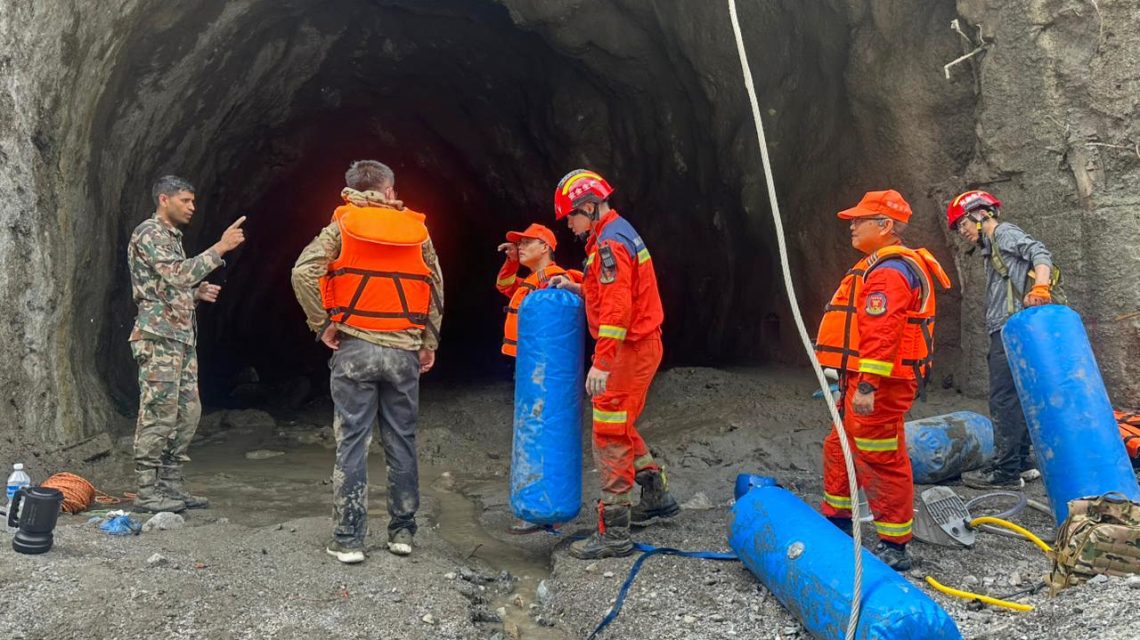
A dramatic photo provided by the Nepal Army shows soldiers conducting a rescue operation at a hydropower project site in Upper Trishuli, Nepal.
Filmmaker and drone pilot Manish Maharjan crossed the border from China’s Tibet into Nepal’s Rasuwagadhi, located near the epicenter of the previous week’s catastrophic flooding, just two days before the disaster struck. Upon returning home, he discovered his professional skills were crucial for aiding rescue efforts along a route he knew well from his work travels.
Authorities have mobilized numerous rescue and relief teams. Maharjan joined the Nepal Army’s efforts a day after flash floods began, resulting in over 1,000 fatalities and thousands missing in Nepal and China. Using thermal drones, Maharjan assisted teams in finding about 900 missing workers from 12 hydropower projects engulfed in mud and debris. Around 500 of these individuals might be trapped inside power plant tunnels.
Drones played a pivotal role in locating stranded people on hillsides and isolated places, such as caves. Maharjan explained, “We used microphone speakers to call out to them. In some places, we even played songs and then waited for a response. That worked in a few cases and helped us locate people.” While drones helped in open areas, challenges remained with tunnels. “Tunnels were filled with mud like toothpaste in a tube,” Maharjan stated. “There was no hollow or empty space inside.”
The Aug. 26 flash floods began following a glacial collapse in the Himalayan region. Scientists analyzed satellite images and concluded that the bedrock under a glacier had collapsed, resulting in a magnitude 5.2 seismic event. The incident triggered a surge of rocks and melted water, which intensified the rivers in valleys below, causing vast destruction to infrastructure, including hydropower plants, roads, buildings, and bridges across Tibet and Nepal.
Some workers managed to alert others when the disaster occurred. However, it remains uncertain if rescuers have since contacted the trapped workers. As time progresses, finding the missing becomes increasingly challenging. Experts highlight the critical first 72 hours where survival chances reduce without access to clean water and breathable air.
At the Rasuwagadhi hydropower project, Maharjan sent drones to explore the tunnel thoroughly but found no signs of life. “We checked repeatedly, but it was filled with mud and debris. The force of the flood was unimaginable,” Maharjan commented. Tunnel searches face difficulties due to their complex access and lack of any empty space. “I can only fly drones in tunnels that are long and straight,” he remarked. “Bends, turns, or zigzags make it much harder to operate and search effectively.”
 Judge’s Decision on 9/11 Case Sparks Criticism and Debate Over Domestic Extremism
  Teen Lifeguard Ryder Williams Rescues Child Amidst Intense Surf
 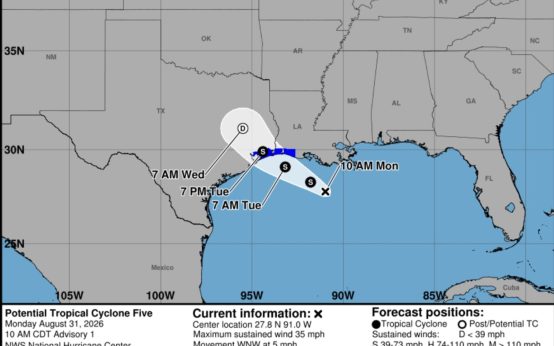 Heavy Rain and Flash Flooding Threaten Gulf Coast
 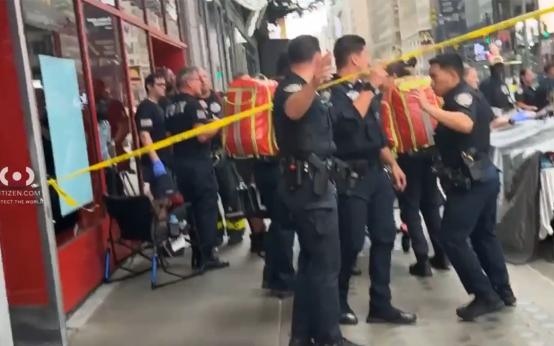 Police Shoot Knife-Wielding Woman in Times Square After She Stabs Two People
  U.S. Senate Candidate Abdul El-Sayed Responds to Fireworks Criticism
 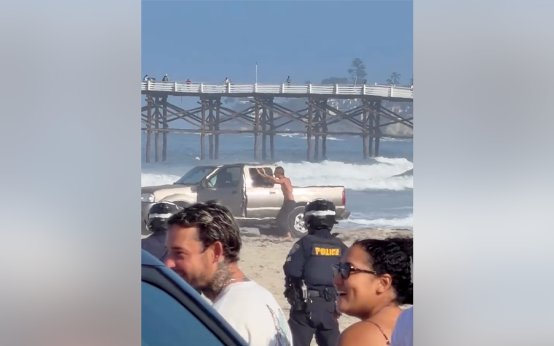 Chaotic Beach Arrest Follows Reckless Driving Pursuit in San Diego