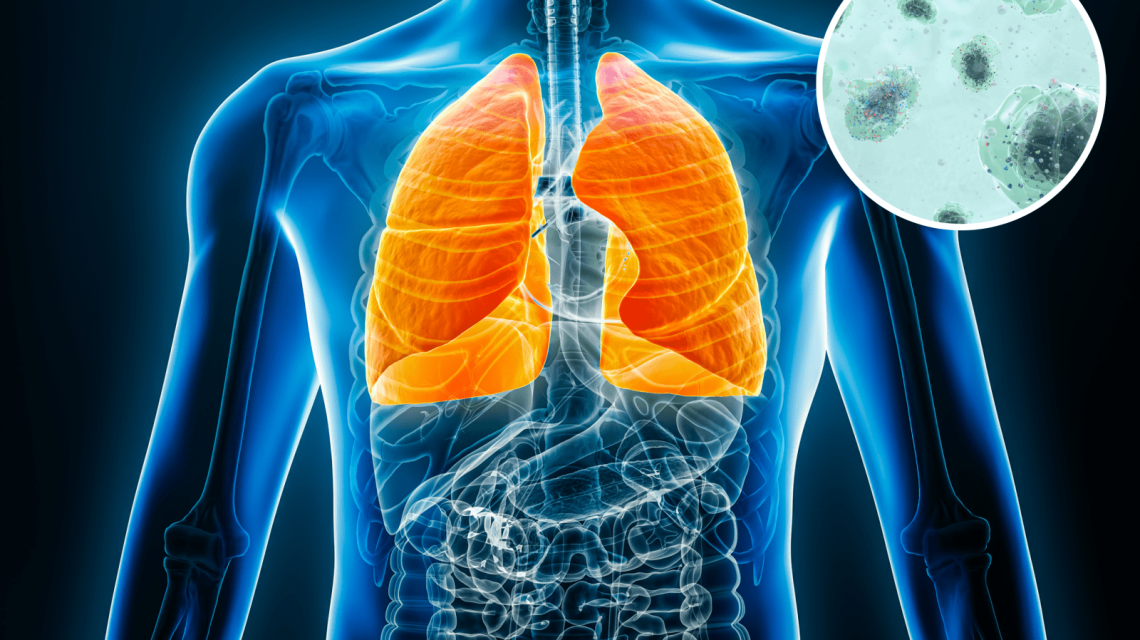
Microplastics have become a significant concern in modern life. Yet their impact once inhaled remains largely uncharted. Recent research involving patients with lung problems has unveiled noteworthy connections between microplastics and lung cancer.
The findings, to be presented at the European Respiratory Society (ERS) Congress in Barcelona, Spain, suggest that microplastics are making their way into the human body through the air we breathe. This study has raised questions about the potential role of microplastics in lung disease.
Study Insights and Expert Opinions
Dr. Ilias Dimeas from University College Dublin School of Medicine, along with the University of Thessaly in Greece, shared insights with Newsweek. He noted the possibility that cancerous lungs might simply trap or retain microplastics more effectively, rather than microplastics causing cancer development.
This observational study shows an association between a greater microplastic burden and lung malignancy, even after adjustment for smoking exposure, but it cannot establish causation or determine which came first.
Dimeas highlighted the necessity of further longitudinal and mechanistic studies to pinpoint these connections. Although the study doesn’t prove that microplastics cause cancer, the potential link cannot be dismissed.
Knowledge Gaps and Ongoing Research
Researchers still lack comprehensive knowledge about the fate of microplastics once inside the body. Dimeas emphasized the unknowns surrounding normal background levels in lungs, individual variations, and the impact of these particles on disease.
If we are breathing these particles in every day, we need to understand where they end up and whether they could be linked to disease.
How the Study Was Conducted
The research involved 100 individuals undergoing bronchoscopy at University Hospital of Larissa in Greece. This procedure uses a thin, flexible tube with a camera to examine airways and collect samples.
A lung-wash sample was provided by each patient, involving saline solution to gather cells and other material. Half of the participants also offered a small lung tissue sample. Analysis of these samples revealed the presence and types of microplastics.
Out of 100 participants, 50 were diagnosed with lung cancer while the others were not. Researchers discovered 232 microplastic particles across the samples. Importantly, 70% of the patients had detectable microplastics in at least one sample.
Key Observations and Findings
Analysis indicated that patients with lung cancer were more likely to harbor detectable microplastics, presenting a higher microplastic burden compared to those without cancer. In lung-wash samples, 66% of cancer patients had detectable microplastics, versus 46% of non-cancer patients.
An intriguing pattern emerged: Patients with higher microplastic levels in lung-wash samples often had lower levels in tissue samples, and vice versa. This suggests uneven distribution of microplastics within the lungs.
Polypropylene and polyethylene were the most prevalent plastics, materials commonly found in products like packaging and household items.
Future Directions and Further Research
Dimeas remarked that the results suggest inhaled microplastics are present in human lungs more often than previously assumed. This underscores the potential health benefits of reducing environmental plastic pollution.
While the study doesn’t establish cause and effect, its findings necessitate further inquiry. Researchers are now conducting laboratory studies to better understand plastic interactions with lung cells. They are also examining samples from patients with chronic lung diseases to explore microplastics’ potential role in lung scarring and disease progression.
Reference: Dimeas, I. et al. (2026) Patients diagnosed with lung cancer found to have more microplastic in their lungs. European Respiratory Society. Available at: EurekAlert news release (Accessed: 4 September 2026)
 Efforts Intensify to Ban Child Marriage in the U.S. and Globally
  Voice Disorders Linked to Higher Dementia Risk in Study
  Protecting Yourself from MyChart Phishing Scams
  GLP-1 Drugs and the Potential for Life Span Extension
  Improving Access to Preventive Care in Alaska
  Starting Statins Soon After Diabetes Diagnosis May Lower Dementia Risk