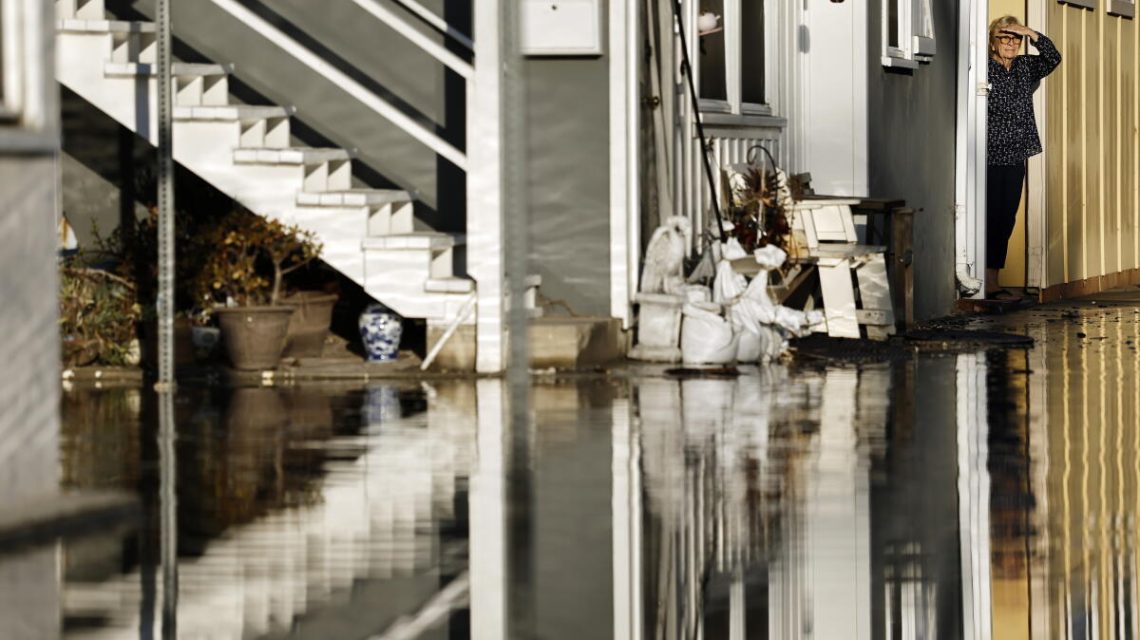
Coastal regions from Newport Beach to Long Beach faced significant flooding due to an unusual combination of environmental factors. This highlights the challenges that California expects during this predicted ‘super’ El Niño winter.
Factors Contributing to the Flooding
This week’s flooding was severe. Scientists attribute it to Tropical Storm Rachel, high tides, a record-hot ocean, and El Niño-related waves impacting coastal regions. Jonathan Warrick of the U.S. Geological Survey noted that this mix of factors is unprecedented, suggesting similar challenges may occur with winter storms and king tides during the holiday season.
The storm’s center was expected to hit northern Baja California on a Saturday night. Sunday morning posed the highest flooding risks for Orange County and San Diego due to the combination of swells, onshore winds, and high tides. High tide times in La Jolla and Newport Beach further highlighted the risk.
Potential Future Impact
Warrick stated that this week’s events could foreshadow future patterns, especially with rising sea levels over the coming decades. The highest tides of the year typically occur around the solstices, with upcoming significant tides expected on Thanksgiving Day, Christmas Eve, and January 22. These tides, coupled with strong winter storms, could lead to coastal erosion and more flooding.
Notably large tides occur roughly every 18.6 years and every 4.4 years, adding to potential risks. Mark Merrifield from Scripps Institution of Oceanography predicts significant king tides this Christmas due to El Niño influences.
El Niño’s History and Impact
El Niño is characterized by abnormal warmth in the Pacific Ocean, typically bringing more rain to Southern California. Two historic El Niños caused significant coastal damage. Another didn’t cause extra rain but led to unprecedented coastal erosion.
The recent flooding in Orange County stemmed from Tropical Storm Rachel’s swells and an El Niño-fueled Kelvin wave moving slowly from Peru. This wave raises sea levels by 6 to 12 inches, and another Kelvin wave is approaching from Mexico.
Community Response and Past Incidents
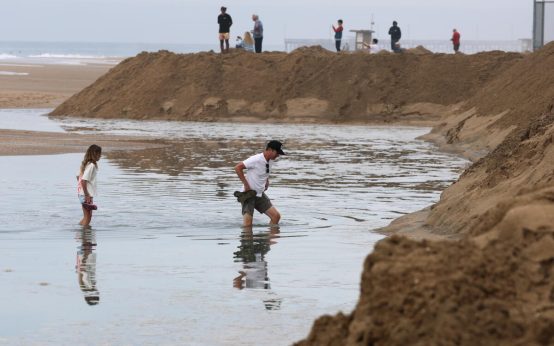
Local officials prepared for Rachel by using sand berms and sandbags. Los Angeles Harbor recorded high tide levels, reaching 7.7 feet, which was above predictions.
Historically, only two tropical storms have impacted California at tropical-storm strength. One in 1939, called El Cordonazo, caused 45 deaths. Another in 1997, called Nora, had minor effects on California but severe impacts elsewhere.
This current season’s El Niño is expected to strengthen. The National Oceanic and Atmospheric Administration forecasts a near certainty of a ‘very strong’ El Niño, with an 83% chance of it being the strongest recorded since 1950.
 Storm Updates: Isaias and Pacific Developments
  Supreme Court Debate on Climate Change Lawsuits Poses Economic Risks
  Southern California Braces as Tropical Storm Rachel Approaches
  Hurricane Isaias Causes Widespread Disruption Along Gulf Coast
  Hurricane Isaias Brings Devastation and Uncertainty to the Southeast
  Hurricane Developments: Simon’s Intensification and Isaias’ Threat