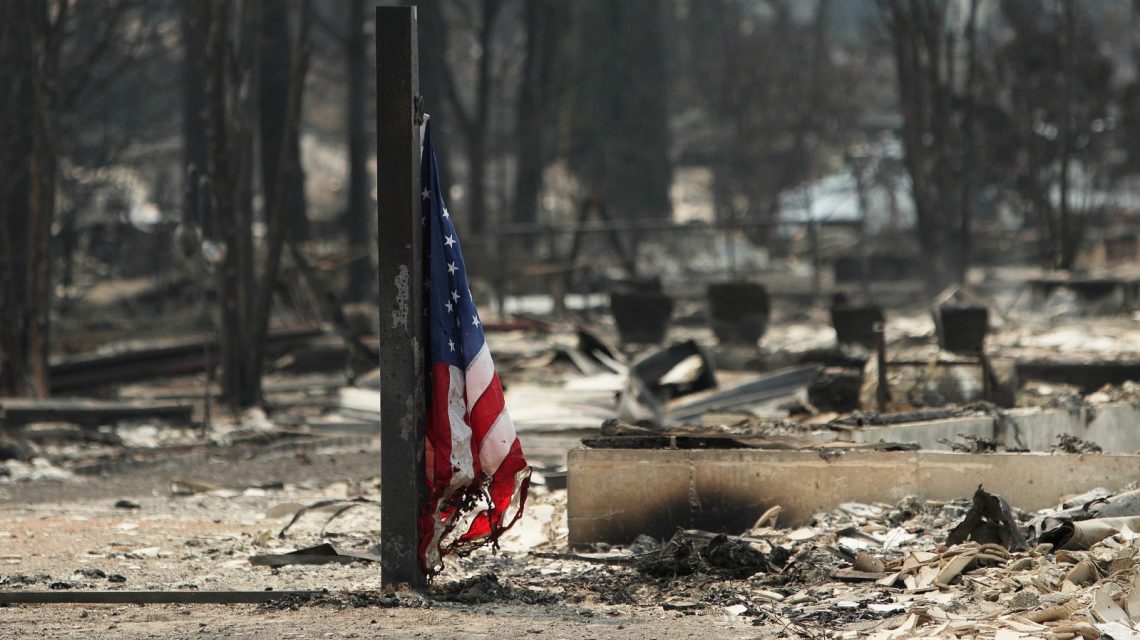
Data from the National Interagency Fire Center (NIFC) reveals that over 8.3 million acres have been scorched nationwide this year. This makes it the most devastating wildfire season by acreage in at least a decade. Fire officials have responded to 53,030 wildfires throughout the country. Despite some improvement in weather conditions, large fires continue to blaze across the Western states.
The surge in fires led federal officials to elevate the national preparedness level to its peak setting during much of the summer. However, they reduced it to Level 4 on September 4 as conditions improved in certain areas. The NIFC warns that even with cooler weather arriving in parts of the Pacific Northwest, late summer and fall are still dangerous periods. Vegetation remains exceptionally dry across many regions. Fire officials urge Americans to remain cautious of ignition sources such as vehicles, equipment, and campfires.
Oregon has experienced the highest number of acres burned this year, with 1,199,105 acres, followed by Washington state at 398,064 acres. This year’s fire scale significantly exceeds figures from previous years. By late August, more than 7.7 million acres had already burned, compared to about 4 million acres during the same period in 2025.
Data on Wildfire Activity Over the Last Decade
Between January 1 and September 5 of each year from 2016 through 2026, wildfire activity has fluctuated in terms of the number of fires and the total acreage burned. The 2026 season recorded the highest acreage burned, with 8,307,707 acres across 53,030 fires. The 2017 season followed closely, with 7,925,998 acres affected by 47,298 fires. In contrast, the 2023 season saw the least impact, with 2,096,906 acres burned across 40,444 fires.
Current Large Fires in the U.S.
As of September 5, firefighters worked to contain 78 large fires across the nation. Nearly 17,812 firefighters and support personnel are assigned to incidents nationwide. The largest concentrations of active fires are in Washington with 13, Montana also with 13, Idaho with 12, and Oregon with 9.
Among the largest active fires:
- Big Grass Fire, Oregon: 578,637 acres, 94% contained.
- Crosswhite Fire, Oregon: 342,923 acres, 92% contained.
- Coleman Creek Fire, Oregon: 308,863 acres, 99% contained.
- Little Giant Fire, Washington: 170,784 acres, 81% contained.
- Sinlahekin Fire, Washington: 166,106 acres, 44% contained.
The Pacific Northwest remains a hotspot of wildfire activity, though cooler temperatures and increased moisture have begun to reduce large fire potential in parts of Washington, Oregon, and Northern California.
Officials have issued warnings as extremely dry fuels are widespread, and new fire starts are possible across several regions. The NIFC states, “Late summer and fall are characterized by extremely dry fuels in many parts of the country, and several geographic areas continue to fight fires that present challenges to containment.” They urge continued vigilance against ignition sources.
Ahead of Labor Day, the agency advised travelers to ensure vehicles are in good condition and to secure anything that might drag and produce sparks. For camping trips, they noted the importance of practicing campfire and barbeque safety, meticulously managing embers and ensuring fires are completely extinguished.
 Trump Orders Review of Gray Wolf Protections Amid Rancher Concerns
  Beachgoers to Benefit from Malibu Land Donation in Coastal Commission Dispute
  Nepal’s Flood Crisis: Health and Mental Challenges Remain
  Public Concerns on Climate Change, Energy, and Animal Welfare
  California’s EV Transition Amid Federal Challenges
  A Bipartisan Effort to Modernize U.S. Recycling