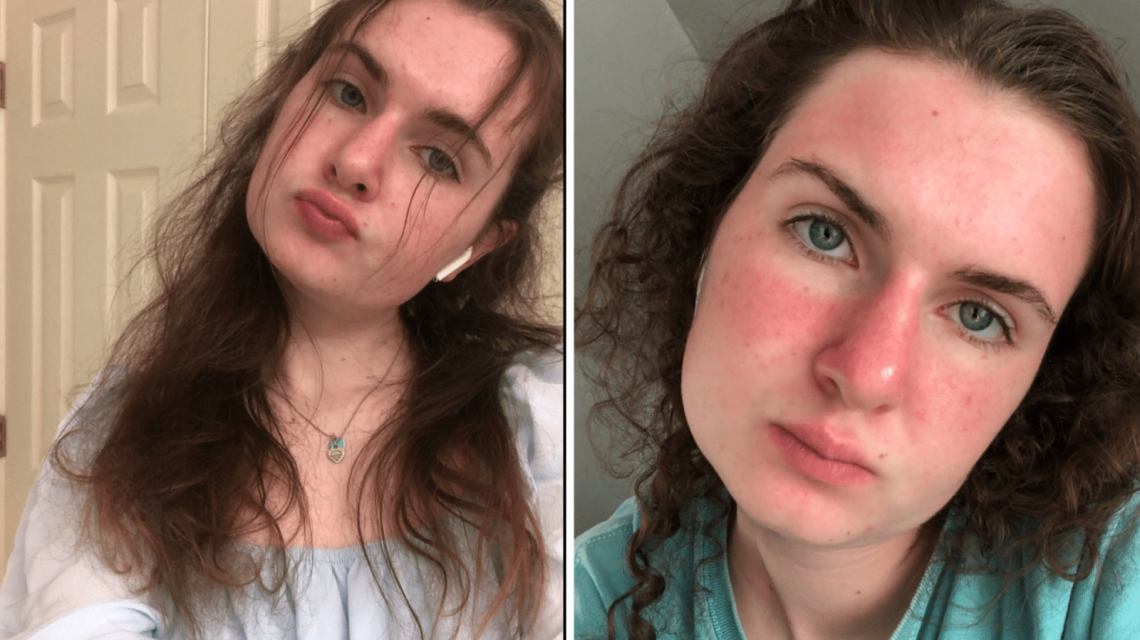
After my junior year of high school, I looked forward to spending three weeks at summer camp. The camp offered many activities, yet I noticed significant changes: excessive sweating, sunburn despite using sunscreen, increased appetite, and acne. As the summer transitioned into fall, my symptoms worsened. I stopped getting my periods, suffered from insomnia, developed anxiety, bruised easily, experienced migraines, and gained weight. With college applications, SATs, and a part-time job, I blamed stress for these changes.
The impact on my mental health was severe. The mirror reflected someone unfamiliar as my weight increased and face rounded. I withdrew socially, feeling unattractive. Seeking medical help became essential after missing my period a second time.
Scans Showed the Worst-Case Scenario
Concerned by my symptoms, the pediatrician suspected Cushing’s Syndrome—a condition marked by excess cortisol. Blood tests, urine analysis, and saliva tests confirmed high cortisol levels. We needed to identify the source. Most Cushing’s cases involve benign pituitary tumors, prompting further investigations, including a brain MRI and a consultation with an endocrinologist, all amidst applying to NYU.
Disheartening results followed. Despite a negative brain MRI, an abdominal ultrasound uncovered a 9-centimeter tumor. Transferred to another hospital, further scans brought devastating news: an 11-centimeter tumor had metastasized to my liver and lungs, confirming stage 4 cancer. Diagnosed with Cushing’s Syndrome on November 1, 2023, I faced another blow with an adrenocortical carcinoma diagnosis on November 28.
The shock was profound, leaving me emotionally numb. Facing an aggressive cancer is daunting, especially when such diagnoses happen to one in a million.
Another Scare Just Around the Corner
Seeking top surgical expertise led us to a surgeon at Memorial Sloan Kettering, New York. A nine-hour operation removed my right adrenal gland, major tumor, part of my liver, and diaphragm, leaving clean abdominal margins. Yet, lung issues persisted.
Chemotherapy followed. The harsh treatment tested my resolve, but I persevered, completing senior year remotely and securing admission to NYU. July 2024 marked the end of chemotherapy and a brief cancer-free declaration. Hospitalization due to gastritis overshadowed any celebrations.
By fall 2024, I began recovering and socializing, deferring NYU admission temporarily. But March 2025 brought renewed challenges following a routine lung scan. Immunotherapy offered short-term relief, allowing class attendance at NYU in Washington, DC. Yet, another recurrence led to surgery to remove six lung tumors. Radiation for an inoperable tumor near my heart complicated my education and health further.
Severe breathing challenges due to lung fluid and radiation scarring interrupted my schooling. I am now participating in an NIH clinical trial with infusions every three weeks and attending NYU as a sophomore.
Living With Cancer to the Best of My Ability
Chemo-induced peripheral neuropathy significantly affects my daily life. Loss of sensation hinders running, jumping, driving, and walking; finding joy takes extra effort. Despite these challenges, life persists. I cherish moments with friends, family, and good food.
Cancer has expanded my perspective, introducing new people and experiences. I urge others to heed their bodies’ signals and seek help when something feels amiss. Early intervention is crucial. Living happily, even with a daunting diagnosis, is achievable.
Virginia Hooper, known as Ginny, is from Northern Virginia. Her travels between Washington and Maryland for medical care go alongside her presence on social media platforms (@_ginnyhooper_ on Instagram and @ginnyhoop on TikTok), where she shares her journey to educate and inspire.
 Navigating the Challenges of Genetic Testing in IVF
  The Rise of Copper Peptides in Skincare: Benefits and Risks
  Uncovering a Family Legacy at Sharswood
  Understanding Postpartum Psychosis: A Personal Story and Broader Perspective
  Gander’s 9/11 Solidarity: A Community’s Unexpected Heroism
  Benefits of Aging in Place with Retirement Home Care Programs