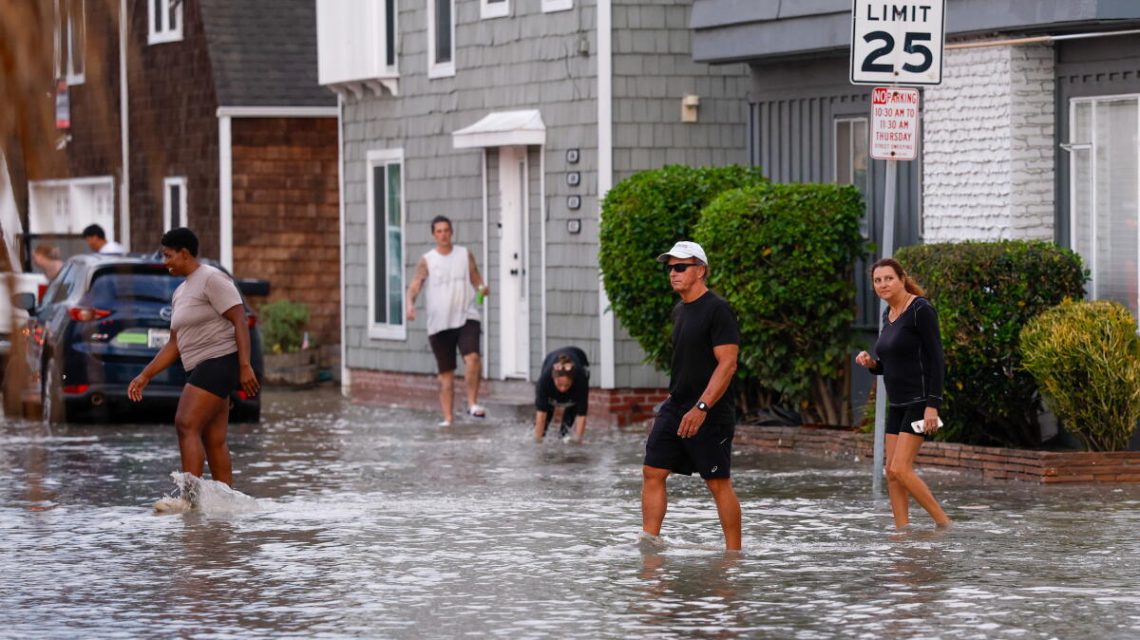
Southern California faces more intense weather in the coming days, characterized by extreme heat and high humidity. This follows a dramatic weekend of coastal flooding, rain, and dangerously high surf caused by the remnants of Tropical Storm Marie. An increase in temperature is anticipated by Tuesday, with predictions of heat rising 10 to 20 degrees above normal, even affecting coastal regions. Downtown Los Angeles and Long Beach could reach highs between 96 and 98 degrees, while inland areas and valleys might see temperatures exceeding 105 degrees.
Nighttime will bring little relief. Low temperatures on Tuesday evening may remain in the mid-70s across the Los Angeles Basin. Weather forecasters suggest that Wednesday may be even warmer. David Gomberg, lead meteorologist at the National Weather Service in Los Angeles-Oxnard, highlighted that moisture from Marie, combined with the heat, will increase discomfort and heat stress. The National Weather Service has issued a heat advisory for Wednesday and Thursday, with the possibility of heightened warnings if conditions worsen.
“If the clouds don’t materialize, Wednesday could pose a real challenge, with temperatures potentially rising further,” Gomberg warned, urging residents to stay hydrated, remain in air-conditioned environments, and check on vulnerable relatives and neighbors.
High surf and coastal flooding advisories remain in effect until 11 p.m. Tuesday. Weather officials caution against venturing near the ocean due to turbulent waters caused by Tropical Storm Marie. Rip currents and massive surf can overturn small boats, topple individuals from jetties, and drag swimmers into the sea.
“Inexperienced individuals should avoid the surf zone. Waves might appear moderate but can suddenly grow larger and more dangerous,” Gomberg advised. “The rip currents have been numerous and severe in recent days, posing life-threatening risks.”
Over the weekend, Zuma Beach in Malibu experienced waves reaching 12 feet. Emergency responders dealt with major beach closures and significant flooding along the coast. Particularly affected were south-facing beaches in Long Beach and Malibu, which experienced high swells, exceptionally high tides, and storm-enhanced waves. Dramatic footage from Long Beach shows massive waves striking the shore, damaging boardwalks, and eroding sand berms built ahead of the storm. Residents reported power outages, flooded garages, and sand-clogged drains.
“Power shortages have led to people being shocked. We’re turning off all power. Tiles are being ripped from floors, and furniture is being displaced,” Long Beach resident Cole Hill shared with ABC-7 news.
While tropical storms are not uncommon in Southern California this time of year, the combination of powerful waves and exceptionally high tides makes the recent flooding notable. As water expands with heat, record-breaking ocean temperatures off the California coast—alongside a brewing “super” El Niño—have resulted in elevated tide levels.
Typically, high tides in this region vary between 4 and 5 feet. However, tides have recently surged to between 6 and 6.5 feet. On Sunday, high tide reached 6.7 feet, and forecasts predict a peak of up to 7.2 feet by Tuesday evening.
“We’ve exceeded predicted tide levels, leading to a surge that pushes water further inland,” Gomberg explained.
Unexpected rainfall compounded drainage problems over the weekend, with some areas of Los Angeles County recording over 1.25 inches of rain on Sunday. Public health officials across the county have advised residents to avoid ocean swimming through Wednesday due to potential bacteria spikes caused by rain.
Los Angeles County’s geography facilitates water runoff toward the sea, collecting debris and pollutants on its journey. Unlike sewage, stormwater, mixed with other waste, drains directly into the ocean without filtration, prompting recommendations to wait at least 72 hours after rain before ocean visits. Some experts suggest waiting up to five days, especially near regions where rivers or outfalls meet the sea.
 El Niño’s Impact on California and the Southeast: What to Expect
  Hurricane Lowell Approaches Hawaii with Intense Winds and Rainfall
  Arizona’s Heat Crisis and the Risks for Mobile Home Residents
  Nation Faces Unprecedented Wildfire Destruction in Recent Years
  Trump Orders Review of Gray Wolf Protections Amid Rancher Concerns
  Beachgoers to Benefit from Malibu Land Donation in Coastal Commission Dispute