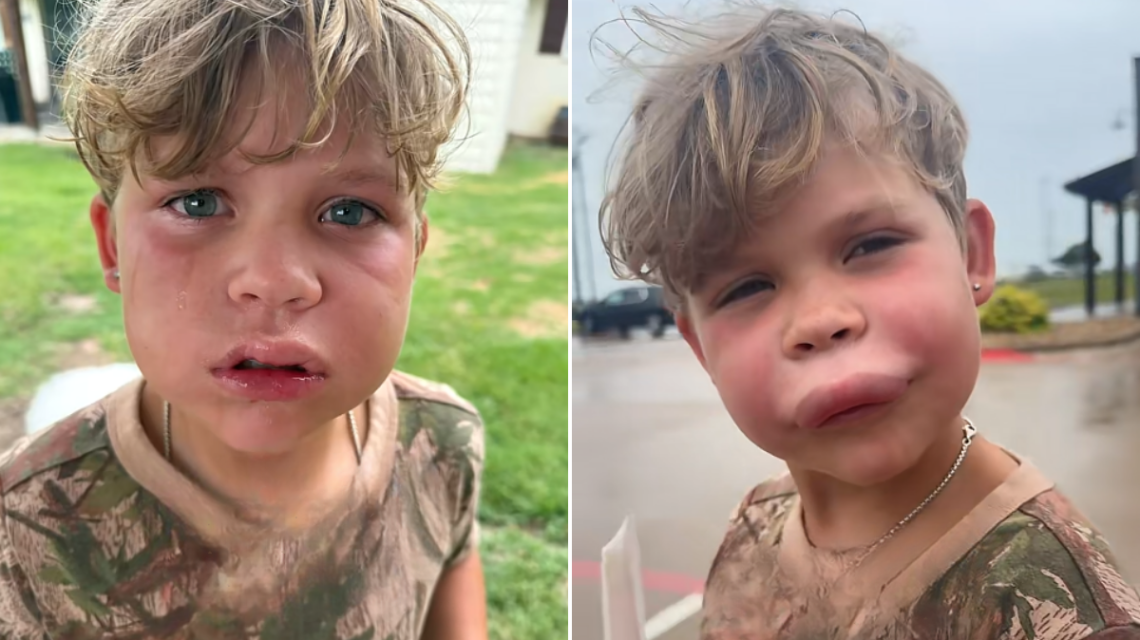
Bailey Cary wasn’t initially worried when her son Oliver got stung by a wasp. Oliver was returning from a fishing trip at a nearby dock when he encountered a wasp. He suspected that he might have disturbed a nest on the dock or possibly brushed against one in a tree during his walk.
“Oliver rushed in saying a wasp had stung him,” Cary explained. “I was about to leave for an appointment, so I gave him Benadryl and an ice pack.” Most people experience a wasp sting at some point. Although painful, it’s usually a common occurrence.
“Even with that dose, his face started to swell quickly,” Cary said. “He told me he thought something might be wrong.”
Oliver was among the small percentage of individuals who have a severe reaction to stings. The CDC estimates that 0.5% to 3% of adults in the U.S. are at risk of a systemic allergic reaction from such stings. Meanwhile, around 10% experience large local reactions, showing significant swelling. Severe allergic reactions, including hives, breathing problems, low blood pressure, and anaphylaxis, are rare, occurring in 0.3% to 3% of adults. Children are even less likely to experience these reactions.
Cary noticed the significant reaction in Oliver, but she remained calm. “His lip had become very swollen,” she recalled. “I tried to downplay the situation on our way to urgent care.” At the clinic, Oliver received a steroid shot and showed quick improvement. His doctor advised further testing with an allergist.
“He’s never had an allergic reaction before,” Cary stated. “This was unexpected for us.”
Due to Cary’s swift response, Oliver was not in any serious danger. His story highlights the risks of insect stings for some individuals. From 2011 to 2021, the CDC documented 788 deaths from hornet, wasp, and bee stings in the U.S., averaging 72 deaths annually. Most fatal cases are due to severe allergic reactions, not the venom’s direct toxicity.
Cary now advises other parents to stay alert. “I hope sharing my story helps others recognize the dangers of unknown allergies,” she emphasized. “I assumed allergies to wasps and bees were genetic.”
 Nocturia and Its Impact on Sleep and Health
  Tackle HIV: Gareth Thomas and Brazilian Advocates Break Barriers
  CDC Declares End to Cyclospora Outbreak Linked to Iceberg Lettuce
  Kate Ping’s Journey with Ovarian Cancer
  Challenges Facing Disability Health Coverage for Young Cancer Survivor
  Rethinking Dementia Prevention: The Need for Broader Strategies