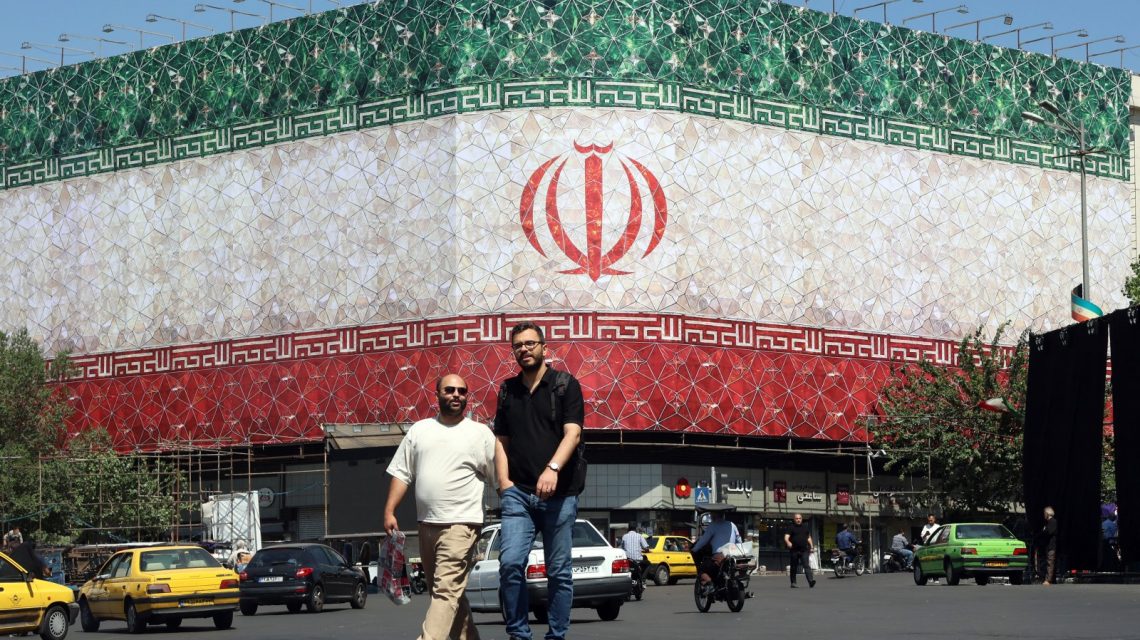
President Donald Trump announced a memorandum of understanding (MOU) aimed at unblocking the Strait of Hormuz and concluding the Iran War. The announcement sparked mixed reactions, drawing applause from some and criticism from others. A Democratic Senator labeled the agreement a surrender. The opening of the Strait has garnered praise, but concerns remain among key stakeholders.
Israel has been notably critical. Before Trump’s announcement, Yediot Aharonot, a Hebrew newspaper, described the deal as unfavorable. Israel, involved in conflicts with Iran over the past year, was not part of the negotiations. The MOU reportedly proposes lifting the U.S. blockade on Iranian ports, with future talks planned concerning Tehran’s nuclear program and sanctions.
“We cannot make any credible or reliable judgment about its potential implications,” said Hamidreza Azizi, an Iran expert at SWP Berlin. Azizi highlighted the lack of clarity concerning the MOU’s provisions, leaving room for misinterpretations.
Israel’s Criticism
Israeli Finance Minister Bezalel Smotrich criticized the MOU, calling it harmful to Israel and the broader international community. He vowed to continue efforts to challenge the regime in Tehran. Yashar party leader Gadi Eisenkot expressed discontent with the emerging deal, contrasting it with Prime Minister Netanyahu’s past promises.
In the U.S., Democratic Senator Chris Murphy objected to the MOU as a capitulation to Iran. He noted Iran’s minimal concession of reopening the already accessible Strait. Murphy warned against releasing frozen Iranian funds, which might diminish U.S. influence in future negotiations. Nate Swanson, director of the Iran Strategy Project, emphasized the MOU’s temporary nature unless a swift follow-on deal is formalized.
The MOU involves a 14-point plan expected to reduce immediate conflict and boost maritime traffic. However, it does not yet address the mechanics of the Strait of Hormuz or details regarding nuclear negotiations and financial terms. Swanson pointed out domestic barriers that might hinder further progress.
Iran’s Supreme Leader Mojtaba Khamenei may prefer limited agreements, given past conflicts with the U.S. Swanson remarked that any agreement overly favoring Iran might face strong opposition in the U.S. and Israel.
Fate of the Strait of Hormuz
Both Trump and Iran’s Deputy Foreign Affairs Minister Kazem Gharibabadi indicated an upcoming signing event in Switzerland. Still, the status of the Strait of Hormuz remains uncertain. Control of this strategic waterway is crucial for Tehran. Reports suggest Iran and Oman will assert sovereignty over the strait. Iran might allow toll-free passage for a limited period but will charge for auxiliary services thereafter, using revenues for economic initiatives.
According to the Institute for the Study of War, Iran’s management of the strait marks a strategic achievement. The current agreement includes temporary reversals of tolls, but future negotiations will determine long-term control. Azizi warned of potential political fallout if negotiators fail to reach a comprehensive agreement.
The complexity of the geographical setting enables Iran to disrupt shipping access if negotiations falter. This indicates the negotiation terms are reversible at Iran’s discretion.
Israeli Occupation in Lebanon
Amid the unfolding diplomatic landscape, Israel announced its intent to remain in Lebanon, further complicating the regional tensions. Hezbollah’s support for Iran brought Lebanon into the conflict, prompting Israeli military actions. Israeli officials declared their territory claims in Lebanon as unaffected by the MOU. Defense Minister Israel Katz affirmed the indefinite Israeli military stay in Lebanon, Syria, and Gaza.
Israel’s military presence in Lebanon has resulted in significant destruction and displacement. Lebanese officials voiced hope for a resolution that ends hostilities with Hezbollah, but Israeli leadership remains steadfast in maintaining their strategic positions.
 Where is Austin Tice?
  Trump’s Speech Targets Iran’s Nuclear Ambitions at U.N.
  U.S., Denmark, and Greenland Sign New Security Agreement
  U.S. Military Aircraft Crash at Spangdahlem Air Base
  Marco Rubio Criticizes NATO’s Role Amid Middle East Conflict
  Israeli Prime Minister’s Visit to the U.N. Amid Controversy