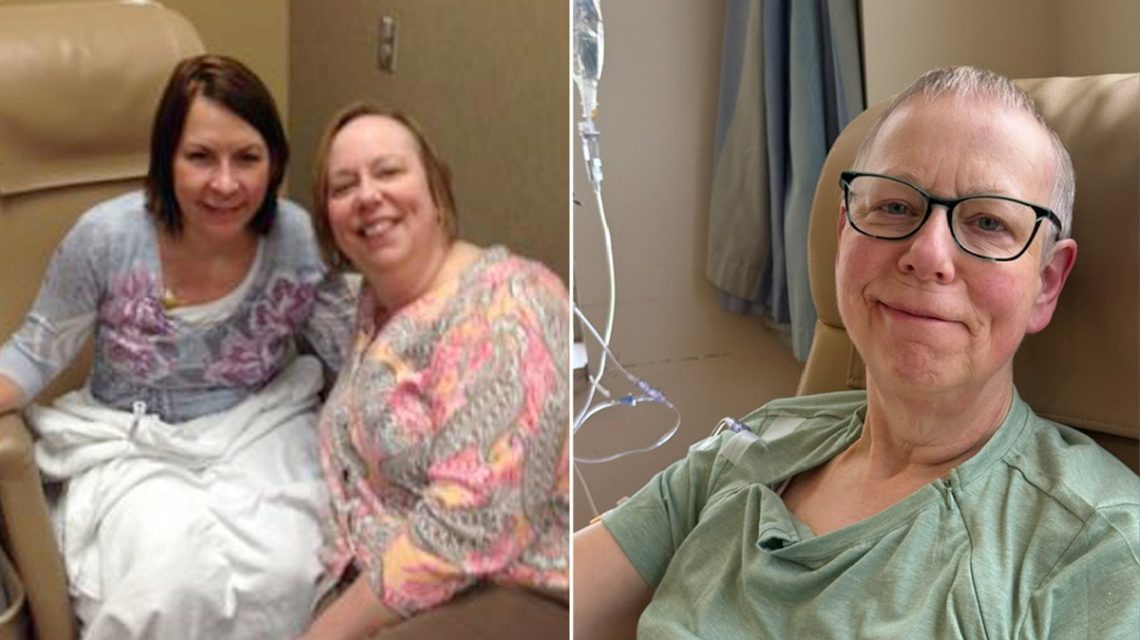
A Minnesota woman experienced firsthand the impact of ovarian cancer when she received a diagnosis less than a year after her best friend passed away from the same disease.
Becky Drexler was present for her friend Connie Dahl when she was diagnosed with stage 4 ovarian cancer in April 2015. Dahl fought bravely but died in September 2017.
During Dahl’s illness, Drexler volunteered with the Minnesota Ovarian Cancer Alliance (MOCA). After retiring in 2017, she planned to travel and spend more time with loved ones. These plans changed with her own diagnosis in July 2018.
“I was diagnosed with stage 3B high-grade serous ovarian cancer,” Drexler, now 65, recounted.
Drexler initially dismissed symptoms, believing they were signs of aging. Her symptoms included frequent urination, constipation, bloating, and hip pain. Encouraged by symbolic signs from her friend, she visited a doctor.
On her 57th birthday, a CT scan revealed masses on both ovaries, leading to surgery and chemotherapy treatment from September 2018 to January 2019. She found strength in her support network, including her friend who, in spirit, joined her journey.
In August 2020, Drexler faced a cancer recurrence. After surgery, she discussed treatment options with her oncologist. Eventually, she opted for targeted radiation, with chemotherapy as a backup plan. Upon completing radiation in January 2021, she had no evidence of disease.
Drexler began taking Lynparza, a maintenance treatment unavailable during her friend’s battle. She remained in recovery until winter 2026 when gastric symptoms revealed another tumor.
A PET scan post-surgery indicated more spots, prompting a new cycle of treatment in May 2026. She reported positive progress halfway through the treatment.
“We were delighted to learn that the spots were no longer visible,” Drexler said.
She anticipates her next treatment could be an antibody drug conjugate maintenance plan based on forthcoming scan results.
Drexler continues to volunteer in ovarian cancer advocacy, highlighting advancements in treatment and emphasizing research for early detection tests.
According to Dr. Brian M. Slomovitz, director of gynecologic oncology at Mount Sinai Medical Center, ovarian cancer symptoms are often non-specific.
Symptoms include stomach pain, bloating, and changes in abdominal girth. Persistent symptoms should prompt a medical evaluation. The lack of reliable early detection methods remains a research focus.
Becky Drexler stresses the importance of listening to your body. She advises women with concerns to consult their doctors and push for further investigation.
“Advocate for yourself,” Drexler urges.
She recommends seeing a gynecologic oncologist, emphasizing their specialized training.
Drexler’s story highlights the necessity for continued research in early detection. Identifying ovarian cancer at stage 1 significantly increases the cure rate.
 Impact of ‘Food Divorce’ on Relationships
  Long-Term Health Impacts of the 9/11 Attacks
  The Link Between Type 2 Diabetes and Mental Health Conditions in Women
  Debate on BMI and Race in Medical Guidelines
  ChatGPT’s Trusted Contact Feature Aims to Support Users in Distress
  Research on Microclots and Long COVID