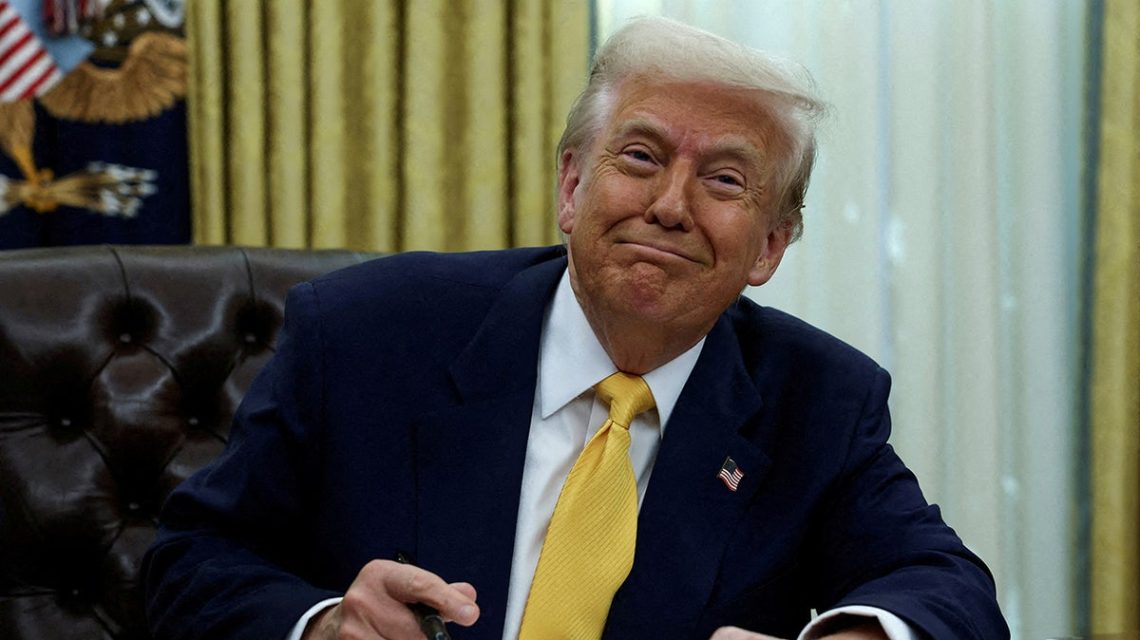
The United States, Denmark, and Greenland will sign a new security agreement at the United Nations General Assembly in New York. This pact will grant the U.S. expanded military rights on Greenland, a strategically important Arctic island. President Trump and the Prime Ministers of Denmark and Greenland will participate in the ceremony.
The U.S. already holds military rights in Greenland through a 1951 defense agreement. However, the new accord will allow Washington to establish additional military installations without separate approval from Denmark or Greenland. It includes provisions to prevent adversaries from establishing a military presence and restricts adversarial investments in sensitive sectors.
The agreement does not involve territorial acquisition as initially pursued by Trump. He had argued that U.S. ownership of Greenland was essential for national security and urged Denmark to give up control. This led to diplomatic tensions with Denmark and Greenland, who stressed their autonomy.
Although Greenland remains a self-governing territory under Denmark’s Kingdom, the new agreement recognizes its sovereignty. It offers Washington enhanced and permanent security rights while maintaining Greenlanders’ right to self-determination. Danish Prime Minister Mette Frederiksen assured that the agreement respects Greenland’s territorial integrity.
The deal aims to close discussions around U.S. control over Greenland, which caused uncertainty among the island’s residents. Greenland Foreign Minister Múte B. Egede confirmed that the pact adheres to Greenland’s core principles, ensuring self-determination while allowing deeper defense collaboration with the U.S. Egede acknowledged that previous U.S. threats had caused apprehension among Greenland’s people.
Some Greenlanders have expressed concerns about how increased American military presence might impact the island, while local politicians advise waiting for the final agreement’s details. Frederiksen highlighted the distinction between expanded U.S. military access and sovereignty over Greenland, emphasizing cooperation without relinquishing territorial control.
“We are not giving up sovereignty. You can retain sovereignty and strengthen cooperation with other countries,” Frederiksen stated.
The Trump administration views the agreement primarily as a national security measure. Secretary of State Marco Rubio described it as securing American interests without cost to taxpayers. No payment is made for the new rights, although future military installations entail typical expenses.
Greenland’s strategic importance continues to grow amid Russian and Chinese competition in the Arctic. The island hosts Pituffik Space Base, vital for missile warning and space surveillance, and the new agreement allows expansion of U.S. military facilities when necessary. The agreement supports plans like Trump’s Golden Dome missile defense system.
To prevent adversarial influence, the agreement bars non-NATO countries from having military bases in Greenland. Rubio emphasized the island’s role in North America’s defense strategy, excluding any adversary.
The agreement also addresses adversarial investments in sectors crucial to U.S. security. Restrictions apply to telecommunications, ports, and critical minerals, similar to measures concerning Chinese involvement in the Panama Canal.
The administration believes these measures will prevent vulnerabilities in the Arctic and protect strategic infrastructure.
 Senator Bernie Moreno Urges DOJ to Address Drug Policy Enabling Forced Abortions
 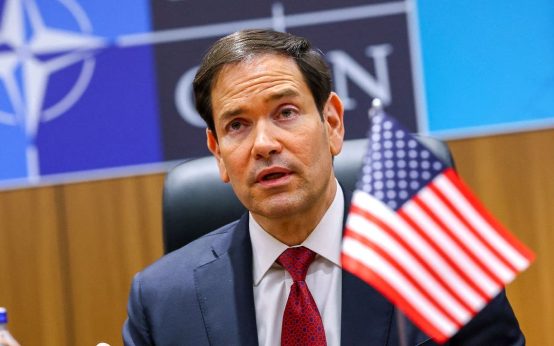 Marco Rubio Criticizes NATO’s Role Amid Middle East Conflict
  Karoline Leavitt Offers Insights on Trump’s Calls With Putin and Xi
  Curtis Pushes for Investigation into Trump Jr. and Biden
  Israeli Prime Minister’s Visit to the U.N. Amid Controversy
  Reader Perspectives on Social Security Reform and Competency-Based Degree Programs