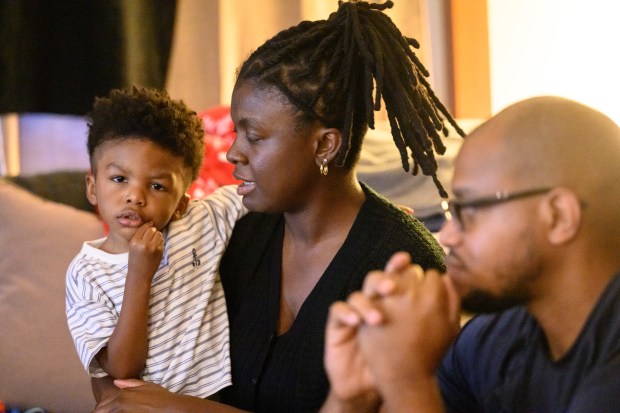
Three-year-old Eliazer Glover was jumping around in the living room of his family’s home in Hammond when an unfortunate fall led to an elbow injury. His mother, Kal Glover, quickly comforted him with a kiss, and soon Eliazer’s tears dried. Despite this quick fix for minor injuries, Eliazer’s diagnosis of sickle cell disease is a more enduring challenge. Kal and Samuel Glover, his parents, remain resolute that Eliazer’s condition will not overshadow his identity.
Kal emphasized the importance of not letting sickle cell define Eliazer’s interactions or capabilities. She expressed concern about potential stigmas, noting, “Other adults will probably categorize him before they even have a chance to know what he’s capable of and what he can handle.” The diagnosis came as a surprise to the Glovers during their first pediatrician visit shortly after his birth. Both parents had expected Eliazer to inherit only the sickle cell trait based on family history.
According to the National Heart, Lung, and Blood Institute, sickle cell disease is a set of inherited disorders affecting the hemoglobin in red blood cells. Usually, these cells are disc-shaped, allowing them to move smoothly through blood vessels. In sickle cell disease, they assume a crescent shape, leading to blocked blood flow.
Eliazer has Hemoglobin SC, a milder form of sickle cell disease. Kal Glover noted that both she and Samuel were unaware of the genetic traits from their families contributing to this. Samuel recalled encountering sickle cell with a cousin’s daughter, which somewhat prepared them but didn’t diminish their shock at Eliazer’s diagnosis.
Dr. Laura Tyrrell, a pediatric hematologist, explained that sickle cell disease is prevalent in regions with historical or current malaria presence. This includes parts of Africa, Latin America, South Asia, the Middle East, and Mediterranean areas. The sickle cell trait provides protection against malaria, which accounts for higher incidences in these regions and among African Americans in the U.S.
Challenges like pain episodes occur when blood flow is obstructed. According to Tyrrell, this often leads sickle cell patients to seek emergency medical care. Fever or infection signs also require urgent attention, avoiding extreme temperatures is crucial. Kal and Samuel vigilantly monitor Eliazer’s temperature, taking extra care to keep him cool during sleep and on hot days.
Eliazer receives regular vaccinations and takes liquid penicillin daily as part of his treatment. Kal explained the importance of this medication due to vulnerabilities in his immune system, noting how Eliazer himself often reminds them it’s time for his doses.
An email from Tyrrell to the Post-Tribune highlighted statistics for Indiana: 1,049 babies born with the sickle cell trait with 31 having the disease. The highest affected populations are in Lake and Marion counties. The Glovers initially struggled with travel for Eliazer’s medical needs but now benefit from an IHTC clinic in Gary, easing their burden significantly.
Sickle cell research lags behind other diseases, Tyrrell remarked, citing historical challenges in funding. Kal Glover voiced disappointment over limited resources due to racial prevalence, despite the high Black population in Northwest Indiana. She remains thankful for ongoing studies but expresses a wish for increased efforts.
The IHTC clinic in Gary provides significant support and community for families, allowing the Glovers to connect with others facing similar challenges. Despite the impact of sickle cell disease on their daily lives, Kal and Samuel celebrate Eliazer’s development and happiness. “He’s special,” Kal noted, affirming Eliazer’s vibrant health and joyful demeanor.
Samuel echoed her sentiments, commenting, “You would think he was a normal child until we tell you that he has sickle cell disease.”
 Female Athletes Discuss Competing Against Transgender Athletes
  Toddler’s Unusual Bedtime Request Helps Him Sleep
  Potential Impact of Changes to the National Vaccine Injury Compensation Program
  Living with Alzheimer’s: A Young Man’s Journey
  Discovery of a WWII Coat Connects Generations
  Understanding the Q-Collar: What Athletes Need to Know