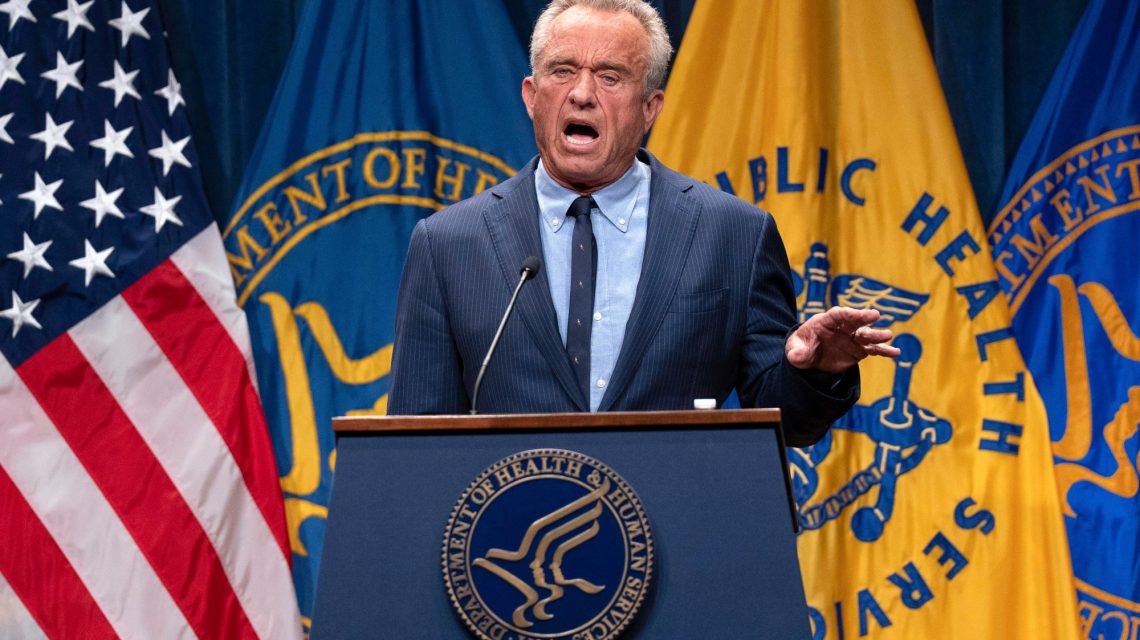
Health and Human Services Secretary Robert F. Kennedy Jr. has called for the dismantlement of a crucial U.S. vaccine program. Since 1989, the U.S. government has run the National Vaccine Injury Compensation Program, distributing over $5.5 billion to individuals affected by vaccines. This program, signed into law by President Ronald Reagan in 1986, was designed to expedite compensation to those suffering from severe vaccine reactions, shielding vaccine manufacturers from overwhelming legal liabilities.
Created as a “no-fault” system, the program serves two critical purposes. First, it ensures individuals receive fair compensation without navigating complex federal courts. Second, it stabilizes the vaccine supply by protecting manufacturers from unpredictable liabilities that could halt vaccine production. In the 1980s, legal challenges threatened vaccine availability, causing shortages and price increases. The program resolved these issues by allowing manufacturers to continue producing vaccines, saving millions of lives.
The program operates by listing presumed injuries for each vaccine, developed through expert reviews. This relieves families from proving negligence and causation. However, Secretary Kennedy views the fund as a shield for pharmaceutical companies, advocating for shifting injury claims back to civil courts, reopening negligence and causation debates. He also aims to include autism as a presumed vaccine-related injury, potentially overwhelming the system with claims, depleting funds, and collapsing the program.
Kennedy’s stance contradicts global scientific consensus, which denies any vaccines-autism link. As Health and Human Services Secretary, his proposed changes could legalize his conspiracy theories. Dismantling the current program could replicate past crises, causing vaccine price hikes and production halts, leading to shortages, disease outbreaks, and weakened herd immunity that risks vulnerable populations.
The current system, flawed by administrative delays, provides a streamlined safety net, compensating over 12,500 individuals since its inception. Removing this safety net burdens families with a complex legal system marked by prolonged cases, high legal fees, and the arduous task of proving manufacturer fault in court settings. Replacing the program with unregulated litigation harms the families it aims to support. Kennedy’s approach might eliminate protective measures vital to public health.
Richard Sauber, a former special counsel to President Biden, emphasizes the practical benefits of the current framework despite its imperfections, advocating for reform rather than dismantlement.
 Court Order Leads to Removal of Trump’s Name from Kennedy Center
  Irish Prime Minister Rejects Claims of Antisemitism in Israel Criticism
  Governor Newsom Signs Bills to Protect LGBTQ Community in California
  Living with Sickle Cell: The Glover Family’s Journey
  Trump Administration Faces Legal Scrutiny Over Use of Pocket Rescission to Cut Funding
  Democrats Narrow Voter Registration Gap in Key Senate Races