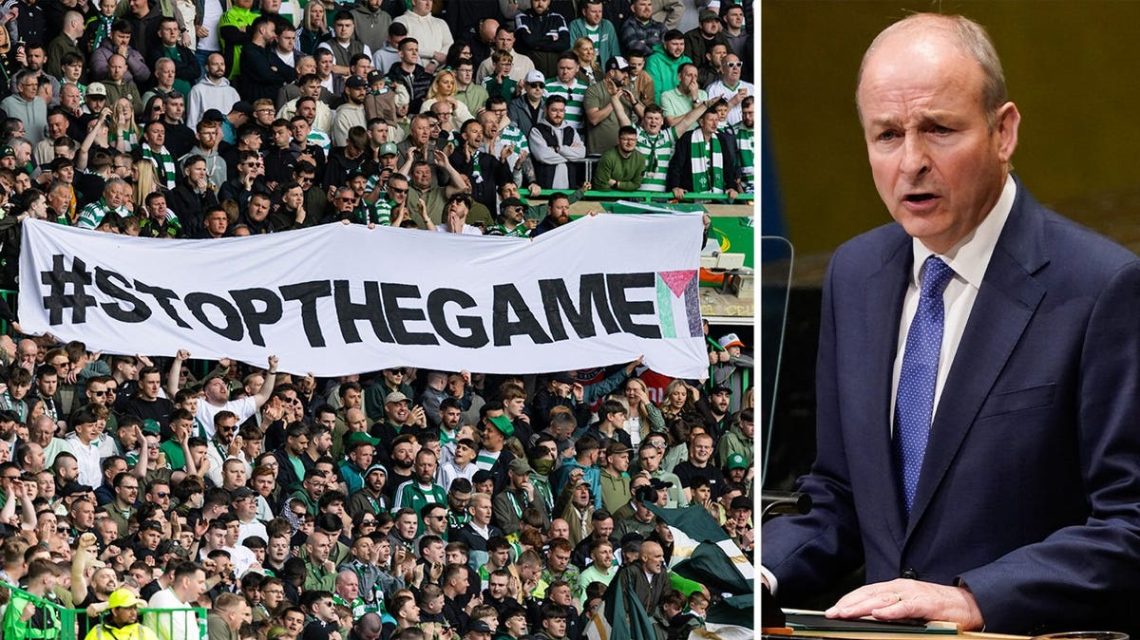
Irish Prime Minister Micheál Martin dismissed allegations that Ireland’s severe criticism of Israel has veered into antisemitism. This comes amid heightened tensions linked to a politically controversial soccer match between Ireland and Israel. The Irish soccer players held a last-minute vote on whether to boycott the game.
In an exclusive interview with Fox News Digital in New York, Martin detailed Ireland’s firm stance against Israel’s actions in Gaza. He described Israel’s military response as “absolutely disproportionate” and called for a change in strategy while advocating for more humanitarian aid to Gaza.
Historical Context
Martin highlighted Ireland’s history, particularly its experience resolving the conflict in Northern Ireland, as a basis for its call for peace on the global stage. He emphasized that Ireland’s perspective is influenced by its past and echoes in its discussions on Ukraine and the debate over Irish reunification.
When asked if anti-Israel sentiment in Ireland had crossed into antisemitism, Martin responded, “I think for the vast majority of people it does not. We have no toleration for antisemitism, none.”
Response to Terrorism and Security Concerns
Martin condemned the Oct. 7 terrorist attack by Hamas, defending Israel’s right to security. He also stressed that Palestinians deserve to live peacefully in their homeland.
“There are many peaceful voices in Palestine that I’ve met who want peaceful coexistence with Israel,” Martin noted.
Martin pointed out Ireland’s pro-Palestinian stance is partly due to its history and a sense of justice and fairness.
Protests and Boycotts
Public sentiment in Ireland has led to street protests since the conflict began. National broadcaster RTÉ boycotted the Eurovision Song Contest due to Israel’s participation. The Irish government’s historical experience under British rule, followed by partial independence, has shaped its views.
Martin called for increased humanitarian aid into Gaza, recognizing the difficult conditions for roughly 2 million people there. He urged a reevaluation of Israel’s war conduct.
Soccer Conflict and Repercussions
The Irish soccer community faced pressure over the UEFA Nations League fixture against Israel. A significant majority of players eventually decided to play, although one player left in protest.
Republic of Ireland manager Heimir Hallgrímsson acknowledged players’ concerns, although his remarks led to criticism from the Israeli Football Association. The FAI sought Israel’s suspension but later accepted to play to avoid financial and UEFA penalties.
Antisemitism Debate
The dispute reflects broader concerns about Ireland’s criticism of Israel. The American Jewish Committee and other groups raised alarms over antisemitism in Ireland. Martin emphasized Ireland’s Holocaust commemorations and contributions of the Jewish community to Ireland, asserting international efforts against antisemitism.
Diplomatic Engagements and Global Role
Addressing the United Nations, Martin criticized Israel’s actions in Gaza and the West Bank. He reiterated support for a two-state solution, advocating for peaceful coexistence between Israel and Palestine.
During his interview, Martin tied Ireland’s role in conflict resolution to its past experiences. As Ireland holds the Council of the European Union presidency, it carries diplomatic weight amid global conflicts.
Reflections on Personal Encounters
Martin recalled meeting Israeli Rami Elhanan and Palestinian Bassam Aramin, who lost daughters in the conflict but worked together for peace. Their experience inspired him, reflecting Ireland’s reconciliation efforts.
Position on Ukraine and Irish Reunification
On Russia’s war in Ukraine, Martin suggested a ceasefire to initiate negotiations. While maintaining military neutrality, Ireland provided humanitarian support and welcomed 120,000 Ukrainians.
Progress Toward Reunification
Martin expressed hopes for Irish unity, citing the need for trust and reconciliation among communities in Ireland. He acknowledged the possible role of Washington in a future reunification process, similar to its involvement during the 1990s peace process.
 Protests Erupt in Madrid Over Housing Crisis After Elderly Woman’s Eviction
  Court Order Leads to Removal of Trump’s Name from Kennedy Center
  U.K. Police Arrest Multiple Suspects Near U.S. Airbase
  U.S. Officials Confident in Iran Negotiations Amid Rising Tensions
  Four American Tourists Among Fatalities in Greece Explosion
  Bab el-Mandeb: Strategic Importance Amid Conflict