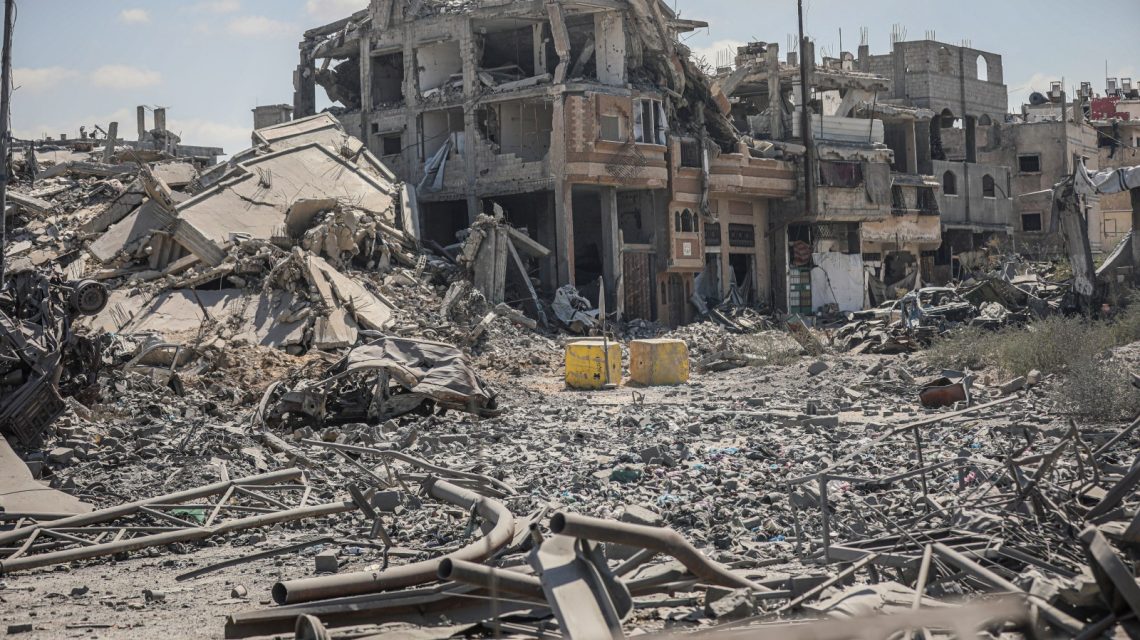
Google Earth images have highlighted the extensive devastation in Gaza due to the ongoing conflict between Israel and Hamas. These satellite images, which appeared online recently, depict the aftermath of the Israeli military offensive following Hamas’ attacks on southern Israel on October 7, 2023. Although Google Earth has not specified when these images were uploaded, reports suggest that some of them were captured during the current year.
Barry Andrews, an Irish Member of the European Parliament, stated, “The updated Google satellite images of Gaza are quite incredible, for all to see,” referring to the flattened buildings and districts reduced to rubble.
His post on the social media platform X has gained significant attention, receiving five million views and 30,000 likes, demonstrating the impact of the images.
Chris Doyle, director of the Council for Arab-British Understanding, noted that these satellite images serve as a record of the destruction in Gaza, where approximately 82 percent of buildings have either been destroyed or sustained damage. He emphasized the shock these images have consistently evoked worldwide and questioned when they may influence the stance of key global leaders, including in the U.S.
Nathan Ruser, an analyst at the Australian Strategic Policy Institute, remarked on the striking clarity of the imagery, highlighting the severe reality facing Gaza.
What Do the Google Earth Images Show?
The conflict in Gaza has resulted in the loss of many lives. The initial attacks by Hamas on October 7 killed at least 1,200 people and led to the kidnapping of more than 250 individuals. The subsequent Israeli military response has been intense, with reports from the Associated Press, citing Gaza’s Health Ministry, stating that 74,016 Palestinians have died and another 175,068 have been injured.
A ceasefire agreed upon on October 10, 2025, has temporarily halted major hostilities, although Israeli strikes persist in reaction to perceived threats and attacks. The United Nations Satellite Centre (UNOSAT) released a report indicating that 82 percent of Gaza’s structures, totaling roughly 200,000, experienced some form of damage, with two-thirds destroyed. This statistic aligns with observations from the latest satellite imagery.
The southern area of Rafah is notably impacted, with once populated residential zones now appearing largely cleared, replaced by makeshift shelters. In Gaza City, destruction is evident around Al Shifa Hospital, a site of fierce Israeli assaults during the conflict. The hospital’s urban environment contrasts sharply with earlier images.
Israel has accused Hamas of concealing a command post within this compound, claims disputed by Hamas and hospital staff.
Rebecca Wolfe, a conflict and humanitarian response expert at the University of Chicago’s Harris School of Public Policy, pointed out the limited discourse surrounding the challenging operating conditions in Gaza, given its small size and dense population.
A United Nations report released last week uncovered significant displacement figures, with around 1.9 million people relocated, many facing displacement multiple times. It reported that over 60 percent of Gaza’s population had lost their homes.
Wolfe explained, “Targets were often close to critical infrastructure and civilians… Israel very well understood the operating environment and the strength of these weapons. Yet they still used them when targeting individual Hamas militants, even though there were other alternatives to conducting the operation.”
The experts continue to analyze the situation and discuss potential strategies moving forward.
Contact Newsweek editors for further information: Alabama Jackson and Sam Wilson.
 Sudan Defies U.S. Ceasefire Amid Visa Dispute
  DHS Warns Migrant Caravan Heading to U.S.-Mexico Border
  Adam Brody and Hollywood’s Political Climate
  International and Domestic Investigations Unfold
  Counterpressure, Not Concessions, Crucial for Russia-Ukraine Conflict
  Ukraine’s Capital Faces Increasing Frontline Challenges