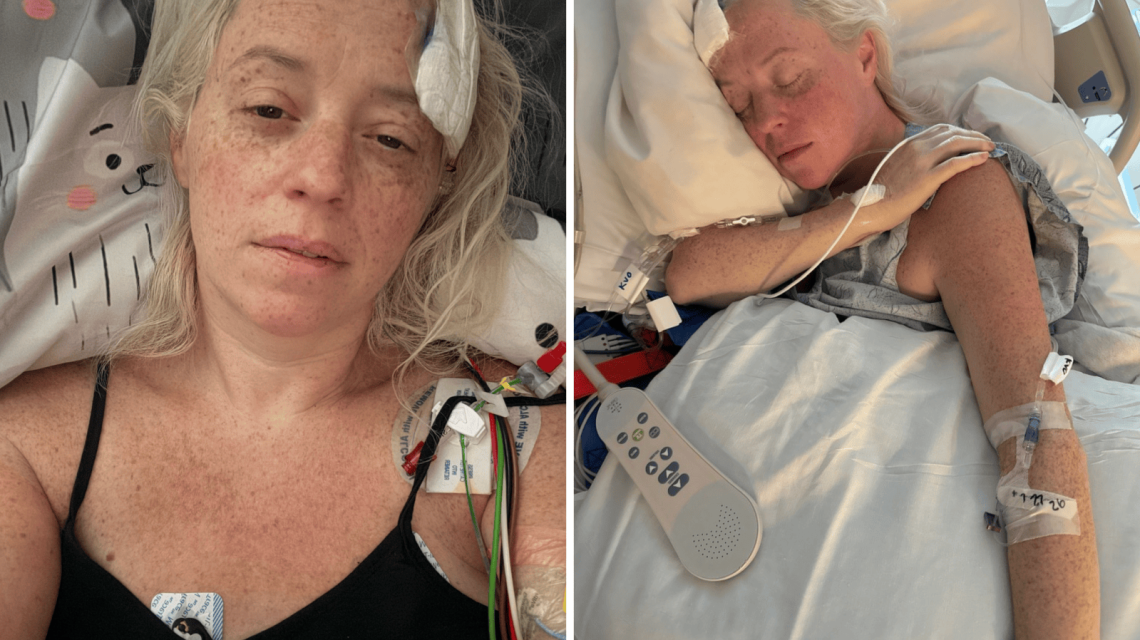
Julie Nashawaty, a 46-year-old cat sitter from Boston, had an ordinary working day that turned extraordinary. On July 27, during her lunch break, Julie experienced a sudden headache that escalated rapidly. She described the pain as if her brain was exploding, followed by an intense increase in body temperature. Her condition deteriorated quickly, causing her husband to call 911. Within 30 minutes, she was in the emergency room and spent the next 25 days in intensive care.
Diagnosis and Initial Treatment
Doctors determined that Julie had a ruptured brain aneurysm. This condition occurs when a weak, bulging spot in a blood vessel within the brain bursts. According to the Brain Aneurysm Foundation (BAF), about 6.8 million people in the United States live with an unruptured brain aneurysm, while approximately 8 out of 100,000 people suffer a rupture annually.
I knew something was wrong because it felt like nothing I had ever experienced. I didn’t know it was an aneurysm, but the sudden pounding, feeling so hot, and needing to lie on the floor were completely out of the ordinary.
Symptoms of a Ruptured Brain Aneurysm
A ruptured brain aneurysm is a critical condition requiring immediate medical attention. Typical symptoms include:
- A sudden, severe headache described as “the worst headache of my life”
- Nausea and vomiting
- Stiff neck
- Blurred or double vision
- Sensitivity to light
- Seizures
- Confusion
- Loss of consciousness
- Weakness or numbness
- Eye symptoms such as a drooping eyelid, dilated pupil, or pain behind the eye
Causes of a Ruptured Brain Aneurysm
Brain aneurysms often form silently without symptoms. While some are inherited due to weaker blood vessels, most develop over time from arterial wear and tear. Several factors may increase the risk of aneurysms, such as smoking, high blood pressure, genetics, drug or alcohol use, infections, and severe head trauma.
Treatment and Recovery
For treatment, Julie underwent an endovascular procedure. Doctors inserted a catheter through an artery to place tiny coils in the aneurysm or insert a stent to divert blood flow. This was only the start of Julie’s recovery journey.
Julie encountered significant vasospasms, causing her brain’s blood vessels to constrict. Treatment included administering medication through a drain and direct delivery into affected vessels via arterial access. Her hospital stay lasted 25 days.
After her discharge, Julie engaged in physical and occupational therapy with regular home visits from nurses. The first two weeks post-hospital presented challenges involving physical weakness, brain fog, emotional stress, and sleep difficulties.
It felt like my brain was trying to figure everything out again while my body was trying to get stronger. Being home didn’t mean I was suddenly better.
Ongoing Recovery and Future Steps
Now, months later, Julie reports continual improvement. Doctors also identified a second, unruptured aneurysm. The follow-up plan involves additional scans and possibly a flow diverter to manage it. Julie’s recovery remains a work in progress.
 Growing Support for Government-Run Health Insurance Revealed by New Poll
  Resilience: Preparing Health Systems for Unexpected Crises
  President Trump to Discuss Health Alert with Putin Amid Pneumonic Plague Concerns in Siberia
  Barriers in Affording GLP-1s in America
  Rising Support for Medicare for All in the United States
  Controversial Death in Russia Sparks Concerns