Hurricane Isaias: Tracking the Storm
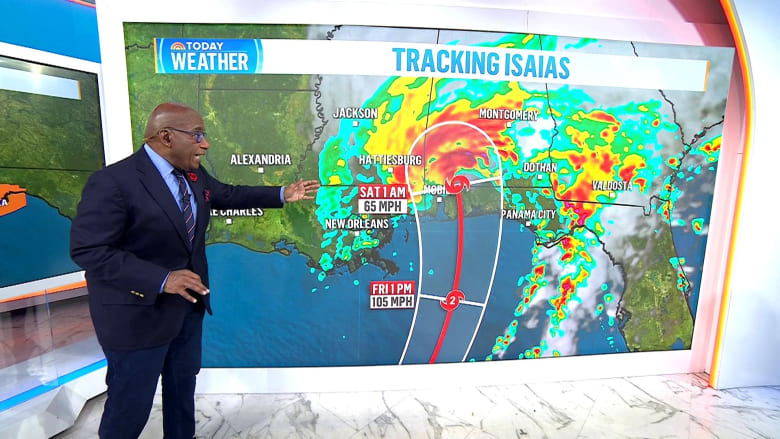
As Hurricane Isaias approaches landfall, the storm’s intensity and expected impacts are becoming clearer. The hurricane, currently moving northeast at 9 mph, has intensified quickly, escalating from a 40 mph tropical storm to an 80 mph Category 1 hurricane within 24 hours. It is situated 385 miles south-southwest of the Mississippi River’s mouth.
Storm surge warnings and hurricane warnings have been issued for the northern Gulf Coast. Isaias is anticipated to strengthen into a Category 2 hurricane by early tomorrow morning, with tropical storm conditions reaching the coast by tomorrow afternoon and hurricane conditions arriving by nightfall. Landfall is predicted late tomorrow night to early Saturday morning, potentially near Pensacola.
Anticipated Impacts
Hurricane Isaias is expected to weaken quickly as it nears land, but this will cause an expansion in the storm’s wind footprint. The fast-moving nature of Isaias increases the risk of power outages and damage from strong winds even in inland cities like Montgomery, Birmingham, Huntsville, Nashville, and Memphis. Although the impacts will be severe, they will be short-lived, with conditions rapidly improving once the storm progresses.
Storm Surge and Flooding
Ocean Springs, MS, to Indian Pass, FL: 5-7 feet
Mouth of the Mississippi River, LA, to Ocean Springs, MS: 5 feet
Indian Pass, FL, to Steinhatchee River, FL: 4-6 feet
Steinhatchee River, FL, to Yankeetown, FL: 2-4 feet
Lake Pontchartrain, LA: 1-3 feet
Significant rainfall and flooding are anticipated, with widespread totals between 3 to 7 inches, and isolated areas potentially receiving up to 10 inches from Mississippi to the Florida Panhandle. Rainfall may extend inland across the Southeast and into the Appalachians and Mid-Atlantic over the weekend.
Tornado Risk
Isolated tornadoes are possible along coastal areas of Alabama, the Florida Panhandle, and southwestern Georgia on Friday night, with the risk extending into eastern Alabama, Georgia, and northern Florida by Saturday. The tornado threat may increase as the forecast becomes clearer.
Impact on Oil and Gas Production
In preparation for the hurricane, oil and gas producers have suspended approximately 25% of offshore production in the Gulf, impacting about 511,000 barrels a day. The region accounts for nearly 15% of the U.S.’s annual crude output. Although oil prices are currently high, greater disruptions have occurred due to previous hurricanes. The market risk, however, remains moderate, particularly if Isaias impacts refineries.
Government Response
Due to the impending storm, Alabama and Florida have declared states of emergency. The hurricane is expected to bring powerful winds, tornadoes, heavy rainfall, battering waves, and an inundating surge. Preparations are underway, including city workers removing lifeguard towers in Panama City Beach, Florida.
 Cornell University Sexual Assault Allegations and Investigation Developments
  Hurricane Rachel Forecast and Potential Impacts on Southern California
  Fauci’s Diaries Reveal Criticism of Trump and More
  U.S. Forces in Japan Face Curfew Following Marine’s Arrest
  Memphis City Council Meeting Ends in Chaos Over Data Center Vote
  Tropical Storm Isaias: Potential Threats and Preparations