The U.S. Energy Information Administration (EIA) has released a report detailing expected changes in household heating expenses for the upcoming winter season. As outlined in the Winter Fuels Outlook, energy costs will vary significantly depending on the type of fuel used for heating homes and regional weather conditions.
Predicted Changes in Heating Costs
According to the EIA, homes using natural gas and propane may see reduced heating expenditures compared to last year. This decrease is attributed to lower fuel costs. Natural gas users might spend around 9% less, while propane users could experience a 3% reduction. Households dependent on electricity may face a 4% increase in heating costs. Those using heating oil are likely to experience a substantial 21% rise compared to the previous winter.
Regional Temperature Impact
Temperature variations across the country could affect heating cost changes. Warmer or similar temperatures are expected in the South, Midwest, and Northeast. However, colder conditions are anticipated in the West, potentially raising heating expenses for natural gas and electricity users by 7% and 9%, respectively. Other regions might not see such drastic changes.
Projected Year-Over-Year Changes in Energy Expenditures
- West: Natural gas +7%, Electricity +9%
- South: Natural gas -15%, Electricity +3%
- Midwest: Natural gas -10%, Electricity +3%
- Northeast: Natural gas -14%, Electricity -3%
The Influence of El Niño
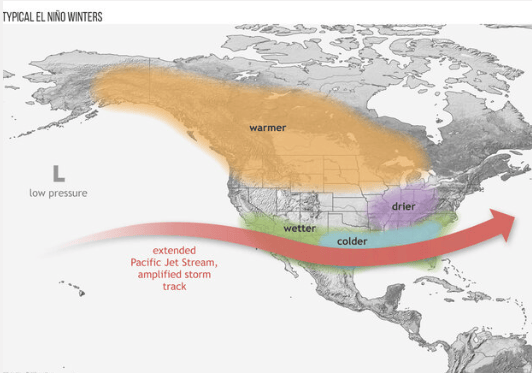
The El Niño weather pattern this year is expected to be notably strong, potentially affecting winter temperatures throughout the U.S. This phenomenon can alter weather conditions significantly, bringing warmer and dry weather to northern regions, and more precipitation to the southern parts of the country. These changes could impact heating costs.
Climate scientist Azhar Ehsan noted that current atmospheric patterns resemble those seen in 1997, when a powerful El Niño led to diverse weather impacts, including ice storms in the Northeast and heavy rains in California. While such incidents can bring challenges, 1997 saw a 10% reduction in heating costs nationwide, a positive effect potentially relevant today given rising energy prices.
Anticipated Heating Expenses
The National Energy Assistance Directors Association reports that U.S. households are expected to spend over $1,000 on average to heat their homes this winter, reflecting ongoing high energy costs.
Data cited: U.S. Energy Information Administration.
 Tropical Storm Rachel Approaches West Coast with Potential Hazards
  Storm Updates: Isaias and Pacific Developments
  California’s Coastal Flooding Highlights El Niño Challenges
  Supreme Court Debate on Climate Change Lawsuits Poses Economic Risks
  Southern California Braces as Tropical Storm Rachel Approaches
  Hurricane Isaias Causes Widespread Disruption Along Gulf Coast