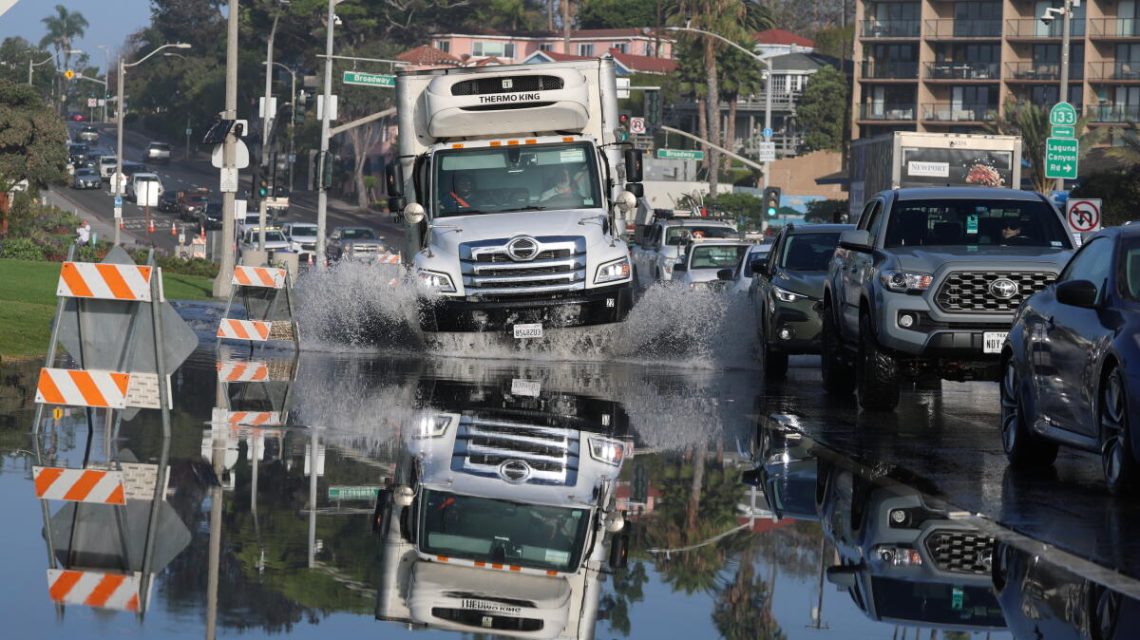
Tropical Storm Rachel is on course to hit either northern Baja California or San Diego County as early as Saturday night. The storm is expected to bring significant threats, including coastal flooding. According to the National Hurricane Center, Rachel could strengthen before making landfall, which is uncommon for storms in the tropical eastern Pacific. Typically, these storms lose intensity in cooler waters. However, the current El Niño conditions and a marine heat wave have increased ocean temperatures by 10 to 13 degrees, creating a favorable environment for Rachel.
Daniel Swain, a climate scientist with UC Agriculture and Natural Resources, stated during a briefing, “It’s notable that this is an unusual event made possible by both early arriving low-pressure and record warm ocean temperatures off California’s coast.”
Flooding Concerns
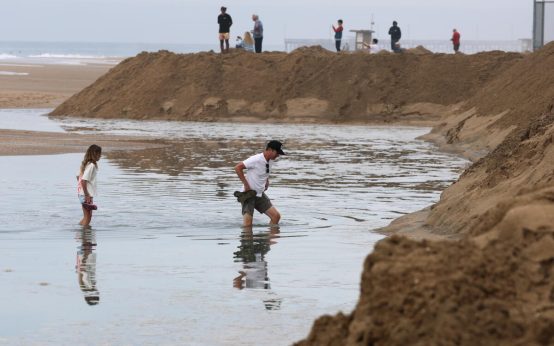
The National Weather Service in San Diego issued a tropical storm watch for most of San Diego County, covering areas like Chula Vista, Carlsbad, and Oceanside. This is only the second such watch in California’s history. The region faces the most significant threat from coastal flooding, especially on south-facing shores. High tides and elevated water levels from the storm may cause water intrusion, hazardous surf, and rip currents.
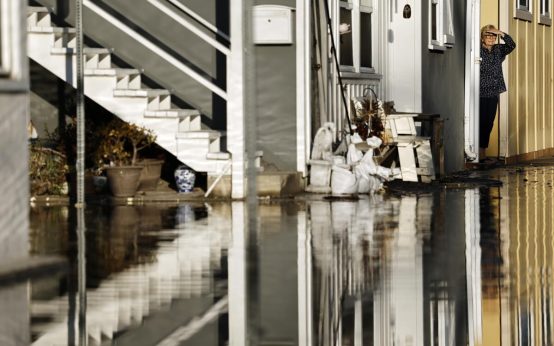
Already, places like Laguna Beach have experienced flooded streets. As of Friday morning, high tides in San Diego and La Jolla measured 17 inches above predictions, influenced by warmer waters and swells from tropical storms. Similar increases were noted in Santa Monica and San Francisco.
Meteorologist Miguel Miller from the National Weather Service commented, “We have high tides, large surf, and already elevated water. These elements are adding up, and we’ve seen how high tides alone can lead to flooding.”
Ventura, Los Angeles, Orange, and San Diego counties have a coastal flood advisory in place until Tuesday afternoon. This advisory warns of possible flooding in beach parking lots, boardwalks, roads, and minor coastal erosion. Cities like Newport Beach and Long Beach have already seen significant flooding.
Rain Predictions
Rachel’s remnants are expected to bring light rain to Southern California from Sunday to Monday night. However, regions like the Mojave Desert and parts of San Diego County may see more rainfall. There is a 40% chance of excessive rainfall that could cause flash floods in areas such as San Diego, Chula Vista, and Palm Springs.
Los Angeles County can expect light to moderate rain, ranging from a quarter of an inch to an inch. Heavier rain is forecast for the San Gabriel Mountains and coastal areas of Orange County. San Diego’s coastal sections could receive between one to one and a half inches of rain.
Rare Tropical Storms
Only two storms have retained tropical-storm strength in California’s modern record. The first, El Cordonazo, hit in 1939, producing heavy rain and significant damage. The second was Nora in 1997, which caused street flooding in Imperial County and other areas.
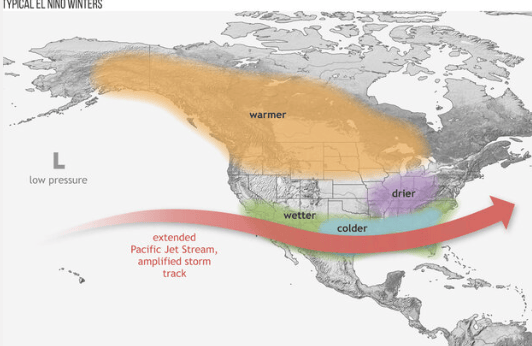
Nora also coincided with a “very strong” El Niño, a pattern linked to increased hurricane activity in the eastern Pacific and often associated with higher winter rainfall in Southern California.
The National Oceanic and Atmospheric Administration’s Climate Prediction Center reports a near 100% likelihood of a “very strong” El Niño this season, possibly the strongest on record since 1950. Previous strong El Niños have resulted in excessive rainfall, like the 1982-83 and 1997-98 events, which doubled Los Angeles’ average annual rainfall.
The 2015-16 El Niño was an exception, leading to a dry period in Southern California but causing record coastal erosion along California beaches.
 Winter Heating Costs: EIA’s 2026 Forecast
  Storm Updates: Isaias and Pacific Developments
  Toxicology Reports Link Deaths of Ole Miss Students to Synthetic Opioids
  California’s Coastal Flooding Highlights El Niño Challenges
  Supreme Court Debate on Climate Change Lawsuits Poses Economic Risks
  Southern California Braces as Tropical Storm Rachel Approaches