Amazon recently introduced two innovative AI devices designed to enhance daily productivity. These gadgets promise to change how users interact with technology by offering features that listen, transcribe, and assist with reminders.
Introducing Bee Frontier and Bee Eclipse
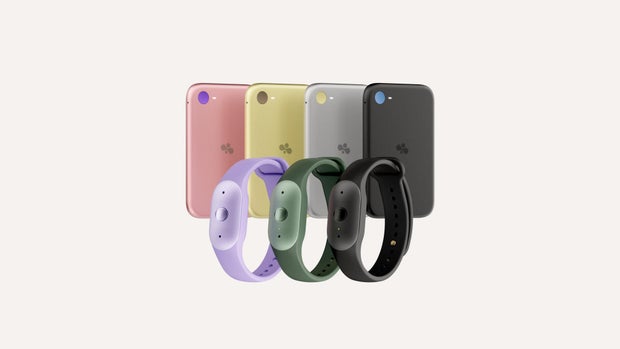
Amazon’s latest offerings include the Bee Frontier, a versatile silicone wristband that also clips onto clothing, priced at $74.99. Alongside it, the Bee Eclipse, retailing at $99.99, is a sleek, credit card-sized device that magnetically attaches to the back of a phone. Both are developed by Bee, an AI wearable firm acquired by Amazon last year.
Features and Capabilities
Equipped with microphones, these devices are touted as ‘personal AI’ tools. They transcribe conversations, whether in meetings or during casual interactions, allowing users to capture moments without the need for manual note-taking. Based on the dialogues, the devices propose personalized goals and actions.
“It takes note of the details you might otherwise forget and turns them into useful conversation summaries, to-dos, reminders, and insights,” a company statement explained.
For instance, during a call about vacation planning, these gadgets can record essential trip details like flight schedules or hotel bookings. Users have the option to integrate Bee with various apps such as Gmail, Google Calendar, and Microsoft Outlook, letting the technology draft emails or set up calendar notifications automatically.
Subscription and Privacy
The Bee devices offer basic features like conversation summaries and a 14-day memory for free. For advanced services, including integration with Alexa+ and Amazon.com, users must subscribe to Bee Pro, costing $11.99 monthly.
Amazon assures users about privacy, stating that neither Amazon nor any third party can access personal data unless shared by users. Audio recordings are deleted post-transcription to maintain privacy protection.
Market and Competition
These products enter a trillion-dollar AI gadget market targeting consumers. Companies like Meta, Microsoft, OpenAI, and Samsung are also releasing AI-enabled products aimed at everyday users.
 Congressional Investments in AI Amid Regulatory Inaction
  Confusion Surrounds Starlink Restrictions in Ukraine
  Supreme Court Case Raises Questions on Digital Privacy and Video Privacy Protection Act
  A New Approach to Artificial Intelligence Regulation
  AI Errors: Responsibility and Implications
  Ukraine Urges SpaceX to Lift Satellite Restrictions Amidst Military Operations