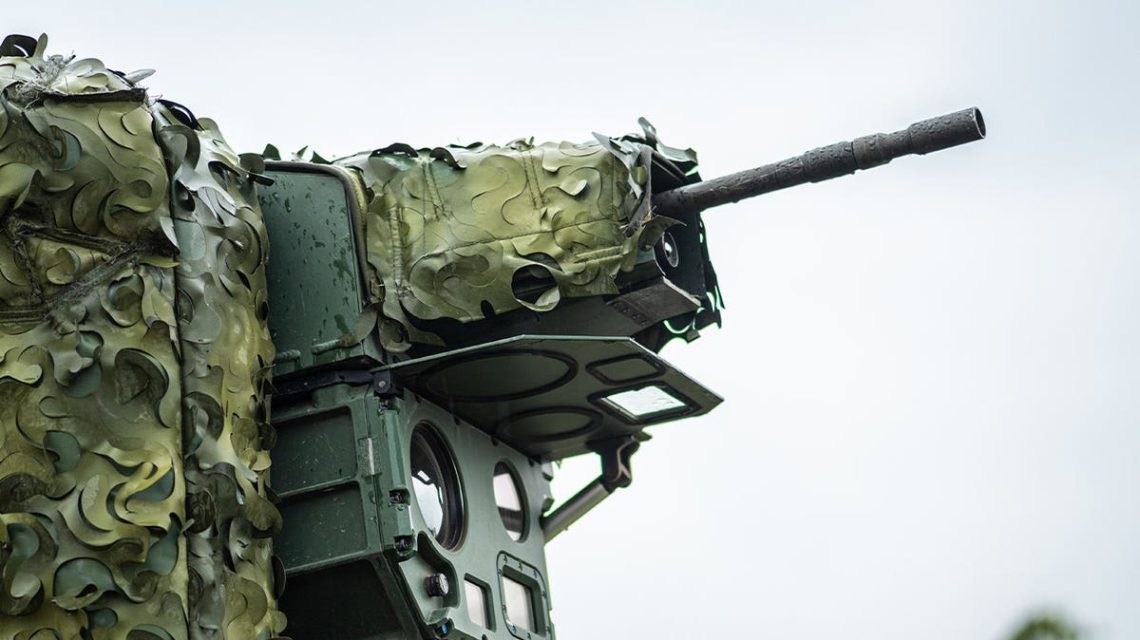
The American military has traditionally operated on a central strategy: tackle threats overseas before they reach U.S. soil. However, the advent of drones, cyberattacks, and long-range weapons is reshaping this approach.
Army leaders foresee potential attacks on American forces before overseas deployment. “If we’re going against a pacing threat, power projection will be contested,” said Gen. Christopher LaNeve, the Army’s acting chief of staff.
The military is reassessing its strategies from past conflicts in Iraq and Afghanistan, where secure bases and supply lines were expected. This shift responds to emerging threats to U.S. military bases and infrastructure.
FBI warns of possible drone attacks on U.S. soil, citing that such incidents are not a question of if but when.
Incidents like drone incursions over installations such as Joint Base Langley-Eustis in Virginia and Picatinny Arsenal in New Jersey highlight this concern. Although they have not been attributed to China openly, they prompt the Pentagon to prioritize homeland defense.
New guidelines from the “How the Army Fights” framework focus on enabling American forces to operate under potential threats to bases, supply lines, and communications.
The Pentagon’s report indicates China’s cyber capabilities in U.S. infrastructure could disrupt military mobilization.
The Army’s updated framework aims at training, fighting, and incorporating new technology under threat, even when communications and infrastructure face disruptions.
Gen. Christopher LaNeve discussed the new direction during a Senate Committee hearing on budget allocations for defense. He mentioned the importance of having a document that sets clear priorities for training and technology integration.
An interagency task force is enhancing defenses against drones. This force collaborates with federal and local law enforcement to safeguard military bases and critical infrastructure.
Acting Army Secretary Adam Telle highlighted how the southern border serves as a test site for new counter-drone technologies, preparing soldiers for future conflicts.
Additionally, the Army is expanding combat training to include responses to biological threats to maintain operations through disease outbreaks or biological attacks.
Air Force Secretary Troy Meink warned about advancements in surveillance. Such technology might soon detect military operations globally regardless of location.
War Secretary Pete Hegseth criticized the Pentagon for lagging in technological advancements, particularly in hypersonics and space.
Despite this reliance on technology, Gen. LaNeve stressed the importance of soldiers retaining core capabilities. “Soldiers are our number one platform,” he emphasized, noting that technology should enhance but not replace fundamental military skills.
 Congressional Investments in AI Amid Regulatory Inaction
  Tropical Depression Champi Threatens Guam and Northern Mariana Islands
  Mass Shooting Attempt at Aurora Hindu Temple Prevented
  Amazon Unveils New AI Gadgets: Bee Frontier and Bee Eclipse
  Travel and Diplomacy: Jared Kushner’s Envoy Role
  Chinese Viewers Perceive American Political Chaos as a Lesson in Civics