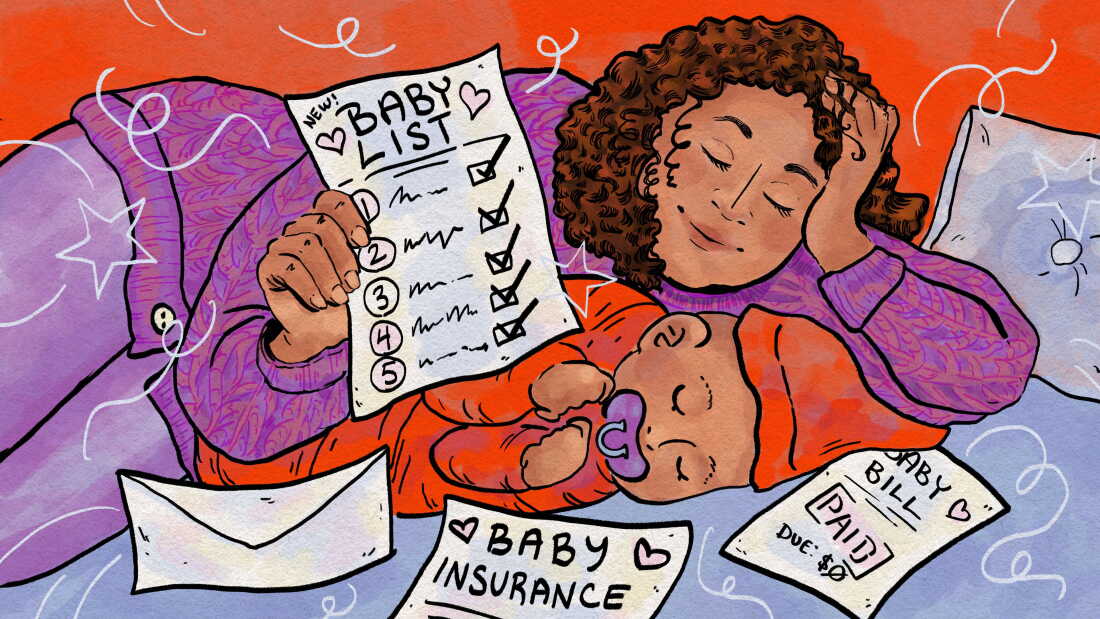
As Grace Griffin awaited the birth of her daughter, she worried about impending medical expenses. “Can we afford another child?” she pondered in Calumet, Michigan.
Grace and Daniel Griffin, both 26, foresaw financial challenges with their first child. Prior to trying to conceive, they assessed potential pregnancy costs. “We aimed to save enough for immediate medical bill payments,” Grace stated.
The task proved complex when a cost estimator connected to her UnitedHealthcare student plan requested billing codes she didn’t have. Despite this, Grace and Daniel relied on their household finances based on a single income, only to discover their estimate fell short by thousands.
After more research, she found details on her insurer’s website suggesting out-of-pocket costs for pregnancy and delivery were about $2,700. “We thought that was achievable,” Grace said. Yet, actual costs were significantly higher.
Early in her pregnancy, Grace met her $500 deductible. Her plan’s 20% coinsurance for in-network care meant she paid $20 for every $100 billed. “The expenses added up quickly,” she noted, citing routine blood tests as significant costs.
“When I started getting lab work is when we started realizing expenses would add up quickly,” Grace said.
After their daughter’s June birth, the Griffins received a notice showing hospital charges of $18,000, accompanied by their substantial share. “Much more than budgeted,” Grace realized.
By October, their out-of-pocket expenses exceeded $9,000, over three times the insurer’s initial estimate. This placed financial strain on the family.
The Legislative Background
Sabrina Corlette from Georgetown University’s Center on Health Insurance Reforms highlighted efforts for transparent healthcare costs. Congress mandated insurers to provide an individualized “advanced explanation of benefits” as part of the 2020 No Surprises Act. However, its implementation remains pending, despite congressional pressure.
Additionally, maternity billing codes are set to change by 2027. The update aims to break down costs for prenatal care, labor, delivery, and postpartum care. It’s uncertain how beneficial this will be for those budgeting for pregnancy. Corlette expressed skepticism about patient advantages.
Budgeting Tips for Pregnancy Costs
- Enroll Your Baby Promptly: Secure health coverage for your newborn, as birth offers a special enrollment chance. Employer health plans typically require enrollment requests within 30 days, while Marketplace plans allow 60 days. Missing deadlines risks uninsured status until the next year.
- Understand Key Numbers: Familiarize yourself with your deductible, copayments, coinsurance, and maximum out-of-pocket expense (MOOP). MOOP caps annual covered in-network services costs, beneficial for worst-case scenario planning.
- Prioritize In-Network Providers: Choose in-network providers to avoid surprise bills. Explicitly request your doctor’s office to use in-network facilities and providers.
- Review Bills Carefully: Check each bill for errors and ensure compliance with the Affordable Care Act, which covers certain prenatal services at no cost. Consider appealing if insurance refuses to cover charges.
- Seek Assistance Before Debt Escalates: Many hospitals offer financial aid or manageable payment plans. State assistance programs, like Michigan’s Rx Kids, can provide additional resources.
Grace Griffin benefited from Michigan’s Rx Kids program, receiving funds to aid in covering expenses while safeguarding their emergency savings. “It reduces our pressure,” she acknowledged.
KFF Health News focuses on comprehensive health journalism, supported by KFF—dedicated to health policy research.
 Ebola Case Reported in Nigeria’s Capital Amid Ongoing Outbreak
 Roger Foley’s Quest for Self-Directed Care Amid Medical Assisted Death Discussions
 ADHD Linked to Increased Risk of Early Death, but Medication May Help
 Addressing School Shooting Anxiety: Guidance for Parents
 Adapting School Designs for Enhanced Safety
 Nigeria Confirms Ebola Case Amid Wider African Outbreak