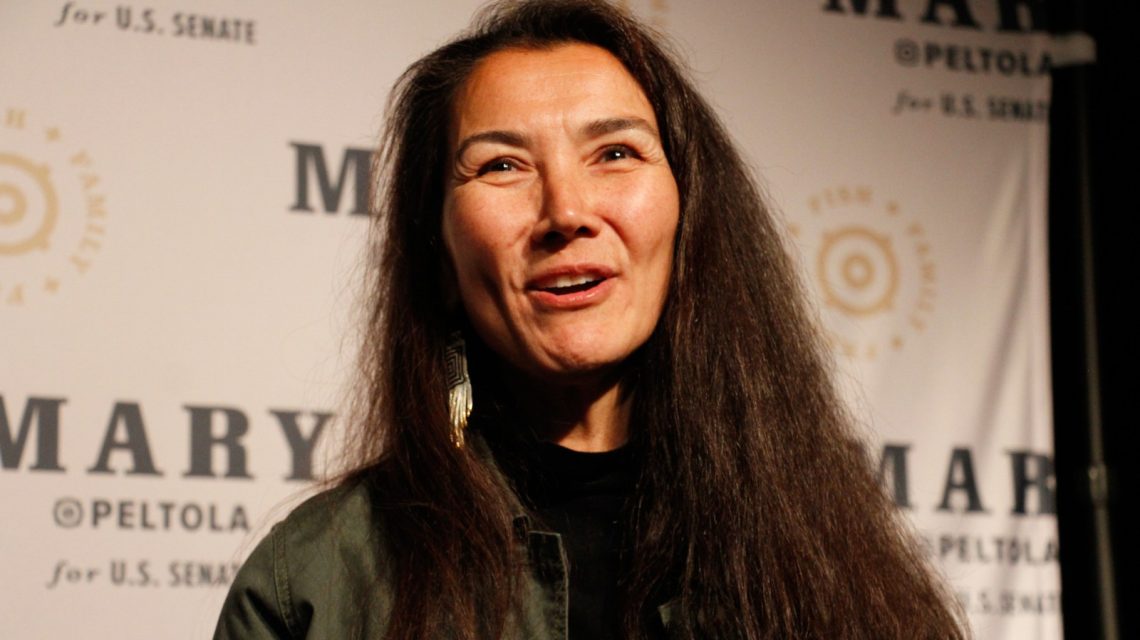
Democratic candidate Mary Peltola is narrowly leading Republican incumbent Dan Sullivan in recent polls for Alaska’s critical Senate race. Alaska represents a key opportunity for Democrats aiming to secure majorities in the House and Senate. Peltola, a former Congresswoman in the state, has emerged as a formidable contender. In contrast, the GOP faces challenges as President Donald Trump’s approval ratings decline, alongside negative voter sentiments on the economy and the Iran war.
For Democrats to take control of the Senate, they must defend all existing seats and flip four additional ones. The race in Maine is the only current contest where a Republican incumbent is defending a seat in a state won by Kamala Harris in 2024. Democrats have had to extend their campaign efforts to target states like Alaska that Trump won decisively in 2024. While Alaska last sent a Democrat to the Senate in 2008, it has not supported a Democratic presidential candidate since 1964, historically serving as a Republican stronghold.
Peltola Holds a Narrow Lead
Peltola is ahead with 44 percent to Sullivan’s 42 percent, according to a Rasmussen Reports poll conducted from October 12 to October 15. This survey included 775 likely Alaska voters and has a margin of error of plus or minus 3 percentage points, offering a 95 percent confidence level.
An InsiderAdvantage poll conducted between October 9 and October 10 indicates a wider lead for Peltola, with her holding a 5 percent margin over Sullivan. In this survey of 1,200 likely voters, Peltola received 48 percent support in a four-way contest. Two additional Republican candidates, Daniel J. Sullivan Jr. and Gerald L. Heikes, secured 1.7 percent and 2.2 percent, respectively, with 5.3 percent of voters undecided. The poll has a margin of error of plus or minus 2.83 percentage points.
In a potential runoff where Sullivan Jr. and Heikes are out of the race, support for Peltola rises to 50.1 percent, while Sullivan garners 48.0 percent.
Peltola’s Consistent Lead
Throughout October, Peltola has consistently held a slight advantage according to various polls, but the race remains highly competitive. Public Policy Polling reported Peltola at 48 percent against Sullivan’s 47 percent from their survey conducted on October 14 and 15. Additionally, Alaska Survey Research saw Peltola leading 47 percent to 45 percent from October 1 to October 3. The first poll surveyed 578 registered voters, and the second involved 1,512 likely voters, both with a margin of error of plus or minus 3 percentage points. Earlier, a Quantus Insights poll from September 28 to September 30 showed the two candidates tied at 47 percent.
Debate on Key Issues
The candidates have been exchanging pointed critiques on topics such as the Iran war, energy production, and fuel prices. These divisions were highlighted during an October 15 debate. Peltola criticized Sullivan for voting multiple times in favor of the Iran war, linking the conflict to financial hardships faced by Alaskans. With Trump’s endorsement, Sullivan defended the war as a measure against Iran obtaining nuclear capabilities. The incumbent argued for increased energy production to lower fuel costs and criticized Peltola’s Congressional track record on Alaskan energy production.
Both candidates agree against importing Russian diesel, supporting the view that purchasing fuel from Russia is an unwise decision. Peltola advocated for continued support for Ukraine, while criticizing the Trump administration’s handling of U.S. allies.
Significance for Midterms
Alaska represents a potential flip for Democrats planning their strategy for 2026. Winning four GOP-held seats is essential for a majority, with at least two flips needed in states Trump won by wide margins in 2024. Alongside Alaska, Texas, Ohio, and Iowa are targeted states. Peltola, running as a centrist, appeals to independent voters and moderate Republicans disenchanted with Trump’s endorsement.
Political analysts rate the Senate race as a toss-up, with some shifting it to a Leans Democrat category.
Vote Counting and Election Results
Alaska employs ranked-choice voting, potentially delaying the declaration of a winner. After November 3, obtaining a final result might take weeks as the state processes absentee ballots. Close polls suggest the race in Alaska could remain one of the key unresolved contests post-election night.
 Crucial Role of Young Voters in Upcoming Elections
 Animal Cruelty Verdict for Canadian Tourist and Political Developments in International and U.S. Politics
 Democrats Target Utility Bills in 2026 Midterm Strategy
 Trump Comments on Europe’s Future Amid French Unrest
 Putin’s Vision of Global Power Dynamics
 Netanyahu’s Middle East Map and Its Implications