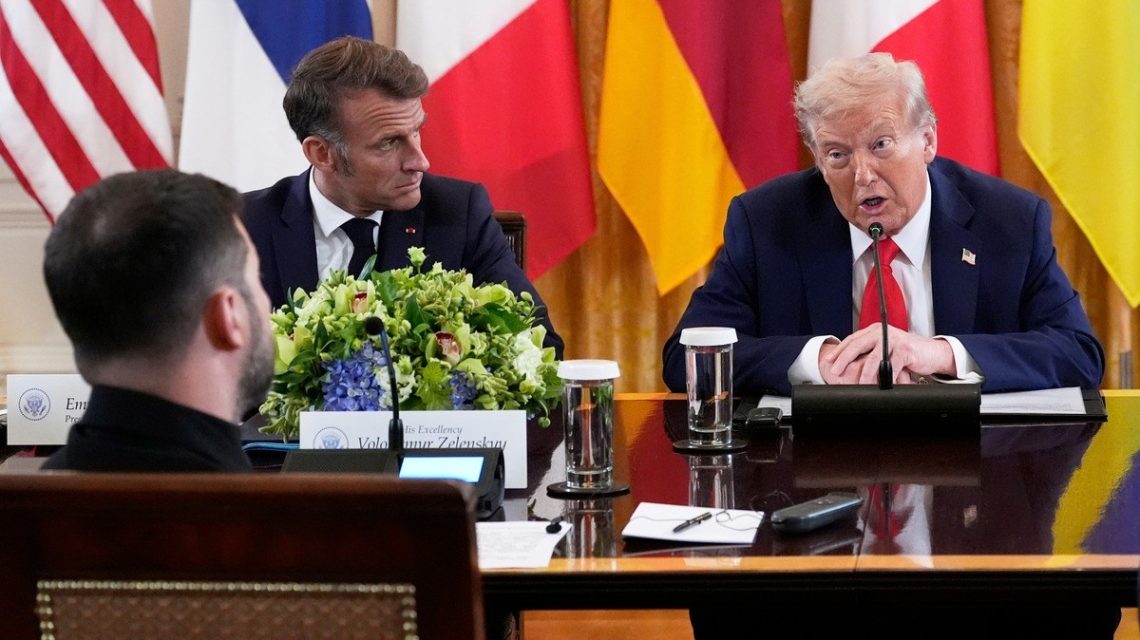
President Donald Trump has suggested the U.S. might “leave” Europe. His remarks follow widespread riots in French cities, attributed to immigrants, religious extremists, and left-wing groups. The White House has not yet clarified his statement. These comments raise questions about the future of U.S.-European relations.
Curfews commenced in Paris and other cities as massive protests erupted over rising living costs, leading to bursts of violence and looting. In Limoges, a fire partly destroyed the town hall. Over the weekend, more than 2,000 arrests occurred, and President Emmanuel Macron called for calm.
On Truth Social, Trump claimed, “A once-great nation that is being conquered, looted, and burned to the ground by migrants, jihadists, and Communists who hate Christianity, and Western Civilization, itself.” He accused left-wing politicians of importing migrants “incompatible with Western Values.”
Trump linked these events to the upcoming midterm elections. He said, “If you want to see what is at stake in this Election, just look at what is happening in France.” The remarks emerge as Republicans face challenges like high fuel costs and low approval ratings.
French officials have attributed the unrest to far-left groups. Originally, the protests were student-led against declining education and rising prices. Macron also pointed to criminal involvement in escalating the violence.
Trump urged, “Europe has to CLOSE THEIR BORDERS, and get out the people who hate their countries, and get them out FAST.” He added, “We stand with Europe, despite its flaws, its weaknesses and, hopefully, its temporary loss of direction. But if they don’t soon find their way, we will have no choice but to leave.”
These statements coincide with U.S. efforts to redefine its relationship with Europe. The White House has urged Europe to assume more responsibility for its security. Trump has long advocated reducing American military presence in Europe, aiming to refocus on China and the Indo-Pacific.
This shift causes concern in European nations near Russia, worried about potential aggression. The U.S. focus on Europe’s immigration and economic challenges highlights growing tensions that transcend recent riot issues.
Aside from unrest in France, Europe faces defense spending challenges amid security threats. Aging populations and economic stagnation add to the difficulties in maintaining defense commitments. Trump’s stance echoes a U.S. national security strategy document from November 2025, warning of “civilizational erasure.”
The document criticized Europe’s migration policies, sparking backlash from European leaders. Despite this, it promised U.S. support for European allies and acknowledged patriotic European parties’ growing influence. Centrist parties have since toughened immigration policies due to opposition pressure.
In early 2025, Vice President JD Vance met Alice Weidel of Germany’s Alternative für Deutschland. He criticized Western liberals over immigration. U.S. officials have supported Marine Le Pen and Jordan Bardella of France’s National Rally, linking riots to immigration.
Though no signs suggest an end to U.S.-Europe ties, Trump’s comments reflect a broader shift. Europe is seen less as a dependent ally and more as a responsible partner.
 U.K. to Deploy RAF Typhoon Jets Amid Saudi Security Concerns
 Democrats Target Utility Bills in 2026 Midterm Strategy
 Alaska Senate Race: Peltola vs. Sullivan
 Putin’s Vision of Global Power Dynamics
 Netanyahu’s Middle East Map and Its Implications
 Elections 2026: Key Developments