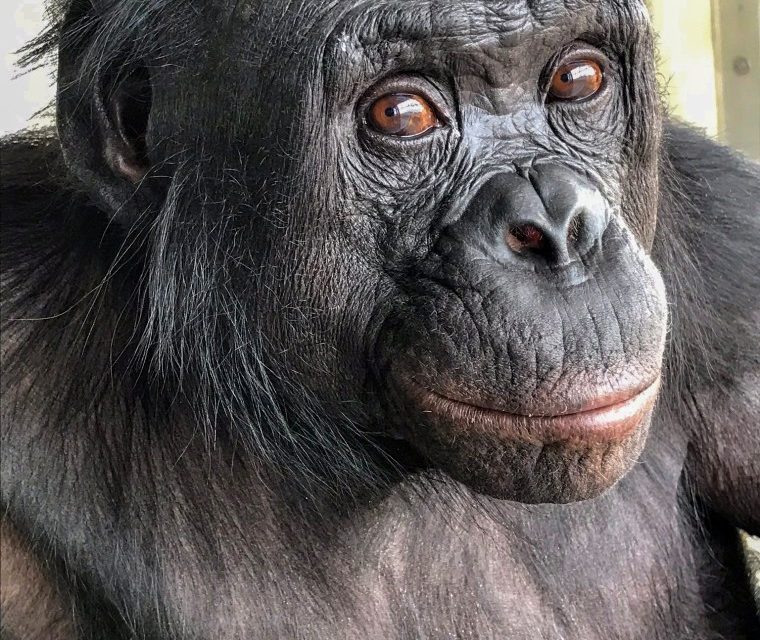
In an intriguing set of experiments, researchers explored whether animals, like the bonobo Kanzi, can engage in pretend play. By hosting a make-believe tea party, complete with invisible juice and imaginary grapes, scientists aimed to discover if a bonobo could participate in such pretend games. Their research, published in the journal Science, revealed that Kanzi was able to play along, suggesting the possibility of imagination in nonhuman primates.
Kanzi, a bonobo involved in these studies, was able to perceive and mentally track invisible juice as it was ‘transferred’ from a pitcher to bottles. According to Chris Krupenye, one of the study’s authors and an assistant professor at Johns Hopkins University, Kanzi could understand that the juice wasn’t physically present, yet he still followed the action mentally. This groundbreaking finding challenges the previous belief that only humans possess the ability to pretend and envisage multiple realities.
Our ability to imagine worlds or scenarios is often viewed as uniquely human, but our findings suggest apes might share some of this cognitive capacity,said Krupenye.
The study conducted three experiments with Kanzi, the first of which involved pretending to pour juice between containers and asking Kanzi to identify where the ‘juice’ was. Out of 50 trials, Kanzi correctly pointed to the glass that would still contain juice 68% of the time, a significant success rate for such cognitive tests.
In a subsequent task, he showed the ability to differentiate between a real and an imagined scenario by consistently opting for the actual juice when both a pretend and a real option were presented. A third experiment using imaginary grapes yielded similar results, underscoring Kanzi’s ability to distinguish imagined circumstances from reality.
Jan Engelmann, a psychology professor from UC Berkeley not involved in the study, observed that these experiments reinforce the idea that apes could engage in ‘secondary representations’ and model different scenarios mentally, reflecting abilities seen in planning and reasoning.
Kanzi’s cognitive abilities were remarkable, as his language training from a young age might have influenced his capability to interact with imaginary concepts. Born in captivity and having learned lexigrams as language symbols, Kanzi knew hundreds of representations for words like ‘egg’ and ‘chase’ and responded to some English prompts.
Given bonobos’ genetic similarity to humans, these findings suggest that abilities like pretend play and imagination were likely present in a common ancestor millions of years ago. Yet, whether other primates or bonobos would perform similarly remains uncertain, considering Kanzi’s unique language experience might have enhanced his cognitive abilities.
The evolving understanding of animal cognition continues to blur the distinctions once believed to separate humans from animals. Some researchers are proposing that rather than individual cognitive superiority, it’s humans’ exceptional social skills and collective thinking that distinguish them, enhanced by tools like language.
The exploration of animal minds opens new horizons in understanding the complexities of nonhuman cognition, and as more research unfolds, we gain insights into the shared aspects of behavior across species.
 The Discovery of Incendiamoeba cascadensis: A Fire Amoeba
  Archaeological Discovery in Germany: Largest Hoard of Roman Coins Found
  Hurricane Formation and Strengthening
 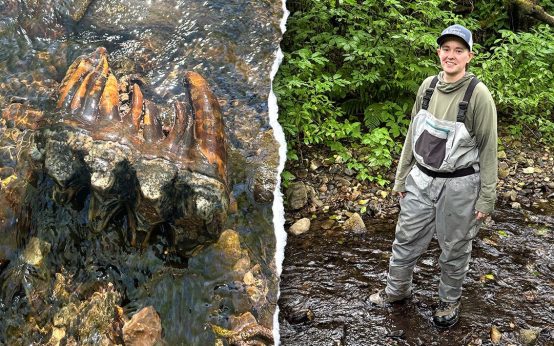 Ancient Mastodon Tooth Unearthed in California Creek
 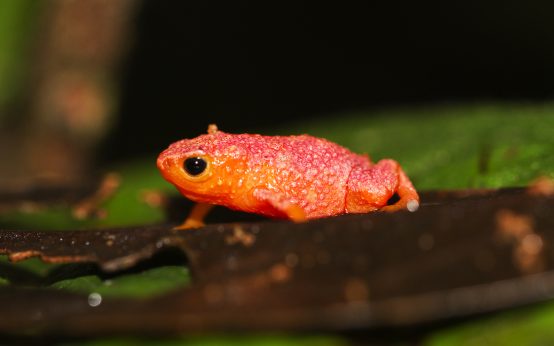 The Tiny World of the Pumpkin Toadlet
 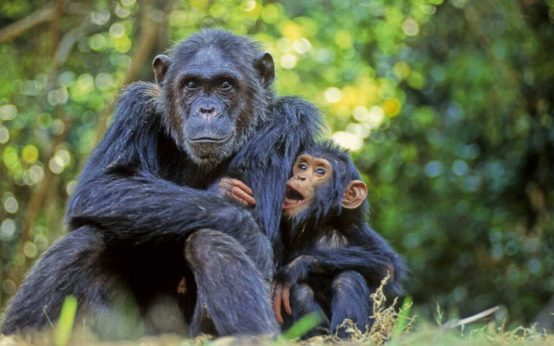 Chimps and Self-Medication: Insights from Gombe Stream