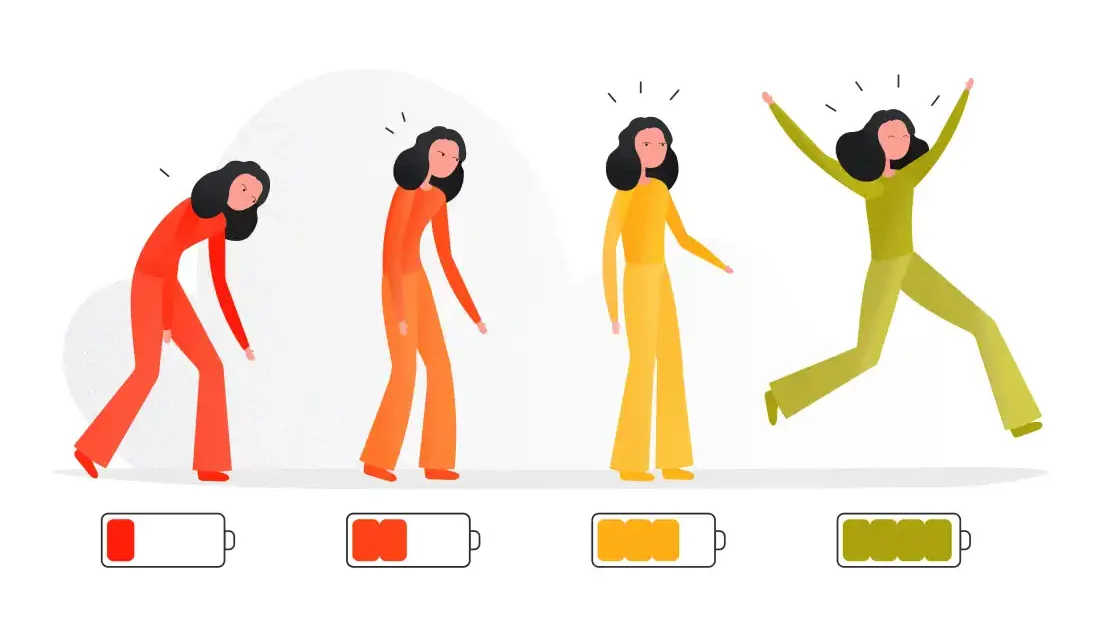
Some individuals with clinical depression struggle to get out of bed. Yet, there’s another group who shows different signs of depression and continues to push through their work and commitments. Psychiatrist Dr. Judith Joseph highlights this group, often overlooked, as experiencing ‘high-functioning depression.’ These individuals meet their obligations but gradually lose the capacity to feel joy.
Dr. Joseph explains, “When you’re joyful, your physical health improves, your relationships flourish, and you’re more productive at work. So, why don’t we prioritize it?” At the heart of Joseph’s research is anhedonia, a diminished ability to experience pleasure. She refers to it as ‘the silent sister’ of depression. “One sister is visibly depressed, garnering attention, while the other remains quiet and numb,” she notes.
“Anhedonia may not align with a classic crisis, but it’s an existential one,” Dr. Joseph emphasizes. “It’s not something to ignore.”
What the Research Shows
In a study published in the journal Cureus, Joseph and colleagues explored high-functioning depression, trauma, and anhedonia through interviews. Findings indicate that individuals with high-functioning depression often experience increased anhedonia and trauma. The study revealed that parents and caregivers exhibited the highest scores in both areas.
High-functioning depression lacks official recognition in the DSM-5, the mental health diagnostic manual. Joseph argues this oversight contributes to the issue: those who maintain functionality might not recognize their symptoms or seek help until burnout occurs.
“Something’s Gonna Give”
Joseph frequently observes this pattern in women who remain a constant support for others. Their focus on responsibilities at work and home can blind them to the signs of burnout. “Eventually, something’s gonna give,” she cautions. “Whether they break down into clinical depression, face distress or crisis, or suffer a physical breakdown.” Many find themselves in the emergency room, unaware they’ve been harboring unresolved emotional pain.
This pattern often appears in careers that discourage vulnerability, like medicine. In these fields, showing emotions such as crying is seen as weakness. “In medicine, we focus on crises,” Joseph states, “We’re trained to look for mania, psychosis.” She advocates for greater attention to anhedonia, the loss of joy.
A Self-Assessment
Joseph created an anhedonia quiz based on the Snaith-Hamilton Pleasure Scale, which gauges the capacity for enjoyment. This questionnaire explores daily experiences, asking about the enjoyment of praise, savoring meals, and deriving satisfaction from accomplishments. The quiz is not a diagnostic tool but a prompt to consider what might hinder a fuller, more joyful life. To take the quiz, email submission is required for results.
Five V’s Framework
In her book, High Functioning: Overcome Your Hidden Depression and Reclaim Your Joy, Joseph presents the Five V’s framework:
- Validation: Recognizing and accepting your feelings.
- Venting: Expressing emotions through talking, writing, or creative activities.
- Values: Prioritizing what matters most.
- Vision: Maintaining a forward-looking outlook.
- Vitals: Caring for your mind and body with sleep, nutrition, and movement.
Anhedonia spans various conditions and life stages, affecting many in midlife. “We need to learn detection methods,” Joseph asserts, “as it can be a silent issue.”
If you or someone you know is in crisis, contact the Suicide & Crisis Lifeline by calling or texting 988.
For further information, follow the Your Turn newsletter and listen to the Your Turn podcast available on the NPR app or your preferred podcast platform.
 Promising Results for Breast Cancer Treatment with Trastuzumab Rezetecan
 Rise in New World Screwworm Cases Among Animals in the U.S.
 The Impact of Arbitration on Health Care Costs
 Impact of Rising Cannabis Use on Families and Children
 Ethical Concerns in Hormone Therapy Policy and Government Financial Disclosure
 Debate Over Data Centers in Arizona Sparks Health Concerns and Political Divisions