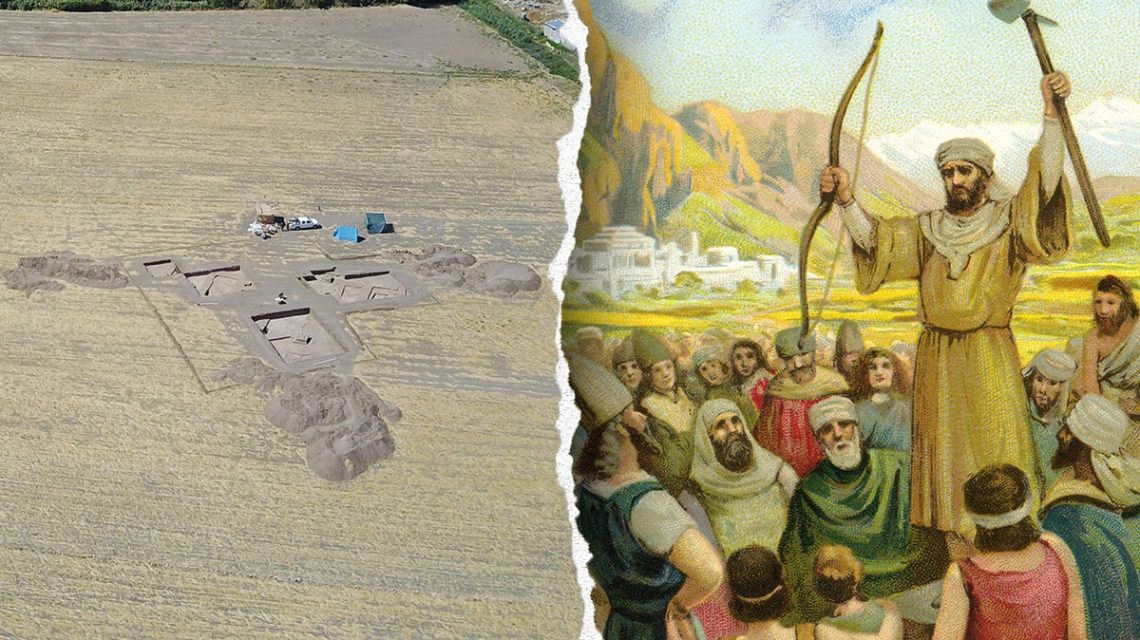
Archaeologists have recently unearthed significant findings in Iraq, indicating that early Christians shared the region with adherents of a religion now not widely known. This discovery was made public by Goethe University Frankfurt in Germany in December. The archaeological digs at the Gird-î Kazhaw site, located in the Kurdistan area of Iraq, began in late summer 2025 and centered on a structure erected around 500 A.D.
At first, the purpose of the ancient building was uncertain until researchers came across five square pillars, leading to the speculation that it could have been a church. Further geophysical surveys revealed additional subterranean walls, initially suggesting the site might have been part of a larger monastery complex.
The investigation uncovered stone pillars indicative of potentially a three-nave structure along with remains pointing to it being a Christian worship site. The discovery of pottery decorated with a Maltese cross further supports this theory.
The site’s location near a Sasanian fortification is noteworthy. This proximity suggests that Christians and Zoroastrians might have coexisted in the vicinity. The Sasanian Empire, which spanned from approximately 224 A.D. to 651 A.D., endorsed Zoroastrianism as its state religion before the region underwent Islamization in the 7th century. Despite the empire’s decline, evidence suggests a continuation of religious diversity throughout the area.
Although experts assure that Zoroastrians were present at the site, their presence is inferred rather than directly evidenced. Alexander Tamm, co-leader of the dig and a professor at Friedrich-Alexander University of Erlangen–Nuremberg, mentioned the existence of a small fortress used during the same period, suggesting that the occupants were likely Zoroastrians.
Zoroastrianism, known for having multiple deities, differs significantly from Christianity, which is monotheistic. This distinction is further highlighted in their burial practices. Zoroastrians typically interred their dead in rock-cut niches or vessels to uphold the soil’s purity, while Christians customarily buried directly in the ground, potentially conflicting with Zoroastrian beliefs.
Despite these differences, Tamm emphasized that the two religious groups likely adapted to one another’s practices and coexisted peacefully. Such adaptations are seen throughout history, where Muslims and Christians later shared the region.
Tamm expressed surprise at finding the structures dating back to the Sasanian period, as initial expectations were to uncover a smaller settlement. Despite this achievement, much remains to be explored.
As the excavation continues, Tamm acknowledges that there is still much to learn about Christianity’s historical presence in Iraq and Iran. He emphasized that ongoing archaeological efforts are vital, stressing that they are prioritized over religious differences. The collaboration between Islamic workers from the Sulaymaniyah Antiquities Authority and the excavation team underscores the commitment to historical discovery.
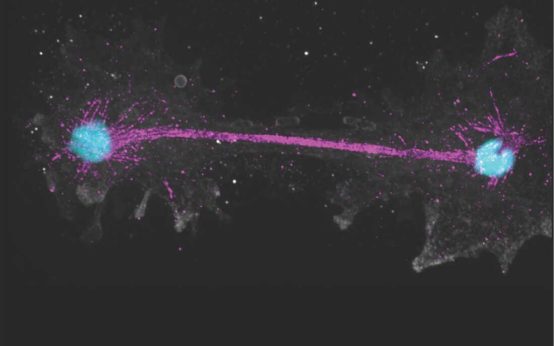 The Discovery of Incendiamoeba cascadensis: A Fire Amoeba
 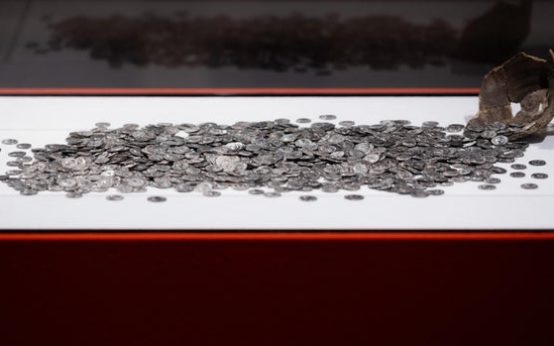 Archaeological Discovery in Germany: Largest Hoard of Roman Coins Found
  Hurricane Formation and Strengthening
 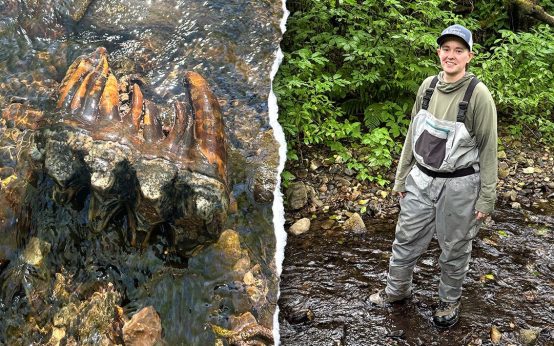 Ancient Mastodon Tooth Unearthed in California Creek
  The Tiny World of the Pumpkin Toadlet
  Chimps and Self-Medication: Insights from Gombe Stream