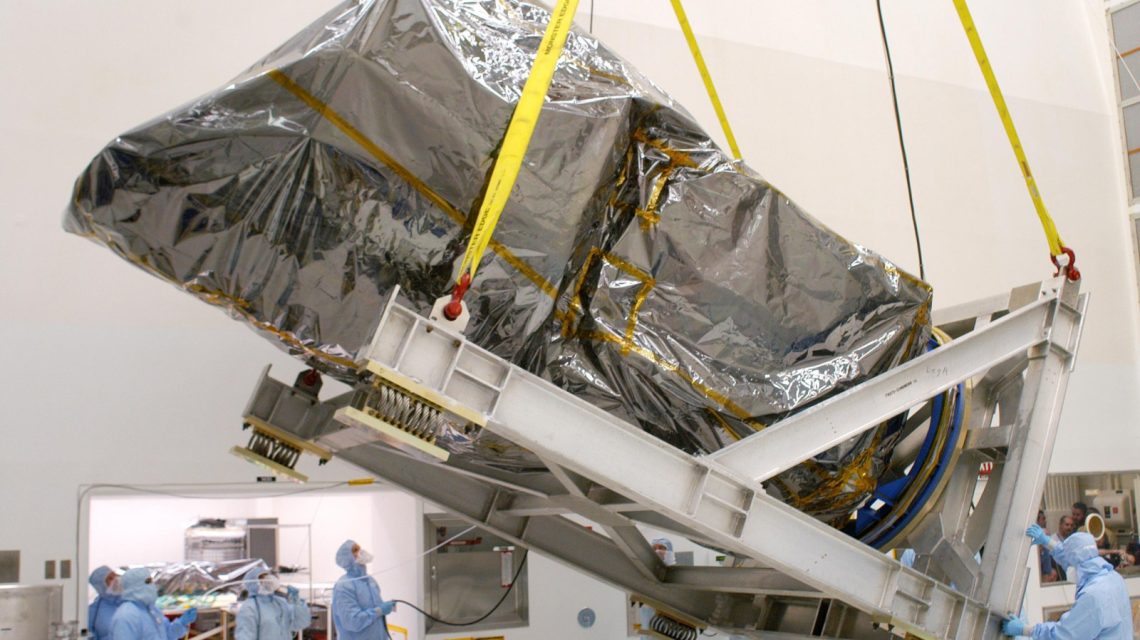
An aging NASA space telescope known as the Swift Observatory, which spent over two decades studying the universe’s most powerful explosions, is expected to re-enter Earth’s atmosphere within days. This has raised questions about potential debris surviving the fiery descent and its eventual landing site.
Re-entry Details
According to the U.S. Space Force, Swift is set to re-enter the atmosphere around Friday following years of orbital decay accelerated by intense solar activity. While most of the 1.5-ton spacecraft is expected to burn up, NASA suggests that some dense parts, including tungsten components and sections of its mirrors, might survive and reach the surface.
Surviving debris is likely to fall into the ocean, although pinpointing a precise location is challenging.
Potential Impact Zones
Debris from Swift could land across a vast range, including parts of Africa, Australia, India, Southeast Asia, Central America, and South America. Predicting a satellite’s final path remains difficult until shortly before re-entry due to atmospheric condition fluctuations affecting a spacecraft’s breakup location.
Therefore, officials typically refine re-entry forecasts in the final hours. The U.S. Space Force continues tracking Swift’s descending orbit.
Reasons for Descent
Swift Observatory’s fall follows a failed rescue effort by NASA, which enlisted Katalyst Space to save the mission using their robotic spacecraft, Link. The intention was to approach Swift and raise its orbit, but technical issues prevented execution. The rescue vehicle ultimately re-entered Earth’s atmosphere, leaving Swift on its current path.
Solar activity also contributed to Swift’s descent. Increased solar activity warms and expands Earth’s upper atmosphere, causing satellites in low-Earth orbit to experience increased drag and lose altitude faster.
Swift’s Contributions
Since its launch in 2004, Swift Observatory was designed to quickly turn toward gamma-ray bursts, among the most energetic explosions in the universe. During its mission, it detected over 2,000 gamma-ray bursts and approximately 1,400 exploding stars. The observatory also provided observations of black holes, comets, and asteroids.
Swift served as a vital support to larger observatories like the Hubble and the James Webb Space Telescopes. By late October, Swift had descended too low for stable observations, prompting mission controllers to shut down its systems and conclude one of NASA’s longest-running astrophysics missions.