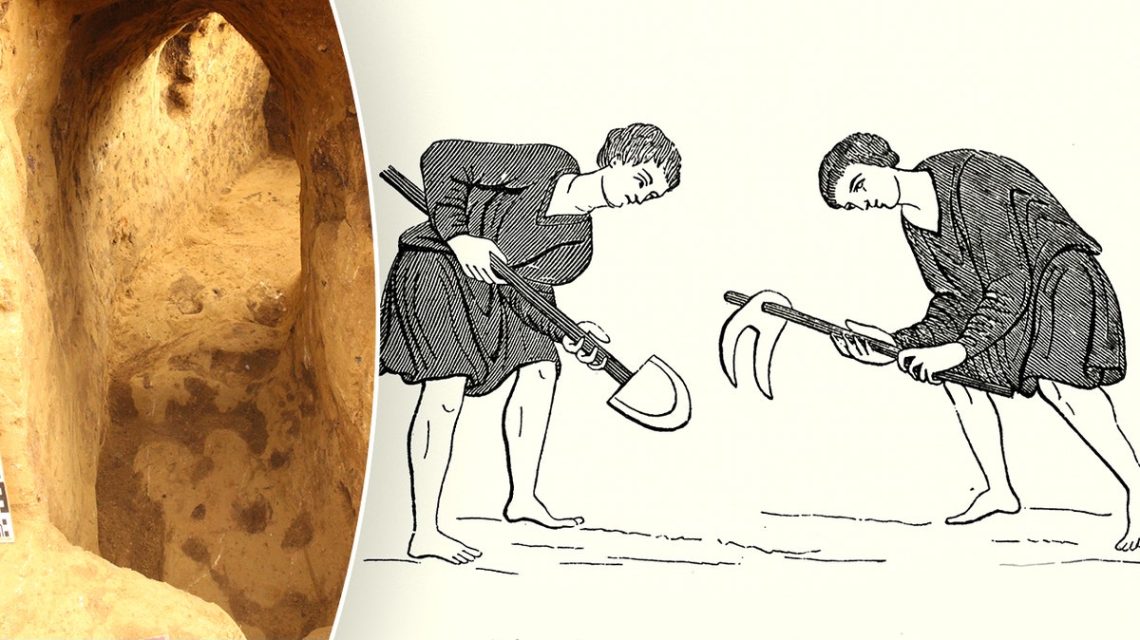
In recent developments, archaeologists in Germany have unveiled a medieval tunnel hidden within an ancient burial site. This remarkable discovery was announced on January 29 by the State Office for Heritage Management and Archaeology of Saxony-Anhalt (LDA Saxony-Anhalt).
The tunnel is located within a burial complex from the Middle Neolithic era near Reinstedt, Germany. Researchers estimate that the site was associated with the Baalberge culture and dates back to the 4th millennium B.C. This site of historical significance was unearthed late last year, prior to the construction of a wind turbine in the area.
“Interpretations of erdstalls range from hiding places to spaces used for cultic activities,” the official statement conveyed.
Approximately 5,000 years after the initial use of the burial site, an erdstall—an underground tunnel system—was constructed in the loess, a type of compact wind-deposited silt. The tunnel dates back to the late Middle Ages, although its original purpose remains shrouded in mystery.
Archaeologists initially mistook the feature for a grave due to its layout, which appeared to be a trapezoidal ditch. This ditch contained several poorly preserved burials dating to the Late Neolithic period, around the 3rd millennium B.C. A stone slab marking the northern end of the pit initially supported the grave theory, until further investigation revealed its true nature as an underground passage.
Within the erdstall, excavators found late medieval pottery, a multitude of stones, and small cavities within the loess fill, verifying the presence of the tunnel. They also discovered items such as a horseshoe and traces of charcoal from a short-lived fire, along with animal remains.
The tunneling appears to have been intentionally closed off at the entrance. Archaeologists observed a stack of larger stones suggesting that the entrance may have been deliberately sealed. This adds another layer of intrigue to the discovery.
It is speculated that the Neolithic ditch enclosure might still have been visible above ground during medieval times. The positioning of the tunnel may have been motivated by religious reasons, particularly to avoid a pagan burial site, which medieval Christians typically steered clear from.
This find is part of a series of impressive archaeological discoveries across Germany. In the previous summer, excavators uncovered a mysterious Roman-era settlement in North Rhine-Westphalia, rich in building remnants and artifacts. During the same period, a hoard of early medieval treasures, including a rare cross, was found on the banks of an inlet in northern Germany.
 The Discovery of Incendiamoeba cascadensis: A Fire Amoeba
 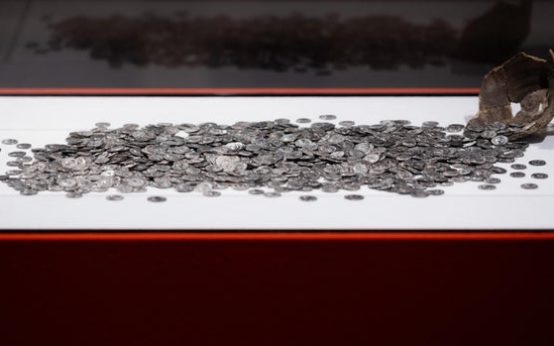 Archaeological Discovery in Germany: Largest Hoard of Roman Coins Found
  Hurricane Formation and Strengthening
 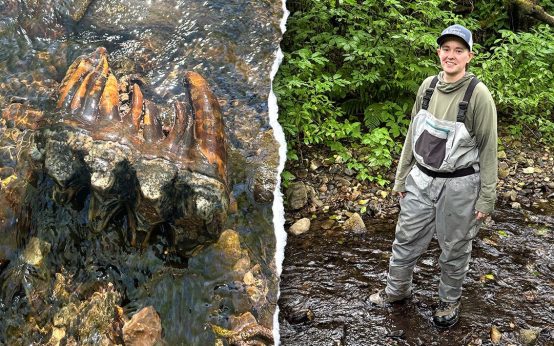 Ancient Mastodon Tooth Unearthed in California Creek
  The Tiny World of the Pumpkin Toadlet
  Chimps and Self-Medication: Insights from Gombe Stream