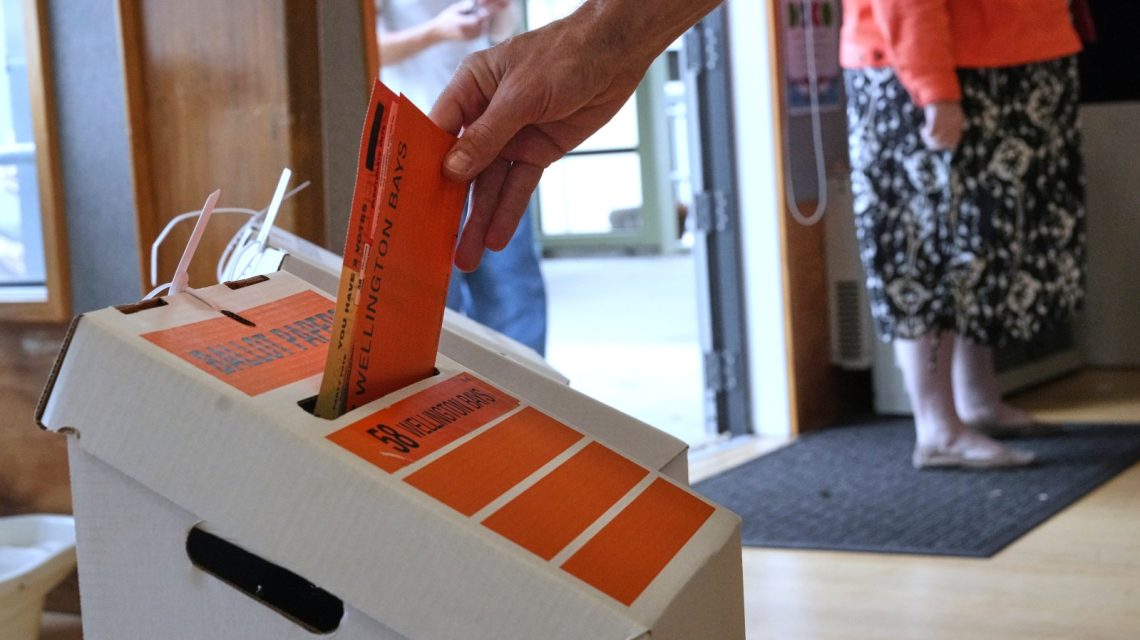
The recent election in New Zealand remains highly uncertain after preliminary results indicated a narrow lead for the center-right coalition headed by Prime Minister Christopher Luxon. His coalition secured a slender one-seat parliamentary majority despite the opposition Labour Party slightly leading the nationwide party vote.
The Close Contest
Preliminary results showed Labour with 29.36% of the party vote, closely followed by Luxon’s National Party at 29.21%. Labour accumulated 710,330 votes, while the National Party garnered 706,680. This resulted in a mere 0.15 percentage point difference or 3,650 votes separating the two parties.
Seats and Coalitions
In terms of seats, the National Party secured 42 compared to Labour’s 36, owing to a stronger performance in electorate contests. ACT New Zealand and New Zealand First, allies of the National Party, were projected to win 13 and 12 seats respectively. This gives Luxon’s center-right bloc a tentative 67-seat majority in a 66-seat threshold Parliament.
Despite this, Luxon refrained from declaring victory, acknowledging the closeness of the race. He told supporters that there exists a “pathway to forming the next government” but emphasized the result was “too close to call.”
The Role of Special Votes
The final outcome hinges on special votes, which remain to be counted. The Electoral Commission estimates approximately 399,000 special votes are yet to be included in the official count. These votes consist of ballots cast by overseas New Zealanders and those unable to vote in their electorate on election day.
The inclusion of special votes often alters the final party percentages and seat allocations. The Electoral Commission plans to announce the official results on November 27. Until then, the incumbent administration remains in a caretaker role under New Zealand’s political conventions.
Labour leader Chris Hipkins noted the current situation’s uncertainty, addressing supporters by acknowledging, “Tonight, New Zealand has spoken,” while expressing the need for clarity on the outcome.
Fragmentation in Party Support
Neither main party reached the 30% mark in preliminary votes, revealing a fragmented electoral landscape. Several smaller parties gained significant seats:
- The Greens: Projected 16 seats
- ACT New Zealand: Projected 13 seats
- New Zealand First: Projected 12 seats
- The Opportunity Party: Projected 7 seats (5.96% of the vote)
- Te Pāti Māori: Projected 5 seats (winning five electorate contests)
New Zealand’s mixed-member proportional electoral system, wherein voters select both a representative and a political party, can expand Parliament’s size. Preliminary results increased the usual 120 seats to 131 due to 11 overhang seats, raising the majority threshold to 66.
Polling Predictions
Surveys before the election signaled a tight race. The final 1News-Verian poll reported National at 30%, Labour at 29%, with the Greens, ACT, New Zealand First, and The Opportunity Party trailing behind. A Post-Freshwater Strategy poll, in contrast, suggested a Labour advantage. With Labour at 30.7% and National at 26.4%, differing findings emphasized the race’s unpredictability.
Global Context
New Zealand’s election occurs amidst growing strength for conservative and far-right parties in parts of Europe, although the political landscape in New Zealand differs. The National Party is seen as center-right, ACT as libertarian, and New Zealand First as populist. Despite some gains, National lost seats compared to the previous election, complicating any narrative of a conservative resurgence.
 Trump Orders DOJ Investigation Amid Impeachment Threats by Democrats
 President Trump Offers Dana White White House Press Secretary Position
 Democrats Tackle Immigration Challenges Post-Midterm Victories
 President Trump’s Demands for DOJ Probe on Democrats
 Democrats Consider Sweeping Changes After Midterm Gains
 Trump Questions Midterm Vote Totals Amid Election Losses