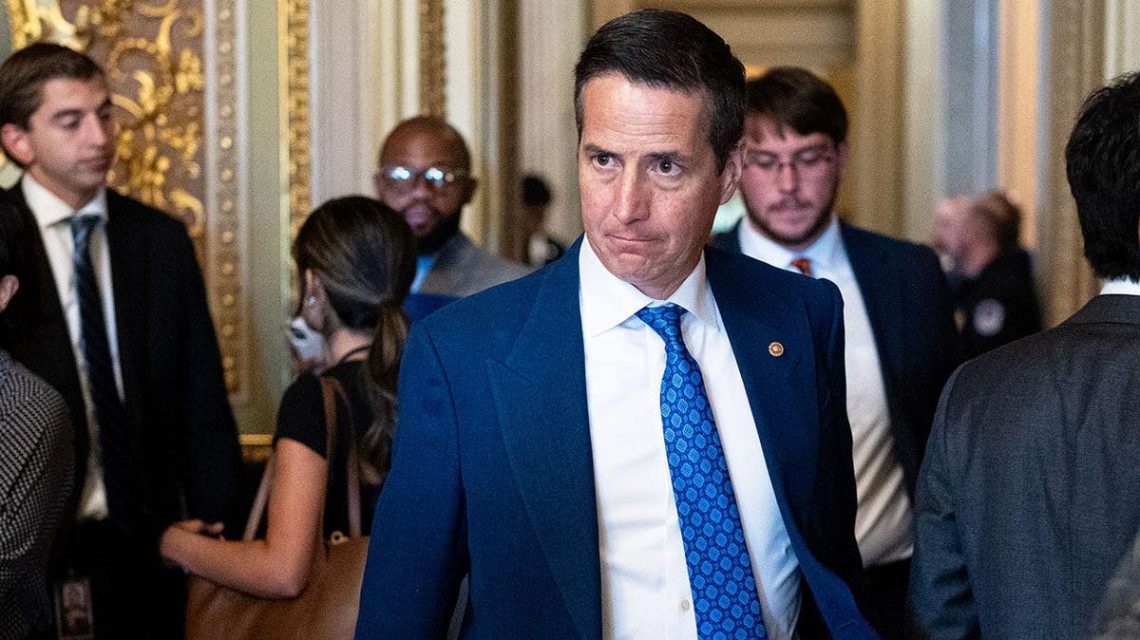
Senate Republicans are still feeling the impact of the recent midterm elections, as a tougher political reality emerges. The possibility of reclaiming control of the Senate may elude the GOP for several years.
This year’s Senate map initially seemed favorable for Republicans who sought to uphold and potentially expand their 53-seat majority. However, the upcoming 2028 election cycle appears daunting, possibly even insurmountable, for the GOP.
Senator Bernie Moreno, R-Ohio, recently appointed as the Senate GOP’s campaign chief, admitted that reclaiming the majority in 2028 presents a “very tough” challenge. Moreno pointed out that only three Democratic incumbents are up for re-election in battleground states. In contrast, Republicans need to defend their seats in traditionally Republican strongholds like the Carolinas, Kansas, and Iowa.
“It is an absolutely brutal map,” Moreno noted, emphasizing a need for discipline and accountability among incumbents and candidates. He stressed the importance of appealing to donors effectively.
Other voices within the GOP express less optimism. Senator Steve Daines, R-Mont., who led the National Republican Senatorial Committee during the 2024 campaign when Republicans gained Senate control, likened the situation to chipping away at a lead in a baseball game. Gaining back majority will likely require several election cycles.
“The Democrats may overreach over the next couple of years,” Daines predicted, suggesting this could create openings for Republicans. Yet, gaining majority control may still take time.
Senate Majority Leader John Thune, R-S.D., recently confirmed as incoming minority leader after a contentious post-midterm meeting, shared similar sentiments. Thune noted that Democratic overreach could alter the political landscape yet also emphasized the variability in election cycles.
Thune reflected on history when, after the 2005 election, Republicans held a 55-seat majority. “We were bullish about reaching 60 seats for a filibuster-proof majority by 2006,” Thune said. “By 2006, Republicans were back in the minority.”
Thune pointed out that while the electoral map matters, the national mood plays a significant role. Previously Republican-leaning states now have Democratic incumbents, and each election cycle can differ sharply.
For Republicans, the heavy losses in the recent elections offer a chance to focus on state-specific campaigns rather than national allegiances, particularly with the decline in association with Trump.
Retired Senator Thom Tillis, R-N.C., who has become a vocal administration critic, predicted that 2028 may not offer favorable grounds for the GOP. He suggested that the party may not be ripe for resurgence until “at least 2030.” Tillis highlighted greater awareness and the need for a feedback loop influencing officials’ performances as essential for future success.
 Democrats Convene in Denver to Chart Future Course
 Seattle’s Response to Initiative 638 and Legal Implications
 Controversy Surrounds Internship Requirement for Colorado Senator
 Republicans Evaluate Future Prospects After Election Losses
 Democrats Face Internal Challenges After Electoral Success
 Alaska Judge Rules Against Peltola’s Campaign Request for Absentee Ballot Records