
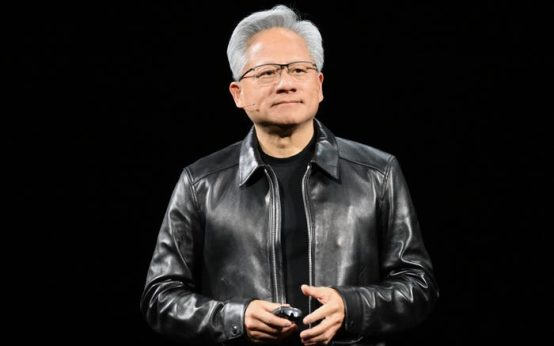
Nvidia cofounder Jensen Huang recently returned to his role as CEO, but a significant challenge looms for the company. Major clients like OpenAI, Anthropic, and Google are advancing AI technology to design their own chips. This reduces reliance on Nvidia hardware, threatening its position in the AI sector.
AI-Driven Chip Design
The industry has closely watched recursive self-improvement (RSI), allowing AI systems to enhance their technological successors. This has mainly occurred in software, but now the same is influencing hardware. Improved AI models help design next-generation chips, challenging Nvidia’s market share.
OpenAI’s Achievements
OpenAI made notable progress with its AI models in chip design, developing custom chips like Jalapeño in early 2025. The models manage to reduce space requirements by 10% to 13% for critical components. For instance, redesigns cut space usage by 15% and calculation time substantially. Additionally, collaborations with AMD improved chip performance by up to 14%, which AMD has incorporated into production designs.
OpenAI tested successive AI models on public processor designs, producing faster chips. These improvements suggest AI can increasingly handle core chip design tasks.
Google’s Head Start
Google’s DeepMind introduced AlphaChip, an AI system aiding chip component arrangement, completing work in hours that previously took weeks. Google has utilized such technology since 2020 for its AI chips, TPUs, essential for training Gemini AI models. A significant TPU agreement with Anthropic positions these chips as serious competition to Nvidia’s GPUs.
Anthropic’s Chip Developments
Anthropic is also focusing on chip design. The company formed an internal team, attracting talent from firms like OpenAI and Google. Their latest AI model, released during their IPO, showed great promise in electronic circuit design. This ability has become a core focus, with restrictions on building operating systems for some specialized AI chips.
The Importance of Customization
Nvidia’s chips excel in various AI tasks but may include unnecessary features for specific companies like OpenAI and Anthropic. Custom chips tailored for precise needs can cut costs significantly across many requests.
AI is also simplifying software development required for AI model operations. Nvidia’s CUDA software locks development into its ecosystem, but AI advancements could enable other chipmakers to replicate CUDA-like methods swiftly.
Nvidia’s Strategic Response
Jensen Huang recognized the potential threat early. Before leaving, Nvidia focused on open-weight AI models, which businesses can independently deploy. This move supports firms wanting flexibility outside proprietary services’ frameworks.
Nvidia has developed open models under Nemotron, supported startups such as Reflection AI, and plans to acquire Hugging Face, a vital platform for open AI technology distribution. While this approach challenges OpenAI’s and Anthropic’s models, it can attract more businesses and governments to use open models for reduced costs and increased control.
Ongoing Challenges
Nvidia’s dominance isn’t ending soon, given the complexities beyond design, including manufacturing partnerships, sophisticated engineering teams, and substantial investment.
Chip production timelines stretch over years, but AI models evolve rapidly, posing obsolescence risks for custom processors. Nvidia continues leveraging AI in its innovations, already enhancing CUDA software development.
Technology Nvidia enabled could empower its clients to build competitive hardware, demonstrating a clear evolution in AI intelligence roles.
 Kevin O’Leary’s Missed Prediction on Jensen Huang’s Return as Nvidia CEO
 The Fragile State of AI: The Impact of Jensen Huang’s Ouster
 Jensen Huang’s Return to Nvidia Sparks Celebration and Debate
 U.S. Coast Guard Engages in Cybersecurity Boardings
 AI Manipulation and Human Vulnerability
 Silicon Valley’s Pursuit of Embryo Screening for Autism