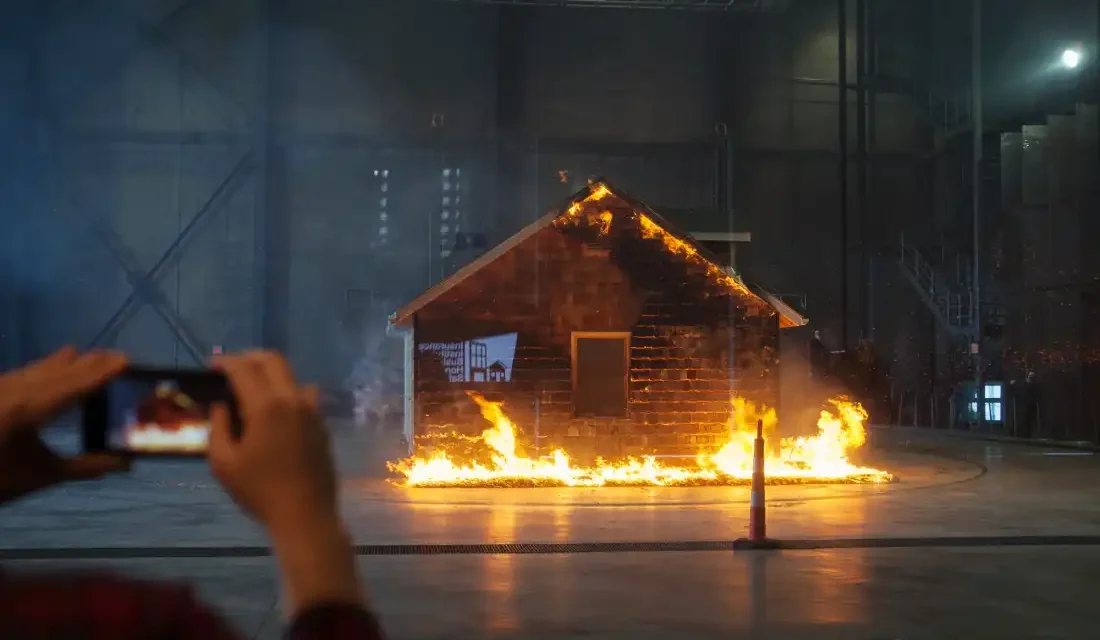
As a homeowner in rural Northern California, the fear of fires is a constant concern. The growing frequency and intensity of wildfires make finding affordable and reliable home insurance challenging. This struggle has reached a point where a home’s most valuable asset feels at risk without sufficient coverage. This situation highlights the ongoing issues within the insurance market, prompting questions about potential solutions.
The complexities of this scenario are explored in Alexi Horowitz-Ghazi’s recent Planet Money podcast series. It delves into the economics of creating safer communities. Insurance companies invest in research to find ways to prevent homes from catching fire. Yet, homeowners who invest in safety measures often see little reduction in their insurance costs despite their efforts. The series takes a closer look at a destruction lab in South Carolina. Here, researchers simulate disasters on mock houses to determine effective ways to protect homes. This research is funded by some of the largest insurance companies. They aim to understand which building designs minimize risk, reducing their potential payout if disaster strikes. This is part of a long-standing effort by insurers to mitigate risk. Historically, organizations like Underwriters Laboratories have tested building materials for safety to prevent costly incidents. Similar approaches are applied in automobile safety by the Insurance Institute for Highway Safety.
Tackling Moral Hazard in Fire-Prone Regions
The insurance industry often appears straightforward. It financially shields individuals against unforeseen losses. However, it also involves complex calculations about risk and mitigation efforts. A key concept in this context is “moral hazard,” where insurance can inadvertently reduce the incentive to lower risk. For homeowners in wildfire-prone regions, this might mean less motivation to invest in home upgrades that reduce fire risk, like metal roofs or ember-resistant vents. These upgrades can be expensive, and if insurance covers a complete rebuild in the event of destruction, these investments may seem less enticing.
To counteract moral hazard, insurers could offer discounts on premiums for homeowners who invest in safety measures. This provides an incentive to reduce fire risks community-wide. However, as reported in the podcast, discounts for these measures are often minimal, leaving residents wondering if there’s a market failure. If the work to reduce fire risk is not reflected in insurance costs, does it imply that insurers have their risk calculations correct? Or should these efforts lower premiums significantly?
The Challenge of Affordable Premiums
The increasing costs of premiums are a significant concern. In places like California, finding any coverage is becoming more difficult. Many are compelled to rely on the state’s insurer of last resort, the FAIR Plan. The issue extends beyond climate change. Insurance companies have consistently managed high-risk scenarios. However, problems arise concerning pricing, regulatory approvals, and whether homeowners can afford coverage. The insurance regulations in California, specifically Proposition 103, add complexity. Passed in 1988, it mandates state approval for rate increases, forcing insurers to rely on historical data instead of forward-looking models. This may have kept premiums low, possibly encouraging development in risky areas. As wildfires become more frequent and claims rise, insurers withdraw from the market.
Adaptations and Market Adjustments
The insurance landscape might adapt by allowing more flexible pricing, despite potentially higher costs for consumers. Economist Nancy Wallace notes that California’s regulatory framework has exacerbated market issues. Insurers need flexibility to accurately price risk, which could come with higher premiums. Nonetheless, allowing more autonomous rate setting might offer a step toward market stability.
Despite these challenges, there are signs of potential improvement. Recent regulatory changes allow insurers to use models that predict future wildfire losses. This could encourage more policies in high-risk areas and ease coverage challenges.
For homeowners like the author, transitioning from the FAIR Plan to the “non-admitted market” offers better coverage. Yet, it comes with risks, such as lack of state protection if the insurer collapses after a major disaster. As winter and El Niño approach, there’s a temporary relief from fire concerns. It is an opportune time to understand the intricacies of the insurance crisis, with the hope that ongoing efforts might stabilize the market soon.
For more insights, listen to Alexi’s comprehensive series, analyzing the current state and future of home insurance amid rising wildfire risks. Further developments will be covered in the upcoming Planet Money newsletter.
 New York’s Nuclear Power Push: Challenges and Solutions
 Who Owns the St. Anthony Falls Cutoff Wall?
 Economic Impact of Outdoor Recreation in the U.S.
 European Governments Urge 72-Hour Preparedness Amid Cyber and Climate Risks
 Maryland Proposes New Rules to Protect Eastern Box Turtles
 Hurricane Lowell’s Impact on Kauaʻi and Medicaid Challenges