
Officials reported a successful controlled detonation of 68 drums of unstable explosive material at an Iowa munitions plant on Wednesday. The operation came after a period marked by public outcry, evacuations, and legal challenges. Concerns centered around the potential spread of toxic lead dust from the site.
Documents reviewed by The Washington Post outlined precautions taken to contain the blast and limit hazardous material spread. Earth-covered bunkers, used for storing lead azide, were reinforced with two-story high barriers. Approximately 19,000 cubic yards of lime-fill and 300 sand-filled blocks, known as HESCO units, were arranged with a 28-foot venting gap to deflect the explosion. Water cannons, misters, and suppressant foam were applied to the buildings holding the explosives.
On November 15, the Army announced plans for a controlled detonation of the degraded lead azide, a reactive material used in munitions production. The military dismissed other disposal methods, including chemical neutralization by a remediation company. During the following week, the Army published plume maps online, advising residents of Middletown, Iowa, and areas within a five-mile cone southwest of the plant to evacuate.
“The U.S. Army detonated a degraded stockpile of lead azide at the Iowa Army Ammunition Plant in Middletown, Iowa, on Wednesday.” — Jim Urquhart/Reuters
Environmental Protection Agency (EPA) data showed no lead detection at four air-sampling stations southwest of the plant post-blast. The Army plans to excavate and test the area’s soil for lead. Contaminated soil will be chemically stabilized and disposed of at a licensed facility. A comprehensive report will be submitted to the EPA within 60 days of the operation’s completion.
 Federal Judge Blocks Trump’s Executive Order on Birthright Citizenship
 Trump and El-Sayed’s Democratic Dialogue on Health Care
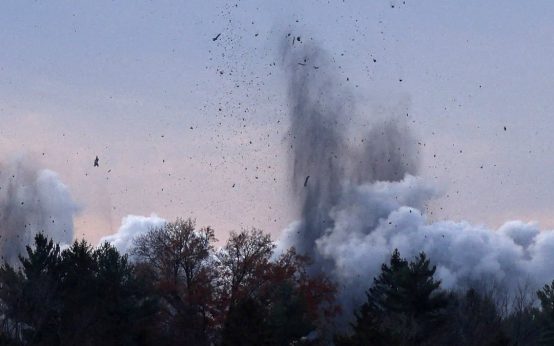 U.S. Army Successfully Detonates Explosive Materials in Iowa
 Thanksgiving Reflections on America’s Agricultural Heritage
 Trump Considers Pardoning Nvidia CEO Jensen Huang Amidst Allegations
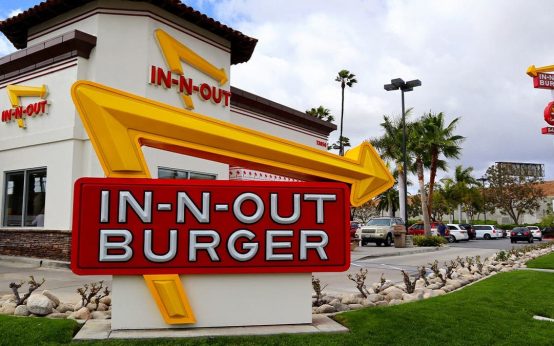 Bystanders Stop Alleged Attack in Women’s Restroom at In-N-Out Burger