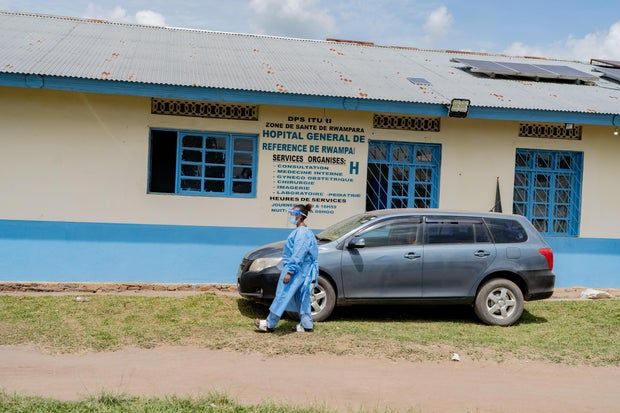
The World Health Organization (WHO) has declared the recent Ebola outbreak in Congo and Uganda a public health emergency of international concern. So far, more than 250 suspected cases and 80 suspected deaths have been identified. There is concern that actual numbers could be higher, as efforts to control the disease are being intensified with increased screening and contact tracing.
The WHO has not classified the outbreak as a ‘pandemic emergency,’ but acknowledges the serious threat it poses. In Congo’s Ituri province, the outbreak’s epicenter, there are eight laboratory-confirmed cases along with 246 suspected cases and 80 suspected deaths as of last Saturday. Uganda has reported two confirmed cases, including one fatality, in people who traveled from Congo.
The Africa CDC reported 246 suspected cases and 65 deaths in Congo, while regional health officials at a news conference suggested that the number may be over 300 probable cases. At least six Americans were exposed to Ebola in the Democratic Republic of Congo, according to sources from international aid organizations.
The Outbreak’s Impact on Local Communities
Locals in Bunia, Ituri’s capital, are deeply affected. The spread of Ebola has led to frequent burials, causing anxiety among residents. Jean Marc Asimwe, a local resident, reported that multiple burials occur daily due to the outbreak.
Congolese Health Minister Samuel-Roger Kamba confirmed eight laboratory-tested cases with four deaths. The virus identified is the Bundibugyo strain, known for lesser prominence in past outbreaks.
Ebola Spread to Uganda
Uganda has recorded a case that authorities labeled as ‘imported’ from Congo. The person died in Kampala on May 14. The proximity of affected areas to Uganda and South Sudan increases the risk of further spread, according to the Africa Centres for Disease Control and Prevention.
Doctors Without Borders is preparing a large-scale response due to the rapid spread of the disease. The body of the patient in Kampala has been returned to Congo, with no other local cases confirmed by Uganda’s health ministry.
Challenges in Outbreak Management
Congo often struggles with logistical challenges in response efforts due to geographical hurdles and regional conflict. Ituri province’s distance from Congo’s capital and ongoing local violence present additional difficulties.
The outbreak is confirmed in three health zones in Ituri, including Bunia. The number of tested samples is low, complicating containment efforts. However, there is hope among residents that government action will bring the situation under control.
Risk to Americans and U.S. Efforts
U.S. health officials consider the risk to Americans as low. The U.S. Centers for Disease Control and Prevention (CDC) is collaborating with other agencies to manage the outbreak. They have issued travel advisories and are monitoring symptoms at ports of entry.
The U.S. response is scrutinized due to past funding cuts, yet experts note the country’s continued capability to manage high-risk pathogens. Dr. Craig Spencer, who survived Ebola, emphasized the importance of rapid response and prior commitments to pathogen management.
 Pope Leo XIV’s Cancer Discovery and Recovery Detailed by Surgeon
  Escalating Tensions at the Venezuela-Colombia Border
  Trump Criticizes Zelensky Over Resumed Strikes on Russian Oil Facilities
  Katie Wiles’ Controversial Visit to Republika Srpska
  Democracy Under Threat: The Rise of Politically Charged Messaging
  Trump’s Strategy for Greenland: Military and Resource Expansion