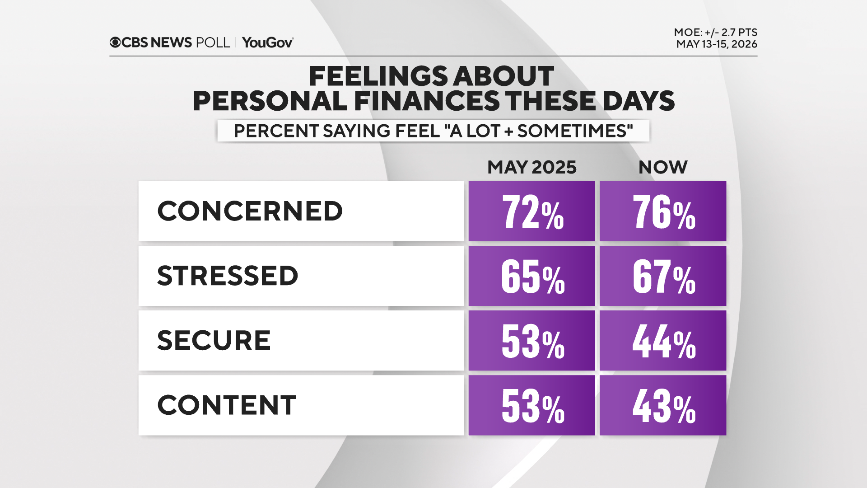
According to a recent CBS News/YouGov survey, a significant number of Americans express concern about their financial situation. Levels of financial security and contentment have decreased compared to the previous year. This is part of a broader negative perception of the U.S. economy, which has reached its lowest point since 2023. Currently, three-quarters of respondents state that their incomes are not keeping pace with inflation.
Many Americans describe the economy as ‘uncertain,’ reflecting both immediate and long-term worries. Gas prices are a major concern, and there is an unclear perception of events in Iran and the Strait of Hormuz.
Additionally, President Trump’s economic strategy is receiving criticism. Neither political party has earned a net positive rating for addressing the cost of living. There is also concern about the potential impact of AI on job opportunities, with many fearing worse prospects compared to their parents’ generation.
Iran and Economic Uncertainty
The situation in Iran is a major factor in the perception of economic uncertainty. Rising gas prices have left many Americans feeling they lack a clear understanding of daily events in the Strait of Hormuz. The general sentiment is that the conflict has not benefited U.S. economic interests, and the views on military success and strategic advancement are mixed. There is no clear consensus on which side currently holds the advantage.
President Trump’s Economic Policies
President Trump is facing political consequences due to these economic issues. Two-thirds of Americans believe his policies are worsening the economy in the short term. Administration calls for patience have not increased optimism regarding long-term improvements. Most Americans describe their emotions towards the administration’s economic policies as ‘frustrated’ or ‘angry.’
The President’s approval ratings on handling the economy and inflation have dropped. His ratings among Republicans have specifically declined regarding inflation, especially amid the Iran conflict and rising oil prices. While Republicans continue to support him highly on immigration (89%) and overall (85%), approval on inflation has fallen to 63%.
Currently, the President’s overall approval rating is at its lowest point of his second term.
Political Responses
Americans do not find the Democratic Party’s approach to economic policy much better. While Democrats slightly edge out Republicans in perceived effectiveness on the cost of living, no clear majority emerges for either party’s policies. A significant portion of people believe neither side offers effective solutions.
Economic Outlook
Worries about the future abound. Many express concerns about finding desirable jobs and fear that AI might eliminate jobs. The prevailing expectation is a downturn, with most forecasting a recession or economic slowdown.
Amid these economic uncertainties, most people choose the word ‘uncertain’ to describe the economy. More people view the economic system as ‘unfair’ rather than ‘fair.’ This pessimism, particularly among those under fifty, is tied to a feeling of diminished opportunities compared to past generations.
This survey involved a nationally representative sample of 2,064 U.S. adults, conducted between May 13-15, 2026. The sample matched national demographics concerning gender, age, race, and education per the U.S. Census American Community Survey and Current Population Survey. The margin of error stands at ±2.7 points.
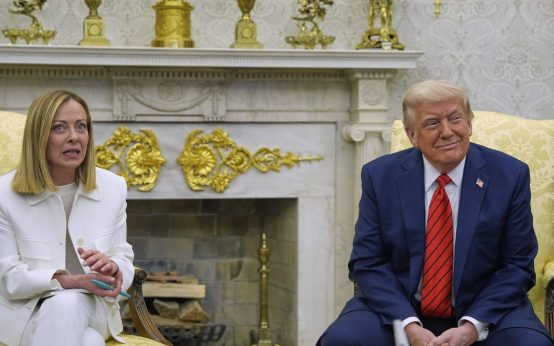 Italian PM Giorgia Meloni Skips UN General Assembly Amid Growing Tensions
  Calls Grow for Ireland’s Soccer Team to Boycott Matches Against Israel
 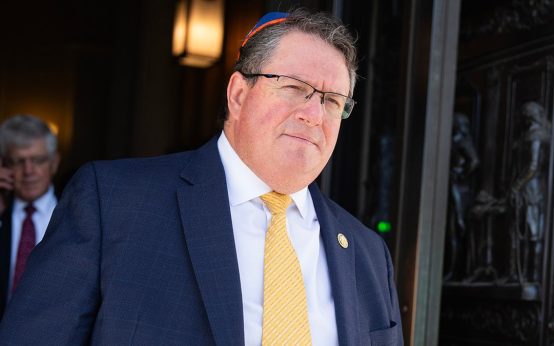 Congressman Randy Fine’s Bold Political Stance and Views on AI Regulation
 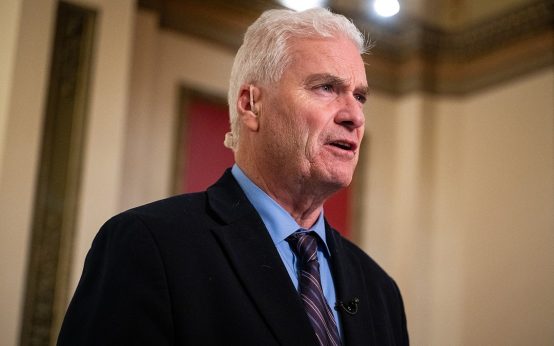 Political Messaging and Strategy Leading Up to Midterms
  President Trump Proposes ‘Super Intelligence’ as New AI Term
  Trump Administration Considers Diesel Export Ban Amid Rising Prices