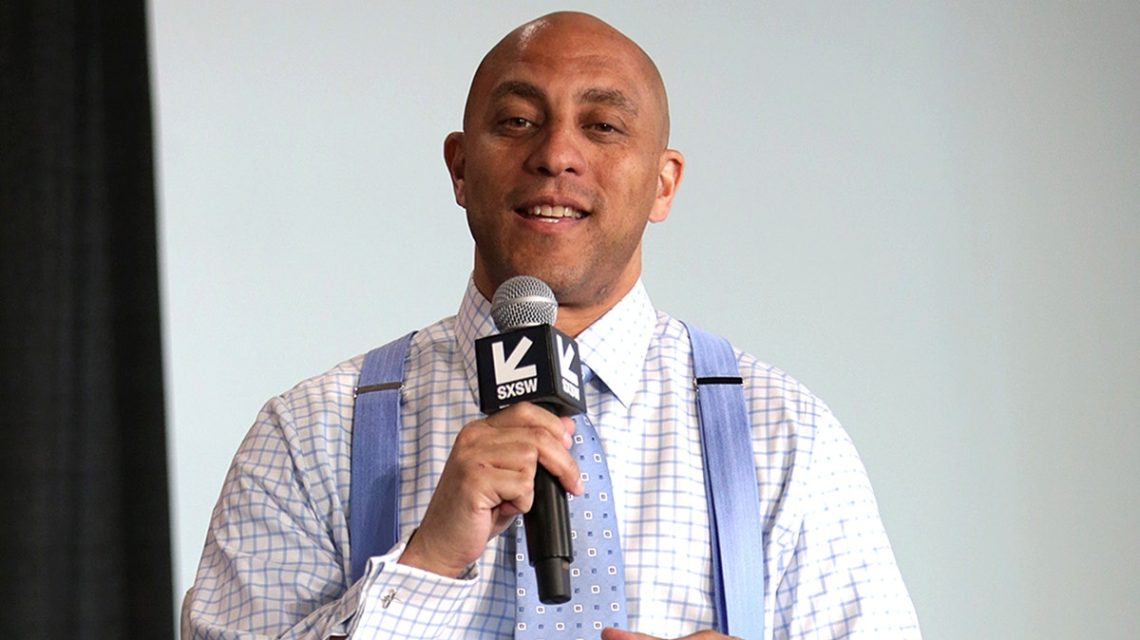
Hasan Kwame Jeffries, a history professor at Ohio State University and brother of House Minority Leader Hakeem Jeffries, has echoed calls for citizens to challenge the system using drastic measures. Jeffries recently suggested that citizens should emulate John Brown, who was known for violent actions against those supporting slavery.
In a social media post noted by Libs of TikTok, Jeffries stated, “John Brown understood that the only way to free Americans from the scourge of White supremacy was to get rid of White supremacists by any means necessary. He was right then. He is right now.” This statement was viewed as advocating for political violence, feeding into the current climate of increasing attacks and assassinations.
John Brown is a historical figure known for his role in “Bleeding Kansas” and the Pottawatomie massacre in 1856, where he killed pro-slavery settlers. His actions were pivotal in sparking the Civil War, but his use of violence remains a controversial topic.
Frederick Douglass, a contemporary of Brown, acknowledged his catalytic role but opposed his methods. Douglass believed in political change and criticized Brown’s raid on Harpers Ferry as misguided and unattainable.
Abraham Lincoln condemned Brown as a zealot, comparing his actions to historical assassination attempts. He argued that Brown’s efforts lacked slave participation and led primarily to Brown’s execution.
Stacey Patton, a journalism professor, has also supported John Brown’s approach, emphasizing his commitment to ending racism. She criticized white allies who seek guidance from minorities, urging them to take more decisive action.
In the current political landscape, rhetoric akin to John Brown’s has surfaced among various candidates. In Maine, Senate candidate Graham Platner labeled himself an “Antifa supersoldier,” advocating for violent measures in the name of tolerance. Such rhetoric raises concerns over increasing radicalization and the potential for violence.
My book “Rage and the Republic” explores the rise of radical voices advocating violence for political gain. These modern parallels to historical events, such as the French Revolution’s “Reign of Terror,” highlight the dangers of using violence as a tool for change. It’s a cautionary reminder of how revolutions can turn against their own, as warned by writer Jacques Mallet du Pan.
Understanding these historical and modern dynamics is crucial in navigating current societal challenges.
 Trump Delivers Warning to Iran, Cuba at UN General Assembly
  Trump Delivers Stern UN Speech on Iran, AI, and Global Security
  Lukashenko and Putin’s Unique Relationship and Belarus’ Strategic Role
  Harris Discusses Potential 2028 Presidential Run
  Far-Left Groups Allegedly Organize Protests in Austin
  Michigan Senate Nominee Abdul El-Sayed Criticized for Remarks on Reproductive Rights