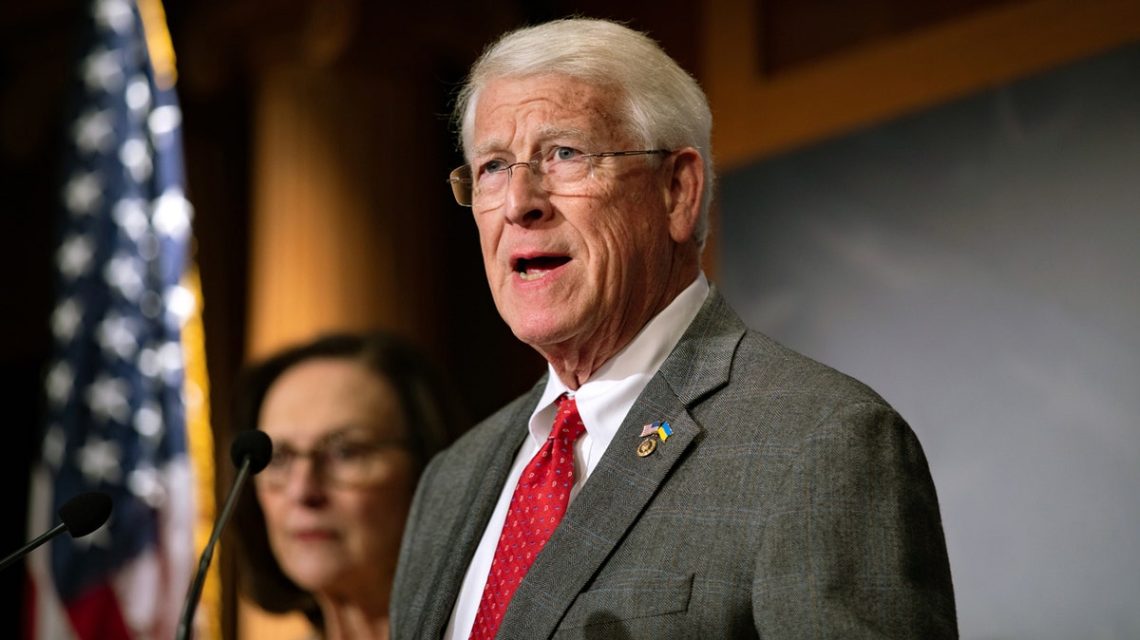
A prominent Senate Republican is urging President Donald Trump to refrain from signing a weak agreement with Iran, as negotiations with Tehran appear to progress. Sen. Roger Wicker, R-Miss., chairman of the Senate Armed Services Committee, emphasized the importance of maintaining military pressure on Iran.
Wicker stated: “We are at a moment that will define President Trump’s legacy. His instincts have been to finish the job he started in Iran, but he is being ill-advised to pursue a deal that would not be worth the paper it is written on.”
He insisted that the U.S. military should complete its mission to dismantle Iran’s conventional military capabilities and secure the Strait of Hormuz. Wicker warned that pursuing an agreement with Iran could be perceived as a sign of weakness. He believes it is time for decisive action.
Our commander-in-chief needs to allow America’s skilled armed forces to finish the destruction of Iran’s conventional military capabilities and reopen the strait.
This statement highlights the tension within Republican national security circles as the Trump administration deliberates over continuing negotiations or maintaining military pressure.
A White House official responded, affirming that Iran would not be allowed to develop nuclear weapons. The official emphasized that President Trump prefers a diplomatic solution but will not rush into a poor deal. Successful operations and blockades have given Trump the advantage in negotiations.
Secretary of State Marco Rubio also acknowledged recent progress in negotiations with Iran but noted that no agreement has been finalized. He emphasized the unresolved issues, particularly Iran’s enriched uranium stockpile and potential enrichment capabilities.
There’s been some progress. I wouldn’t exaggerate it. I wouldn’t diminish it. We’re not there yet. I hope we get there.
Rubio highlighted the significance of the Strait of Hormuz in the discussions and expressed hope for diplomacy despite the ongoing military tension.
President Trump expressed openness to giving diplomacy more time to resolve the conflict. He stated the importance of avoiding war and saving lives by waiting.
Pakistan is possibly playing a key intermediary role, with a visit from Field Marshal Asim Munir to Iran suggesting backchannel efforts to reduce tensions.
Negotiations remain delicate, and Rubio cautioned that they could fall apart. He assured that Trump has alternative strategies should diplomacy fail, but reiterated the president’s preference for a strong diplomatic agreement.
 Public Trust and Transportation Funding in California
  AI Data Centers Stir Debate in Oregon
  Oregon Politics and the Role of AI Data Centers
  The Call for Political Reform in the Two-Party System
  Public Perception of Transportation Funding in California
  U.S. Plans New Economic Sanctions on Iran as Tensions Rise