
Global stock markets experienced a positive shift on Monday. This comes as U.S. President Donald Trump announced progress in negotiations aimed at ending the conflict with Iran. Meanwhile, oil prices saw a significant drop, falling over $4.
European markets reacted positively. France’s CAC 40 increased by 1.1%, reaching 8,203.32. Germany’s DAX gained 1.0%, closing at 25,148.39. Britain’s FTSE 100 rose slightly by 0.2%, ending at 10,466.26. It should be noted that U.S. markets remained closed due to Memorial Day.
Asian markets were active as well. Japan’s Nikkei 225 showed a strong performance, surging 2.9% to finish at 65,158.19. Australia’s S&P/ASX 200 saw a 0.4% increase, closing at 8,692.00. China’s Shanghai Composite saw an uptick of nearly 1%, reaching 4,152.57. Trading was suspended in South Korea and Hong Kong due to holidays celebrating Buddha’s birthday.
There are positive developments in the U.S.-Iran talks. Regional officials informed that a deal is nearing completion. This agreement aims to end hostilities, reopen the strategic Strait of Hormuz, and have Iran relinquish its stockpile of highly enriched uranium. However, the specifics and timelines are yet to be finalized.
The reopening of the Strait of Hormuz is pivotal for oil prices. Its closure has impeded the movement of oil tankers from the Persian Gulf, affecting global oil supply. For example, Japan relies heavily on oil imports, which primarily pass through this strait.
According to analyst Stephen Innes, markets are transitioning from geopolitical fears to optimism over potential peace. This shift is influencing the direction of oil prices and the U.S. dollar.
In advanced market sessions last Friday, the S&P 500 noted a rise of 0.4%. Dow industrials increased by 0.6%, and the Nasdaq composite went up by 0.2%. Benchmark U.S. crude fell dramatically by $4.77, exceeding a 4% drop to settle at $91.83 a barrel. Brent crude experienced a similar fate, decreasing by $4.86 to $98.68 a barrel.
In currency trading, the U.S. dollar weakened against the Japanese yen, shifting from 159.16 yen to 158.95 yen. The euro strengthened slightly, rising from $1.1605 to $1.1644.
Recent earnings reports from U.S. companies that performed better than expected have boosted the markets. Despite this, inflation concerns persist due to the ongoing conflict.
 Twitch Streamer Hasan Piker Discusses Controversial Commentary
  A Shifting Political Landscape: The Decline of Autocratic Power
  Trump Delivers Warning to Iran, Cuba at UN General Assembly
 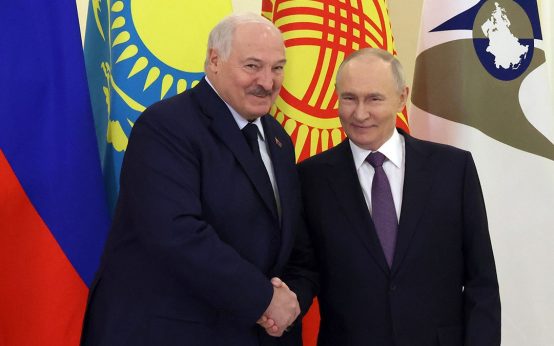 Lukashenko and Putin’s Unique Relationship and Belarus’ Strategic Role
  Alan Ritchson Faces Backlash Over Political Remarks
  Himalayan Pilgrimage: A Couple’s Narrow Escape and Lingering Questions