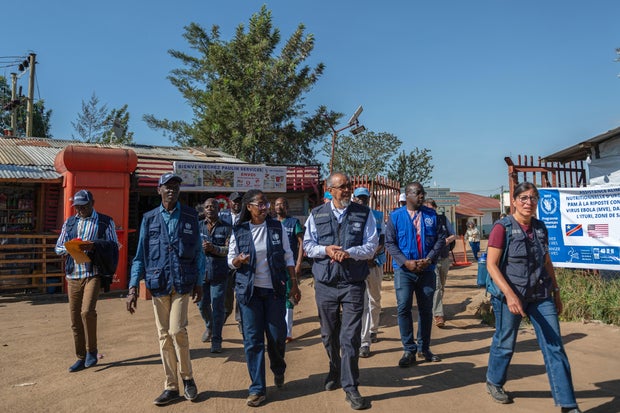
The head of the World Health Organization (WHO) announced that five individuals have successfully recovered from a rare form of Ebola. This emphasizes the necessity of seeking medical care when experiencing symptoms of the disease. WHO Director-General Tedros Adhanom Ghebreyesus pointed out that, although there is no approved treatment or vaccine for the Bundibugyo virus causing this outbreak, recovery is achievable.
Previously, the WHO reported that one person had recovered from the Bundibugyo virus, marking the first documented recovery since the outbreak began. During the inauguration of a new Ebola treatment center in Bunia, Congo, Tedros stated, “Four people will be discharged today, following one who was discharged two days ago.” He stressed, “Though our efforts to develop vaccines and treatments continue, people can still recover from Ebola.”

The WHO has reported at least 906 suspected cases and 223 fatalities in Congo. Among confirmed cases, there are 134 cases and 18 deaths in Congo and Uganda. Uganda has nine confirmed cases and one death, the Ugandan Health Ministry announced.
Doctors Without Borders (MSF) revealed that the virus is spreading faster than the response efforts, even with well-organized health facilities and new aid. MSF is urging for expanded testing, rapid deployment of aid workers, and consistent access to medical supplies.
Challenges arise from local hostility towards strict medical protocols for handling victims’ bodies, conflicting with traditional burial practices. This tension has led to at least three attacks on health centers. During the treatment center’s opening, Tedros emphasized community involvement in stopping the virus, reinforcing the importance of early medical attention.
“Engaging the community is crucial,” Tedros noted. “Seeking healthcare promptly can usher recovery. We must all treat this outbreak seriously. Every citizen has a role in our response.”
The outbreak response in Ituri faces interruptions due to attacks by the Allied Democratic Forces and ethnic militias. The disease has also emerged in North Kivu and South Kivu, where the M23 rebel group controls vital regions.
Despite these challenges, optimism remains. Pierre Akilimali, Incident Manager at Congo’s National Institute of Public Health, shared, “We are hopeful thanks to the symptomatic treatments we provide.” Dr. Davin Ambitapio echoed, “With support from our partners, we intend to control this outbreak swiftly. The virus is less complex than those seen previously.”
 Legal Challenges Arise Over GLP-1 Receptor Agonists and Vision Loss Risks
  States Move to Restrict Tianeptine Amid Growing Concerns
  Potential Changes in Medicare Reimbursement for Lab Tests
  Understanding and Addressing the Complexity of Suicide
  Recall of Meat Products from Star Meat Delivery Inc.
  Questions Arise After Presley Gerber’s Death in Rehab