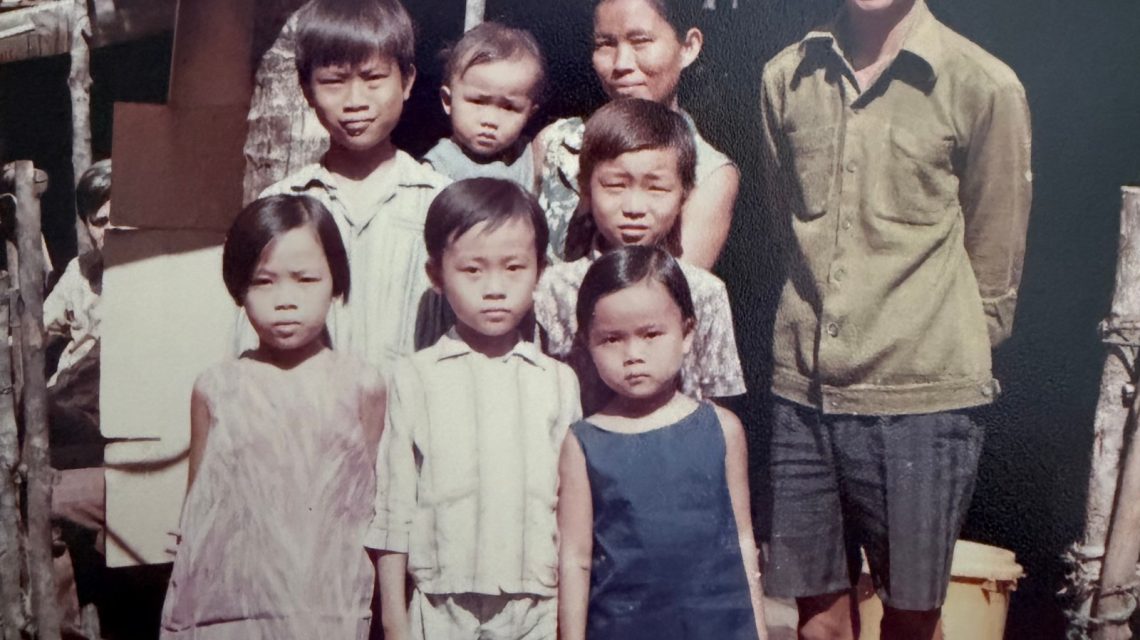
In 1979, at the age of 11, my life changed dramatically. My father instructed us to pack a small bag. That evening, my family, consisting of seven children and two parents, left our home in Saigon and journeyed to a coastal village in Song Be, Vietnam. We embarked aboard a small fishing boat, hidden under the cover of darkness, with approximately 300 others. Adrift in open waters, survival was far from assured.
As a child, I didn’t grasp the full reality of our escape. My understanding came with time, especially after becoming a parent myself. My father’s choice was one that no parent should face: risk everything, including his life and those of his children, or abandon the hope of a better future.
In March of this year, over four decades since that pivotal night, I returned to Vietnam. As the chief financial officer of UNICEF USA, I walked the streets of a country that had transformed significantly. The war-torn Vietnam of my childhood was now dynamic and thriving. It led me to ponder if my parents would have taken that dangerous journey, even with the loss of their youngest child, had they known what Vietnam would become. I believe they would have. My father’s decision was driven by hope and the belief that his children deserved more than uncertainty and fear.
This belief resonates with the millions of families around the world today.
In June, we commemorate World Refugee Day and Father’s Day. These observances are deeply connected for many, including myself. It’s critical to remember that behind every refugee statistic is a decision like my parents’. A decision born not out of recklessness, but responsibility.
Currently, nearly 50 million children are forcibly displaced globally. These children flee conflicts, climate disasters, and instability they didn’t create. Like me, they will carry these experiences for life.
After three days at sea, we reached Malaysia. Temporarily allowed to stay on a beach, we were later moved to a refugee camp. After a year, we relocated to the Philippines, waiting over a year for resettlement. Initially, no country would accept us as we were deemed too many, and my parents lacked English skills and suitable jobs.
During this uncertain time, hope appeared. Humanitarian workers vaccinated me for the first time. International organization volunteers taught me my ABCs. The world hadn’t forgotten about us.
Seeing the UNICEF logo as a child, you don’t understand institutions, but you do understand what it means when someone shows up for you.
My recent visit back to Vietnam showcased the impact of humanitarian support. At the Inclusive Education Resource Center (IERC) in Hanoi, I observed technology support for children with disabilities. This integration aids them in accessing equal opportunities, reflecting what inclusive education can achieve.
In Bac Ha, I witnessed UNICEF’s influence across educational initiatives. The implementation of mother-tongue bilingual education for the Hmong community ensured children learned Vietnamese while preserving cultural identity, a reminder of my own experience learning English while maintaining cultural roots.
A visit to a boarding school evoked memories of my refugee camp days. The shared, cramped sleeping arrangements mirrored the wooden boards of my past. These programs are lifelines, crucial for children to discover their potential despite today’s global displacement challenges.
Refugee policy often focuses on borders, numbers, and costs, neglecting long-term impact. My life demonstrates that investing in children yields immeasurable returns. Today’s refugee child could be a future teacher, doctor, or leader.
This World Refugee Day and Father’s Day, we must honor family resilience and recognize our shared responsibility. My father’s bravery is echoed by parents worldwide who make impossible decisions daily for their children’s futures. Will we match their determination by providing children access to education, healthcare, and opportunities? It’s an investment in a stable, prosperous world.
Reflecting in Vietnam this year, I felt grateful for my parents, supportive organizations, and the chance to build a life once unimaginable. But I also felt a responsibility. Millions of children await that same opportunity, and it’s up to us to ensure they receive it.
Michael Chen is the chief financial officer of UNICEF USA.
 Reviving Candlepin Bowling in Ellsworth, Maine
  New Trilateral Defense Agreement Explained
  Finding Strength and Courage in Challenging Times
  Israel’s Ongoing Strikes in Gaza Despite Ceasefire Agreement
  Turkey, Saudi Arabia, and Pakistan Sign Defense Pact
  Ancient Roman Shipwreck Discovered Off Sicily