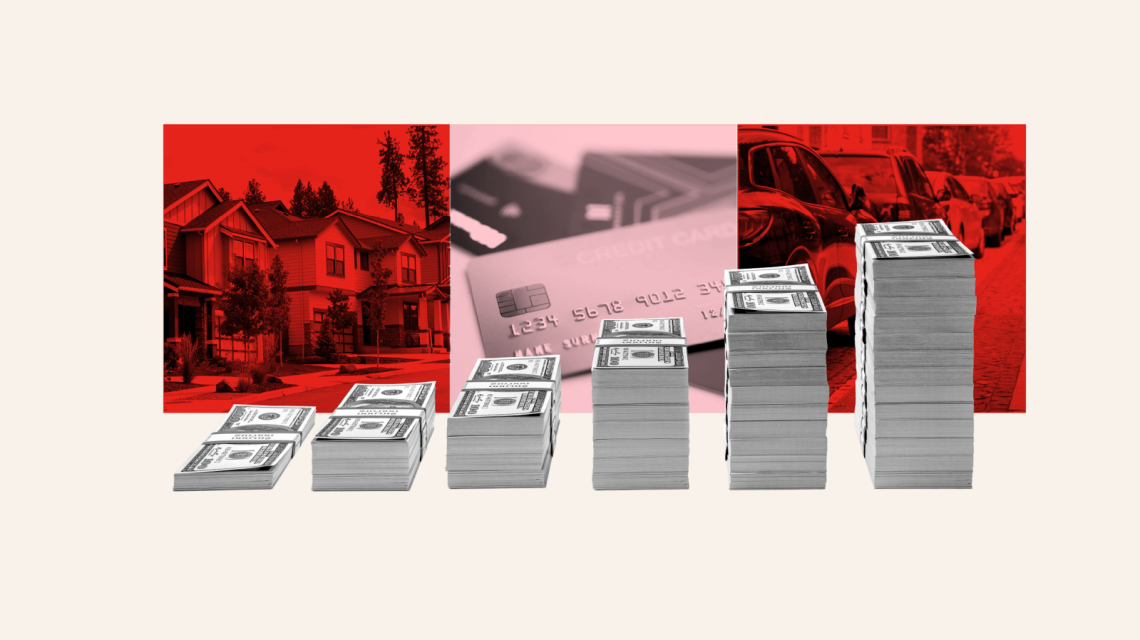
American families are grappling with unprecedented levels of debt, driven by increasing borrowing costs and affordability challenges. According to the Federal Reserve Bank of New York, household debt reached $18.8 trillion in the first quarter of 2026. Although this marks a slight rise from the fourth quarter of 2025, it represents an all-time high, sparking concerns about its impact on both indebted Americans and the broader economy.
Factors Contributing to Rising Debt
Household debt is increasing because consumer purchasing power is not keeping pace with inflation. As reported by the Department of Labor, wage growth is falling behind rising prices, compelling more Americans to rely on credit cards and loans for daily expenses.
Data from the New York Fed indicates credit card balances fell slightly to $1.25 trillion in the first quarter but have surged over 60% in the last five years. Increased costs for housing, student, and auto loans are stretching repayment periods, potentially extending them for decades, according to a study by financial services company JG Wentworth.
Delinquency as a Major Concern
The recent debt increase is largely attributed to higher balances in mortgages and auto loans, which rose to $13.2 trillion and $1.7 trillion, respectively. While student loan debt decreased slightly in the first quarter, delinquency remains a significant risk.
Currently, 4.8% of outstanding debt is in some stage of delinquency, a state described as “mostly steady” by the New York Fed. Student loan delinquencies are approaching pre-pandemic levels. A rise in delinquencies alongside increased balances could lead to tighter credit, posing difficulties for individuals seeking loans or credit lines.
Research from the Federal Reserve Board of Governors shows household debt servicing payments expanded to 11.3% of monthly income by the end of 2025. In comparison, these payments were 11.1% in the fourth quarter of 2024 and 9.1% at the start of 2021, though still below pre-pandemic figures. LendingTree’s study reveals average auto loan payments for new cars reached $767 by the end of last year, increasing from $746 the previous year.
Global Credit Stress and Future Implications
Credit stress worldwide is on the rise. Higher minimum credit card payments, more expensive auto loans, and stricter mortgage approvals could further stretch household finances. Interest payments reducing borrowers’ ability to repay debts might compel households to reduce spending, thereby threatening growth and increasing delinquency risks.
S&P Global’s research highlights the ongoing blockade of the Strait of Hormuz, which has intensified global credit stress. Prolonged conflict could further escalate borrowing costs and restrict credit access, slowing economic activity.
The economy-wide impacts include potential job losses, stagnant wages, and financial squeezes should another downturn occur. Experts warn the current credit trends resemble those before the Great Recession. Researchers at the St. Louis Fed note the present level of delinquent credit card debt is nearing those seen during the 2008 financial crisis.
Experts Provide Dissenting Views
Despite alarming debt statistics, some experts maintain a positive outlook. Ted Rossman, principal analyst at Bankrate, points out that housing debt constitutes nearly three-quarters of total debt, which often facilitates wealth creation through homeownership.
Rossman adds that increasing credit card balances can reflect the decline of cash usage, signaling a robust consumer-driven economy. He asserts that while some individuals may struggle with excessive credit card or student loan debt, these trends generally depict a favorable economic picture.
 University of Georgia Student Survives Eight-Story Fall
  Texas Law Enforcement Intercepts Potential Threat at Capitol
  Senate Vote on Reducing Data Center Electricity Costs Fails
  Oil Market Faces Challenge as Safety Measures Deplete
  Venezuelan Delivery Driver Charged with Assaulting Federal Officer
  U.S. Navy Aviators Eject from Aircraft Near USS Dwight D. Eisenhower