
Before the historic Apollo 11 moon landing in 1969, David Bowie sang about an astronaut, “Major Tom,” lost in space. Today, there is no such tale of loss in my family. Our astronaut, Chris Williams, has safely returned to Earth. Chris landed in Kazakhstan on Sunday morning after an eight-month journey aboard the International Space Station, covering an astonishing 102 million miles. A recovery team promptly took my nephew to the Johnson Space Center in Houston.
It’s incredible to consider that Chris, a child fascinated by astronauts, now proudly wears the U.S. flag on his spacesuit. During his mission, Chris twice experienced spacewalks, linked to the space station while fixing its robotic arms. Watching him live on the NASA channel was a mind-blowing experience. Within the space station, he and his colleagues explored zero gravity’s effects on human eyesight and how our brains perceive direction in space. They also monitored changes in bone density and DNA to understand the impact of prolonged space travel on the human body.
In January, Chris took on the role as the sole American on the space station after a colleague’s evacuation due to illness. In June, an air leak triggered an evacuation order, forcing Chris and four astronauts into a separate “Dragon” spacecraft. His family on Earth anxiously monitored the situation until the issue was resolved.
Notably, Chris gained recognition for his space photography. In May, USA Today highlighted his ability to capture stunning images from the station’s glass cupola. In February, he photographed China’s Lunar New Year fireworks from space. Astronaut Zena Cardman praised his work, and astronaut Anne McClain applauded his capture of balance and color. In April, he shared images of a fiery object soaring above West Africa, speculated to be satellite debris, creating spectacular visuals.
Chris also engaged with students from kindergarten to high school, answering their questions about science on Earth versus in space. A former physics student at Stanford with advanced degrees from MIT and Harvard, Chris explained how zero gravity makes tools and objects float, requiring Velcro strips for practicality. He shared that space food, thanks to Houston’s food science experts, tastes decent. A highlight for students was when Chris released a water bubble, only to consume it like Pac-Man, delighting young and old alike.
The sessions aimed to inspire the next generation of scientists and engineers to explore beyond Earth, leading the nation back to the moon and even to Mars. In April, when Artemis II brought astronauts close to the moon for the first time in 50 years, Chris watched from the space station, discussing the mission with colleagues. He recorded a notable segment for “Fox News Sunday,” where, in a unique finish, he floated off-screen, leaving astonished crew members behind.
On a personal note, Chris frequently called his family, talking to his wife, daughters, sister, and parents. He reached out to me during a Macy’s shopping trip. During a family video call, his presence spanned continents, connecting relatives in the U.S., Europe, and Panama. On Father’s Day, Chris’ live broadcast from the space station reached Trinity Episcopal Church, where he greeted his father and the congregation. This conversation with an astronaut traveling at 17,000 miles per hour left churchgoers in awe.
In a heartfelt moment, his father, Roger, read a prayer praising a son who surpassed every expectation, seeking divine strength and safety for Chris. The church members concluded with a hopeful refrain led by Rev. Shayna Watson, “Until We See You Again.” That anticipated return is now a reality.
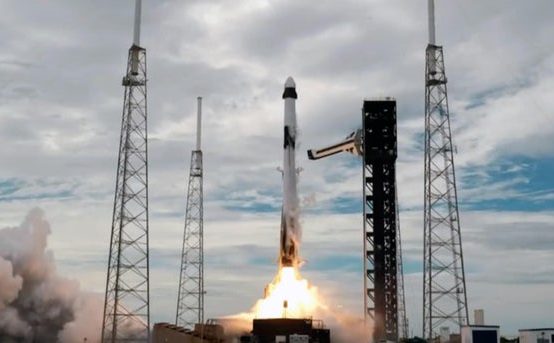 SpaceX Falcon 9 Delivers Crew to International Space Station
 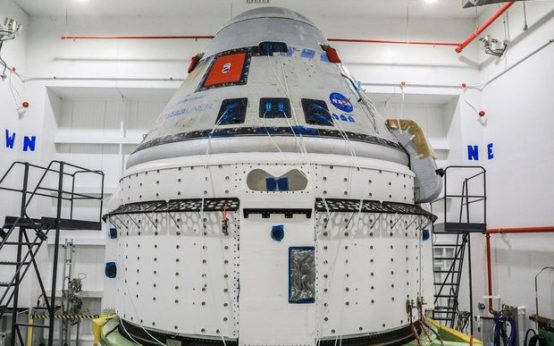 NASA Collaborates with Boeing to Launch Unpiloted Starliner Test
  NASA’s New Space Telescope Launch: A Breakthrough in Cosmic Exploration
 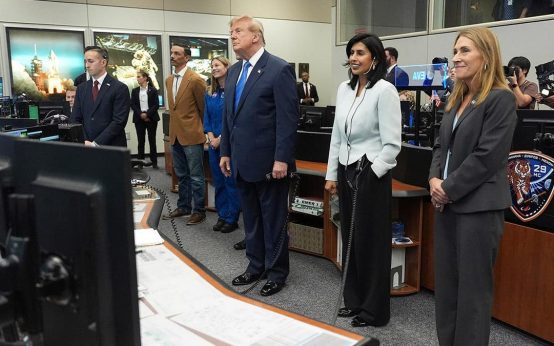 Trump’s Call with ISS Astronauts and Honors at NASA
 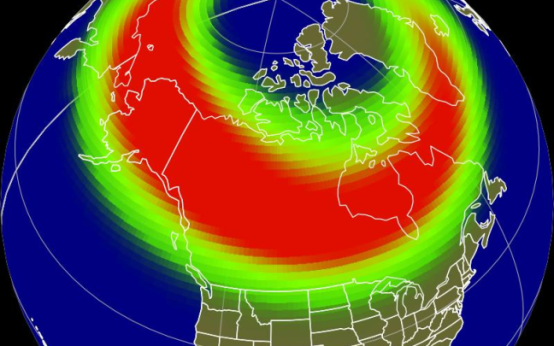 Anticipated Northern Lights Due to Solar Activity
  NASA’s Nancy Grace Roman Telescope Prepares for Launch